

























Strait of Hormuz Effectively Shut as Crude Oil Prices Spike — What Happens Next

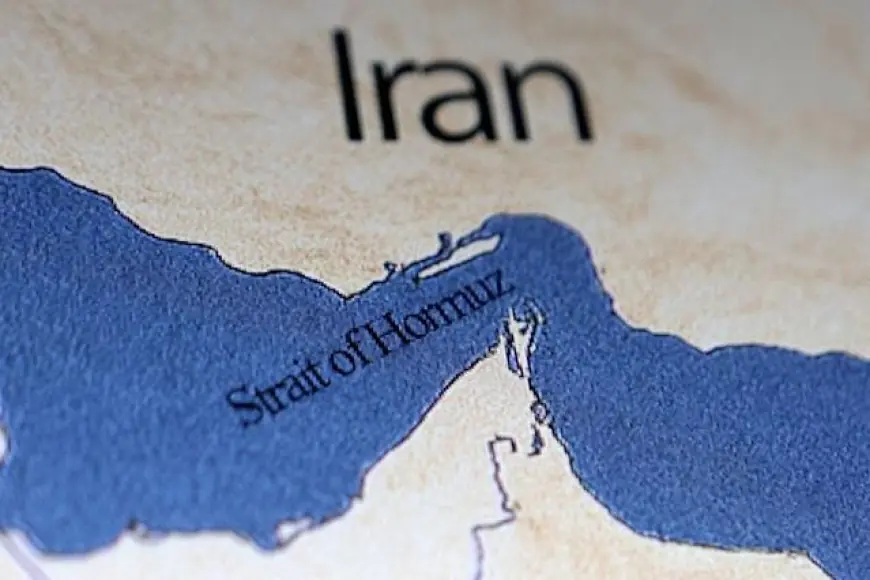
The global energy market is facing its most dangerous moment in decades. Following U.S. and Israeli military strikes against Iran on February 28, 2026, the Strait of Hormuz — the world's most critical oil chokepoint — is in a state of severe disruption. After coming under attack from the U.S. and Israel, Iran appeared to exercise one of its options for retaliation by putting a squeeze on the strategic Strait of Hormuz, with a semiofficial Iranian media outlet describing the strait as effectively shut and ships reporting a radio broadcast purporting to come from the Iranian navy announcing that transit through it was banned.
Crude Oil Prices Spike Sharply as Strait of Hormuz Crisis Unfolds
Crude oil prices today are already reflecting the severity of the crisis, with markets pricing in a major supply shock before trading officially reopens on Sunday evening. Brent crude, the benchmark for two-thirds of the world's oil, closed up 2.87% on Friday at $72.87 per barrel, while West Texas Intermediate ended the session 2.78% higher at $67.02 per barrel.
Benchmark crude prices have surged from approximately $65 per barrel to $72–$73 per barrel over just the past few days, reflecting a growing risk premium amid reports of attacks on oil producers and concerns about possible supply disruptions. Analysts are warning Monday's open could bring an immediate additional price spike depending on how conditions at the Strait of Hormuz develop overnight.
What Is the Strait of Hormuz and Why Do Oil Prices Depend on It?
The Strait of Hormuz is a narrow waterway located between Iran and Oman at the mouth of the Persian Gulf — and it is irreplaceable to the global oil supply. In 2024, oil flow through the strait averaged 20 million barrels per day, the equivalent of about 20% of global petroleum liquids consumption, with very few alternative options existing to move oil out of the Gulf if the strait is closed.
The strait also handles about one-fifth of global LNG trade, with Qatar accounting for the bulk of those volumes. Around 3,000 vessels transit the strait each month, making even short-lived interference economically significant. The scale of this flow makes any threat to the Strait of Hormuz a direct and immediate oil price catalyst.
Oil Tankers Turning Back as Shipping Companies Suspend Hormuz Transits
The disruption is already showing up in real-time vessel tracking. Reports indicate some oil companies and trading houses have suspended oil and fuel shipments through the Strait of Hormuz, while tanker tracking firms reported a number of tankers taking U-turns at the strait. The UK Navy confirmed there is "significant" military activity at the Strait as of late Saturday.
Multiple analysts and outlets confirmed that oil loading operations were continuing in Saudi Arabia, the UAE, Kuwait, Qatar, and Iraq — but getting that oil to market through the strait is the crisis point. Saudi Arabia and the UAE have alternative pipeline bypass routes, but their combined unused bypass capacity totals only approximately 2.6 million barrels per day — less than 20% of total Hormuz flows.
Gas Prices and Global Inflation Hang in the Balance
The impact of sustained Strait of Hormuz disruption on gas prices and broader inflation would be severe and fast-moving. Oil prices would likely spike to $120–$150 per barrel within days of a full closure, with sustained disruption potentially pushing prices toward $180–$200 per barrel — levels not seen in inflation-adjusted terms since the 1979 crisis. A closure lasting more than 30 days would push global recession probability above 75%.
Goldman Sachs said in a recent note that oil prices could top $100 per barrel if the strait were blocked. Higher oil and gas prices would feed through to inflation, raising fuel, transport, and manufacturing costs worldwide, with Asia most exposed given that China, India, Japan, and South Korea together account for approximately 69% of all crude flows through the Strait of Hormuz.
What Iran's Hormuz Threat Means for U.S. Gas Prices
American drivers watching gas prices today should prepare for near-term volatility regardless of whether a full blockade materializes. Trading markets are currently closed and the full effect on oil prices will not be quantifiable until markets open late Sunday. The world is currently oversupplied with oil, which helped keep prices from rising too sharply in recent weeks — but if the strait is closed, particularly for a prolonged period, it would be a fundamentally different story.
Iran accounts for approximately 4% of global crude supplies at around 3.1 million barrels per day, with more than 80% of its exports bound for Chinese refineries. But its greatest leverage is not its own production — it is geography. The strait falls within Iranian and Omani territorial waters at its narrowest point, giving Tehran direct legal and physical leverage over the world's most critical oil chokepoint.