

























Trump and Latin America: Navigating New Hemispheric Dynamics on Día de las Américas

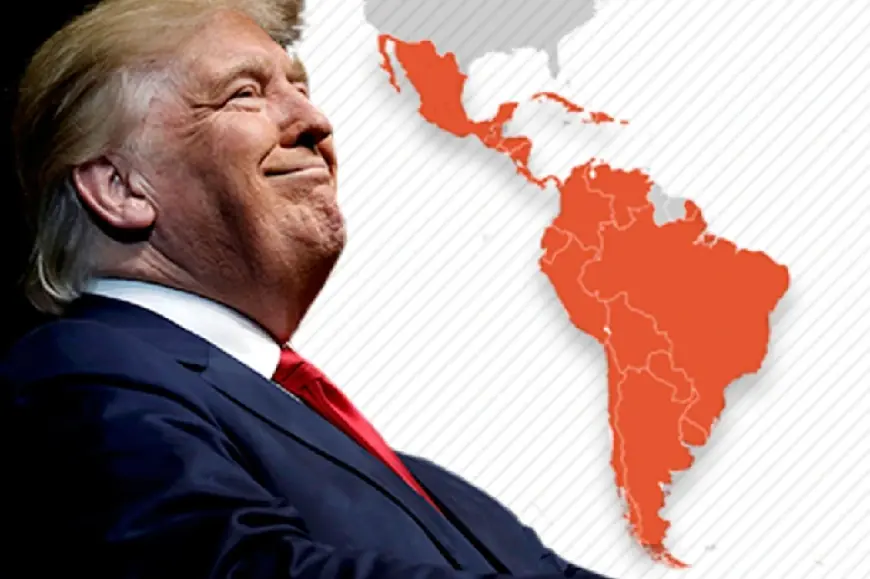
Since 1890, April 14 has marked the founding of the Union of American Republics, the forerunner of today’s Organization of American States. The date is observed annually as Día de las Américas. In 2026, the milestone coincides with a sharp rise in external pressure on Latin America from the United States.
A renewed U.S. focus on the hemisphere
Donald Trump began a second presidential term in January 2025. His administration’s National Security Strategy named Latin America a strategic priority. Officials framed the shift around competition with China.
China’s economic reach
Trade between China and Latin America surged in recent decades. It rose from about $18 billion in 2002 to more than $450 billion in 2021. China is now the main trading partner for several countries in the region.
Economic pressure and tariffs
The U.S. response included unilateral tariffs and intensified diplomacy. Most countries in the region faced a roughly 10% tariff increase. Exceptions served as differentiated punishments for states with closer ties to extra-hemispheric actors.
Panama Canal and port ownership shifts
Washington applied pressure related to Chinese influence at the Panama Canal. Panama reportedly declined to renew ties with China’s Belt and Road Initiative. Hutchison Ports, which ran terminals at both ends of the canal, sold its operations.
The buyer was linked to an investment group associated with BlackRock. Analysts tied the sale to U.S. pressure on strategic maritime assets.
Military intervention in Venezuela
On January 3, 2026, U.S. operations removed Nicolás Maduro from power in Venezuela. This was the first direct U.S. military action in the region since the 1989 Panama invasion. That earlier operation led to the capture of General Manuel Noriega, a former CIA collaborator.
Migration, detentions and deportations
Migration policy became a major lever of pressure in 2025. Between January and December 2025, the Department of Homeland Security recorded over 600,000 deportations. Detentions rose by roughly 75 percent from the previous year.
Some Latin American leaders sought closer ties to Washington in response. El Salvador’s president, Nayib Bukele, offered a high-security detention center to house deportees and those accused of gang activity.
Aid, rescues and political alignments
Argentina negotiated a $20 billion rescue package in a direct deal between President Javier Milei and the Trump administration. Many analysts viewed the package as an alignment signal rather than purely technical assistance. The move illustrated how economic lifelines were becoming political instruments.
Soft power, USAID cuts and regional influence
The U.S. decision to close USAID programs reduced funding for social initiatives, independent media, and human rights groups. That withdrawal removed a key instrument of American soft power. Observers warned it could open space for alternative influence from China.
Voices from the region
Political analyst Marco Frieri said the United States has become more present and assertive. He argued the approach differs from earlier periods of collaboration. Geopolitics expert Stephanie Henaro warned the region is being treated as an area to manage.
Implications on Día de las Américas
This Día de las Américas arrives with a visible fracture over autonomy. Capitals across the hemisphere now debate how much room remains to decide independent policies. The central question is whether countries can balance sovereignty with growing external pressures.
Coverage prepared for Filmogaz.com on themes including Trump and Latin America and navigating new hemispheric dynamics on Día de las Américas.