
























Dubai Bombing Sends Shock Through Gulf: Luxury Hotel Hit, Military Bases Targeted and Civilians Displaced

The Dubai Bombing has immediate human and operational consequences: hotel guests and nearby residents were forced into shelter, emergency services responded to fires and authorities closed airspace as missile and drone strikes rippled across the Gulf. The attack came as part of a wider Iranian strike campaign framed as retaliation for a massive and ongoing assault on Iran by the US and Israel, leaving military sites and civilian areas in multiple countries affected.
Dubai Bombing: who felt the impact first and how
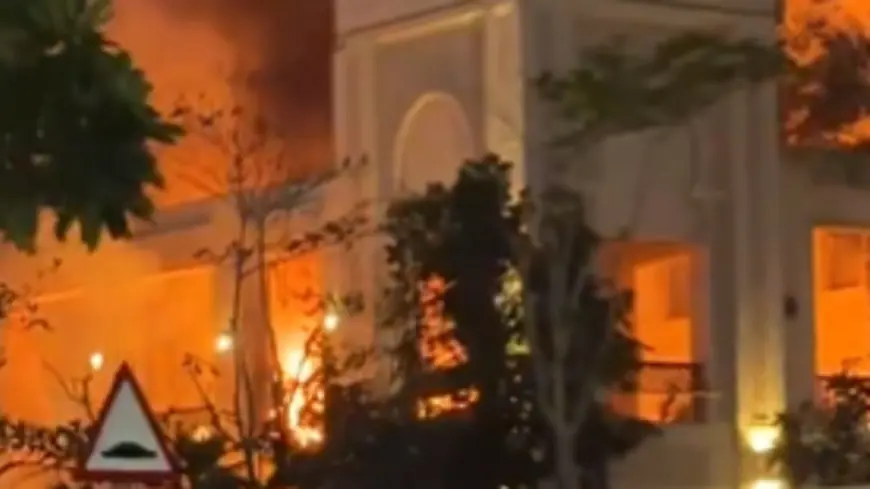
Guests and staff at Fairmont The Palm were among the first directly affected when a fire erupted near the hotel entrance after debris reportedly fell from the sky during missile strikes. Verified video shows a large blaze at the five-star property with thick black smoke and emergency teams attending the scene; a second verified clip captures the moment of impact and a person filming who appears to fall to the ground. Dubai authorities said a separate blaze in the Palm Jumeirah area injured four people and was later brought under control. Emergency messaging urged calm as air raid sirens sent people running for shelter.
Regional picture: explosions, interceptions and mounting damage
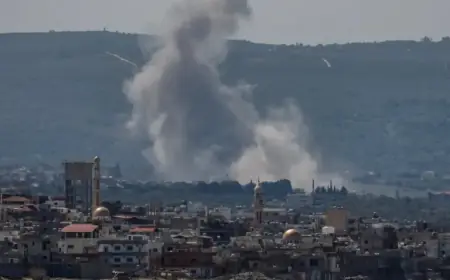
What unfolded around the Gulf included intercepted missiles and drones, explosions over multiple cities and at least one residential fatality. Qatar, Bahrain, Jordan and Kuwait announced they had intercepted projectiles aimed their way. Huge plumes of black smoke were seen near the US Navy's Fifth Fleet headquarters in Manama, Bahrain, while video from Manama shows a drone striking a tower block and detonating in a brilliant yellow fireball. Explosions were also reported in Kuwait and in Abu Dhabi; one person was confirmed killed in Abu Dhabi by falling debris after missiles were intercepted.
Military targets and the wider strike-and-defend dynamics
Several US-linked facilities were in the crosshairs or the path of incoming strikes. Qatar’s defence ministry said it intercepted missiles apparently targeting the al-Udeid air base, described in coverage as the largest US base in the region. Bahraini authorities confirmed an attack on Naval Support Activity Bahrain, the home port for anti-mine and logistical support ships, though it is unclear whether those vessels were present at the time. Kuwait reported a drone that targeted the international airport caused limited damage and minor injuries to several employees. Across the region, statements note that interceptors engaged ballistic missiles and drones at bases such as Ali Al Salem Air Base, where shrapnel caused minor injuries and some material damage; Colonel Saud Al-Atwan was named in that account.
Casualties, evacuations and public safety measures
At the national level, media coverage has published a toll of at least 201 people killed in Iran during the broader campaign of strikes. In the Gulf, a health ministry statement cited 12 people injured during and after the strikes, though it was unclear whether the three Kuwaiti soldiers hit by shrapnel at a base housing US personnel were included in that figure. In Kuwait a local news agency described minor injuries to airport staff and limited terminal damage. Dubai’s media office confirmed emergency response for an "incident" in Palm Jumeirah and reiterated that injured people were taken to medical facilities. The General Civil Aviation Authority announced UAE airspace was closed as a precautionary measure. Around 240, 000 British citizens living in the UAE were advised to remain indoors or in a safe place and to stay away from windows.
- Here’s the part that matters: US Central Command says US forces suffered no combat casualties after hundreds of missiles and drones were launched and that CENTCOM forces successfully defended against those attacks; damage to US installations was described as minimal and not disruptive to operations.
- Local responses included immediate evacuations and sheltering orders; one resident in Abu Dhabi messaged that "The kids are terrified, " and additional missile waves were reported over residential areas of Dubai.
- Authorities in multiple countries reported interceptions at bases and airports; parties on the ground noted both material damage and injuries ranging from minor to fatal.
- Political leaders called for diplomacy even as military activity continued: statements urged restraint and plans for accelerated diplomatic efforts to prevent further bloodshed.
Political reactions, warnings and alerts
Leaders and officials across the region and beyond expressed concern. One senior commentator described the moment as dangerous while noting US and Israeli actors see an opportunity. Turkey’s president in Istanbul criticized the US-Israel strikes as violations of sovereignty and warned the region risked being dragged into a wider fire without restraint and diplomacy; he said his government would push for urgent diplomatic action to prevent more bloodshed and to revive negotiations. France’s president told an emergency defence council his country was not warned of or involved in the strikes and urged a diplomatic solution. Meanwhile, the Israeli defence establishment issued an urgent Farsi warning for personnel in the 'G' industrial zone in the Isfahan region to evacuate immediately and advised residents of nearby Mazraeh village to stay indoors until morning and to avoid the industrial area.
It’s easy to overlook that this flare-up followed an initial wave of allied strikes: the latest sequence is framed in coverage as retaliation after US and partner actions. The real question now is how quickly diplomatic channels can alter the trajectory from escalating military exchanges to de‑escalation.
Writer's aside: what stands out is the mix of high-end civilian targets and hardened military sites in the same wave of strikes—this raises complex questions about force protection and civilian risk that regional authorities will have to manage carefully.