

























Carney Targets Year-End Completion of India Trade Deal

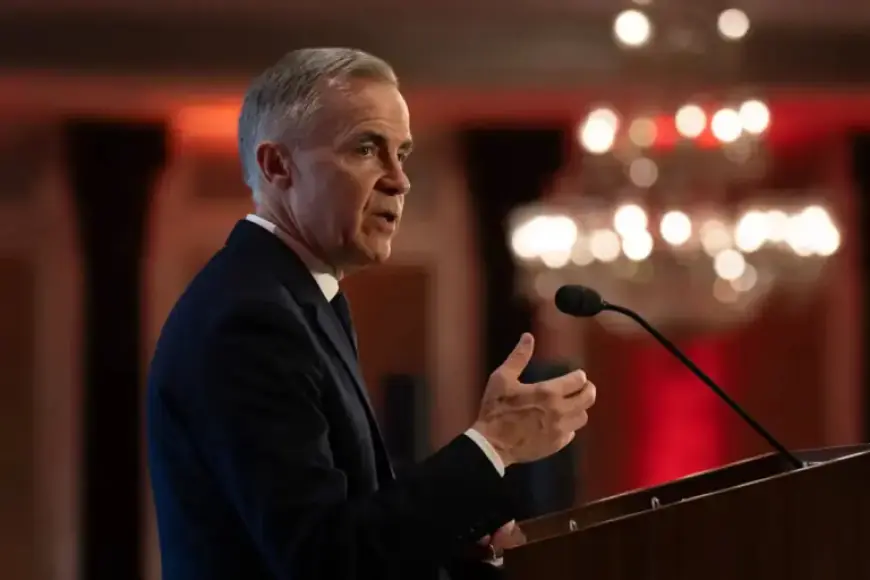
Prime Minister Mark Carney has set an ambitious goal to finalize a comprehensive trade agreement with India by the end of this year. This initiative, involving a country of 1.4 billion people, represents his commitment to mend and enhance diplomatic ties with New Delhi.
Significance of the Trade Deal
During his recent visit to Mumbai, characterized as a pivotal moment in Canada-India relations, Carney addressed around 100 investors and executives. He emphasized that this agreement signals the conclusion of a “challenging period” and the initiation of a bolder partnership with India’s rapidly growing economy.
Carney remarked on the shifting global landscape, highlighting that recent disruptions in the rules-based international order have resulted in increased volatility. Countries are now striving for more independence, a concept referred to as “strategic autonomy,” which resonates with India’s foreign policy approach.
Strategic Autonomy and Opportunities for Partnership
“True strategic autonomy requires diversification, not isolation,” Carney explained, noting how Canada and India can collaborate to promote prosperity and enhance sovereignty. He acknowledged that despite differing foreign policy views, effective partnerships are possible.
- India maintains a strong relationship with Russia, contrasting Canada’s support for Ukraine against Russian aggression.
Carney described his foreign policy as values-based realism, recognizing that incremental progress requires working with varied partners whose interests may not always align with Canada’s values.
Advantages for Investors
Carney highlighted Canada’s economic potential, particularly its energy resources. He pointed out that the country’s capacity to export liquefied natural gas to Asia could rise significantly in the coming years.
- Canada has introduced a super-deduction tax incentive for investments in clean energy and research.
- The marginal effective tax rate for new investments has been lowered to 13%, which is more competitive than the United States.
Carney noted that Canada’s exports to India currently account for less than 1% of total exports, indicating substantial room for growth. Two-way investments already exceed $30 billion annually, but he believes these figures do not reflect their full potential.
Future Collaboration
“With two million Canadians of Indian descent, Canada and India are natural partners,” Carney stated. He highlighted opportunities in critical minerals and clean technology, which align with India’s manufacturing needs.
Furthermore, he pointed out that India’s leadership in artificial intelligence aligns well with Canada’s goals in AI and quantum development, emphasizing the potential for deeper cooperation in defense innovation.
This strategic partnership, centered around mutual economic interests and shared values, could unlock significant advantages for both nations in an increasingly complex global environment.