






















Geneva Talks: Mesghami and Shamkhani Invoke Khamenei’s Fatwa Again

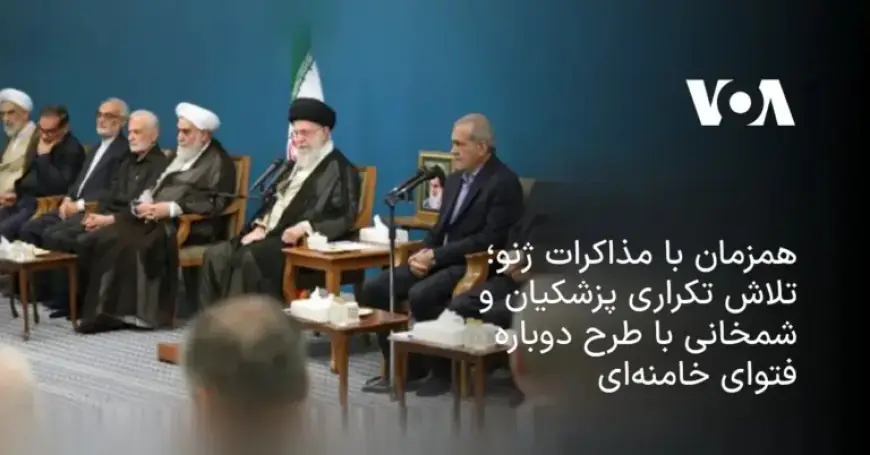
The ongoing Geneva talks feature crucial discussions about Iran’s nuclear program, once again invoking the significant fatwa from Ali Khamenei that prohibits the construction of nuclear weapons. Iranian officials are reiterating this position as they aim to underscore the peaceful intentions behind their nuclear agenda.
Recent Statements from Iranian Officials
During the talks, Iranian President Masoud Pezeshkian emphasized that Khamenei’s edict guarantees that Iran will not develop nuclear weapons. He remarked, “If the leader has prohibited nuclear arms, it means Iran will not possess them.” Moreover, Ali Shamkhani, the Secretary of Iran’s Supreme National Security Council, asserted that if the primary negotiation point revolves around Iran’s non-proliferation, it complies with Khamenei’s guidance, suggesting that an agreement could be swiftly reached.
Background of the Nuclear Agreements
- In 2015, during negotiations with President Barack Obama, similar references to Khamenei’s fatwa were made.
- Obama defended the deal by stating that Khamenei had religiously forbidden nuclear bomb production.
Despite these assertions, several Republican figures, including Senator Lindsey Graham, are doubtful. Graham criticized the potential agreement, stating, “We are dealing with an insincere party.” Concurrently, retired General Jack Keane questioned the validity of negotiating with a regime he believes to be deceptive.
U.S. Reaction and Concerns
The recent proposed framework presented by Iran is reported to resemble previous offerings closely. Israeli sources and certain Arab diplomats have claimed that this draft aligns with principles similar to the previous Joint Comprehensive Plan of Action (JCPOA), which the Trump administration exited.
U.S. Secretary of State Marco Rubio has termed Iran’s refusal to discuss its missile program a “significant obstacle.” He highlights that while current discussions center primarily on nuclear issues, Iran’s ballistic missiles pose a serious threat, particularly to U.S. bases in the region as well as to allied nations like Saudi Arabia, Qatar, and Bahrain.
Conclusions from Geneva Talks
Rubio stressed that the existing missile arsenal of Iran remains a danger today. He called for discussions that extend beyond nuclear proliferation topics, indicating that substantive progress in negotiations regarding the nuclear program could influence future talks on Iran’s missile endeavors.
The developments in Geneva highlight the intricate balance of diplomacy, strategic interests, and security concerns related to Iran’s nuclear activities as the international community watches closely.