

























Did Congress Approve Bombing Iran? No — Trump Launched Operation Epic Fury Without Congressional Authorization

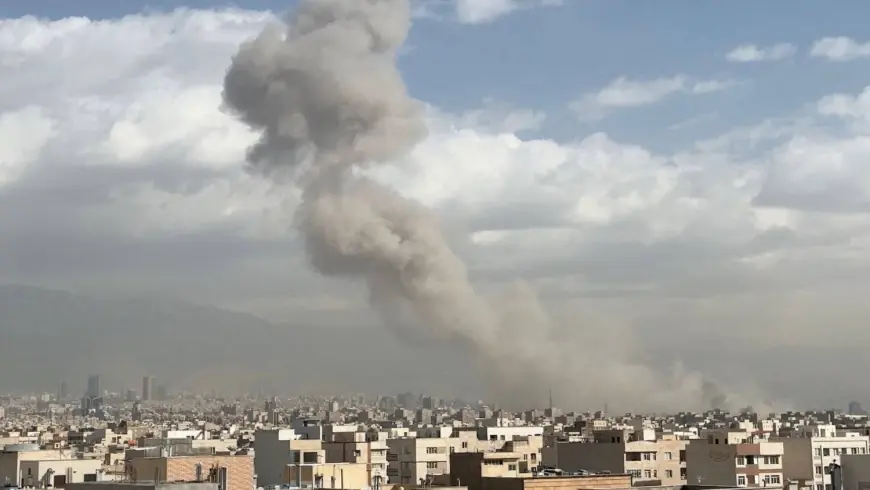
The short answer is no. Congress did not approve the bombing of Iran. President Trump launched Operation Epic Fury on Saturday, February 28, 2026, without a congressional declaration of war, without a formal Authorization for Use of Military Force, and without consulting lawmakers beforehand. The move has ignited one of the most intense constitutional confrontations between the White House and Capitol Hill in modern American history.
What the Constitution Actually Says About Declaring War
The United States Constitution is unambiguous on this point. Article I, Section 8 grants Congress — and only Congress — the sole authority to declare war. The president serves as commander-in-chief, but that title authorizes the execution of wars already approved, not the unilateral decision of where, when, and against whom the country goes to war. The Constitution's framers lived in an age when wars were fought at the whims of monarchs, sometimes for lofty imperial goals and sometimes for petty personal grievances — and they designed the system specifically to prevent that.
The War Powers Resolution of 1973: The Law Trump Bypassed
After the trauma of Vietnam, Congress passed the War Powers Resolution of 1973 to claw back some of its authority. The resolution recognizes that the president may use military force only when a war is declared by Congress, after Congress passes an Authorization for Use of Military Force, or when there is a national emergency created by an attack on the United States. It also requires the president to notify Congress within 48 hours and to consult lawmakers in every possible instance before deploying force.
Constitutional law scholars conclude that none of those conditions existed before the Iran bombing. One legal expert stated plainly that the Constitution "prohibits the president from using armed force in attacking a country such as Iran unless there is an attack on the United States or the threat of an imminent attack. That didn't happen." The White House has not offered a formal legal justification for bypassing the resolution.
Republican Thomas Massie and Democrat Ro Khanna: The Bipartisan Rebellion
The political fallout is not dividing cleanly along party lines. Republican Representative Thomas Massie of Kentucky quickly labeled the strikes acts of war "unauthorized by Congress," and is one of the lead sponsors of a bipartisan War Powers Resolution aimed at reining in the Trump administration's ability to pursue further military action against Iran without congressional approval. The resolution is co-led by Democratic Representative Ro Khanna of California.
House Democrats plan to force a vote on the Khanna-Massie War Powers Resolution as soon as Congress reconvenes. "As soon as Congress reconvenes next week, we will compel a vote of the full House of Representatives," House Minority Leader Hakeem Jeffries said in a statement. Senate Democrats are preparing a parallel resolution vote in the upper chamber simultaneously.
Republicans Who Support the Iran Bombing — And Why the Vote May Fail
Not every Republican is joining the rebellion. Senator Lindsey Graham of South Carolina called the strikes "necessary" and "long justified," writing: "God bless President Trump, our military and our allies in Israel. The end of the largest state sponsor of terrorism is upon us." Senate Majority Leader John Thune threw his weight behind regime change in Iran just days before the strikes began.
Many in Congress — both Democrats and Republicans — sought to avoid a war powers vote entirely ahead of Saturday's strikes. Political strategists noted that the opposition to holding a vote was a symptom of lawmakers who privately support the war but do not want to be on record for fear of future accountability. Without a two-thirds supermajority in both chambers, Congress cannot override a presidential veto — meaning even a successful War Powers Resolution could be killed by Trump's pen.
Democrats Who Back the Iran Strikes Despite the Process Concerns
The constitutional debate is complicated by the fact that not all Democrats oppose the bombing of Iran itself. Pennsylvania Democratic Senator John Fetterman praised the Saturday morning operation, writing: "President Trump has been willing to do what's right and necessary to produce real peace in the region." His support underscores the difficulty Democrats face in building a unified front against the action.
House Minority Leader Hakeem Jeffries demanded Trump explain why a new bombing campaign was necessary, pointing out a direct contradiction. "The president made the representation that Iran's nuclear program was completely and totally obliterated last year as a result of actions the administration has taken," Jeffries said. "If that, in fact, was true, what is the urgency at this moment? The American people need a real explanation." That question has yet to receive a formal White House answer.
What Happens Next: Can Congress Actually Stop the Iran War?
The War Powers Resolution requires the president to notify Congress within 48 hours and to terminate operations within 60 days without congressional authorization. However, courts have rarely if ever intervened to stop a president's war-making power — meaning Congress must be the principal check on executive overreach, and it must act fast.
Even if Congress passes a War Powers Resolution this week, Trump is almost certain to veto it — just as he vetoed a similar resolution after the June 2025 Twelve-Day War against Iran. Without a two-thirds supermajority in both chambers to override the veto, Congress would be left watching a war it never authorized continue unimpeded. The constitutional crisis unfolding alongside the military one may prove just as consequential for American democracy as the bombs falling on Tehran.