

























Mohammad Pakpour Killed: IRGC Commander and Iran's Defense Minister Eliminated in Operation Epic Fury

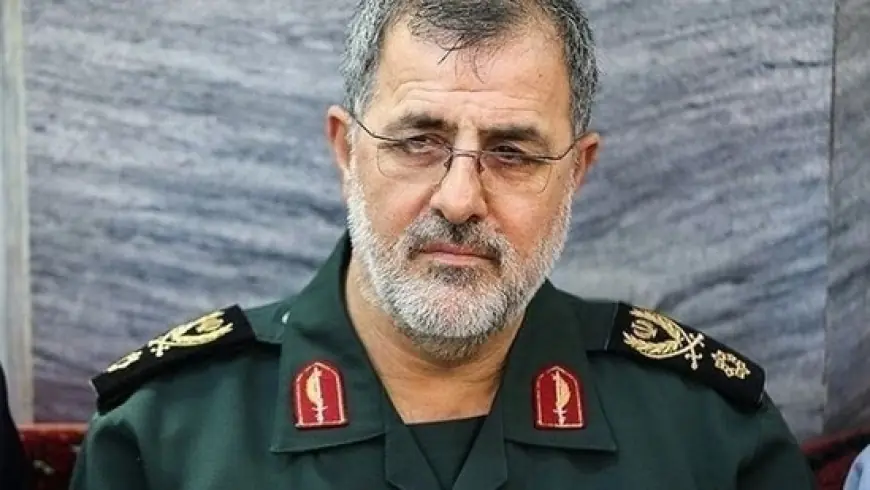
Mohammad Pakpour, the commander-in-chief of Iran's Islamic Revolutionary Guard Corps, has been killed in Israeli airstrikes on Saturday, February 28, 2026, according to Israeli officials and multiple regional intelligence sources. His death — alongside Iran's Defense Minister — represents the most significant decapitation of Iran's military leadership in the nation's history and marks a devastating blow to Tehran's command structure on the opening day of Operation Epic Fury.
Who Was Mohammad Pakpour? The IRGC Commander Israel Eliminated
Mohammad Pakpour served as commander of the Islamic Revolutionary Guard Corps for 260 days. He assumed command after the elimination of his predecessor, Hussein Salami, who was killed by Israel at the start of the June 2025 Twelve-Day War. Pakpour was one of the most powerful and feared figures inside Iran's security establishment — the head of a force that operates entirely separately from Iran's conventional military and controls the country's missile arsenal, regional proxy networks, and internal security apparatus.
Pakpour was named the new IRGC commander in June 2025. He was promoted to the rank of major general and tasked with strengthening the force's capabilities, combat readiness, and internal unity. He returned to the spotlight in January 2026, when he was identified as the official who oversaw a brutal crackdown on widespread uprisings against the regime. Rights groups estimate that more than 6,800 protesters were killed under his direct command during that crackdown, with some estimates placing the toll far higher.
Pakpour's Final Warning: "Finger on the Trigger"
Just weeks before his death, Mohammad Pakpour issued what now reads as his final public statement to the outside world. Only weeks before the reported strike, Pakpour had issued a public warning directed at both Israel and the United States. He cautioned them "to avoid any miscalculation" and declared the Islamic Republic "stands more ready than ever" with "finger on the trigger." Those words now stand as one of the most strikingly ironic final statements in modern military history.
Mohammad Pakpour was appointed during the Twelve-Day War after his predecessor was eliminated, promising to "keep going until the end." He served precisely 260 days before Israeli strikes ended his command — making him the second consecutive IRGC commander killed by Israel within a single calendar year.
Iran's Defense Minister Also Killed: A Double Decapitation Strike
The losses go beyond Mohammad Pakpour. Iran's Defense Minister Amir Nasirzadeh and Islamic Revolutionary Guard Corps commander Mohammad Pakpour are believed to have been killed in Israeli attacks, according to two sources familiar with Israel's military operations and one regional source. The simultaneous elimination of both the IRGC commander and the Defense Minister in a single day is without precedent in the history of modern warfare in the Middle East.
Officials also assessed that Iran's minister of defence and chief of intelligence may have been killed in the same wave of strikes. Pakpour had taken charge of the IRGC after Israel killed his predecessor, Hossein Salami, at the beginning of the June 2025 war. His leadership played a key role in overseeing Iran's regional military strategy, including missile and drone operations. Iran has not officially confirmed either death as of Saturday evening ET.
Israel Claims "Very High Success" Across Iran's Entire Leadership Tier
Israeli interception of communication signals inside Iran, including military landlines, major hospital CCTV networks, and other compromised intelligence assets, indicate a high success rate in eliminating Tier 1 officials across all verticals of the regime. The breadth of the intelligence penetration — reaching deep into Iran's hospital networks and military landlines simultaneously — shocked regional analysts who had underestimated Israeli capabilities inside Iranian infrastructure.
The operation focused on three primary objectives: toppling regime leadership spearheaded by Supreme Leader Ayatollah Ali Khamenei, dismantling the military command of the Revolutionary Guards under Mohammad Pakpour, and exacting a heavy price from those who orchestrated the brutal suppression of civilian protests, primarily Basij commander Gholamreza Soleimani. All three objectives appear to have been at least partially achieved within hours of the first strike.
Khamenei Still Unconfirmed — Compound Demolished, Location Unknown
The fate of Supreme Leader Ayatollah Ali Khamenei remains the single most consequential unknown of the entire operation. An air strike was reported near the offices of Supreme Leader Ayatollah Ali Khamenei in Tehran. The 86-year-old leader had already been moved out of the capital and taken to a secure location. Khamenei has not appeared publicly for several days as tensions between Iran and the United States intensified.
Videos emerged of Khamenei's compound being leveled, with footage showing Iranian civilians in Tehran cheering and shouting in the streets as the strikes hit the supreme leader's residence. Iran's foreign minister stated Khamenei is alive "as far as I know" — a qualifier that carries enormous weight given the fog of war now blanketing Tehran's command structure.
What Pakpour's Death Means for Iran's Military Response
The killing of Mohammad Pakpour does not end Iran's military capacity — but it severely disrupts its command and control at the most critical moment. The Iran-Israel war entered a more volatile phase after Israeli officials assessed that senior Iranian military leaders were likely killed in fresh strikes on Iranian targets. The claims have intensified regional tensions and triggered warnings of possible retaliation across the Middle East and beyond, with Iran-backed groups threatening American military bases and Israel issuing urgent security advisories to its citizens worldwide.
Iran has warned of a "crushing" retaliation as tensions are already at a boiling point. With the IRGC commander dead, the Defense Minister dead, the supreme leader's location unknown, and Iran's internet at 4% capacity, Tehran faces the most severe leadership vacuum in the Islamic Republic's 47-year history — all within the first 12 hours of Operation Epic Fury.