

























IRS and Treasury End NTEU Bargaining Agreements as Legal Fight Intensifies — Yahoo

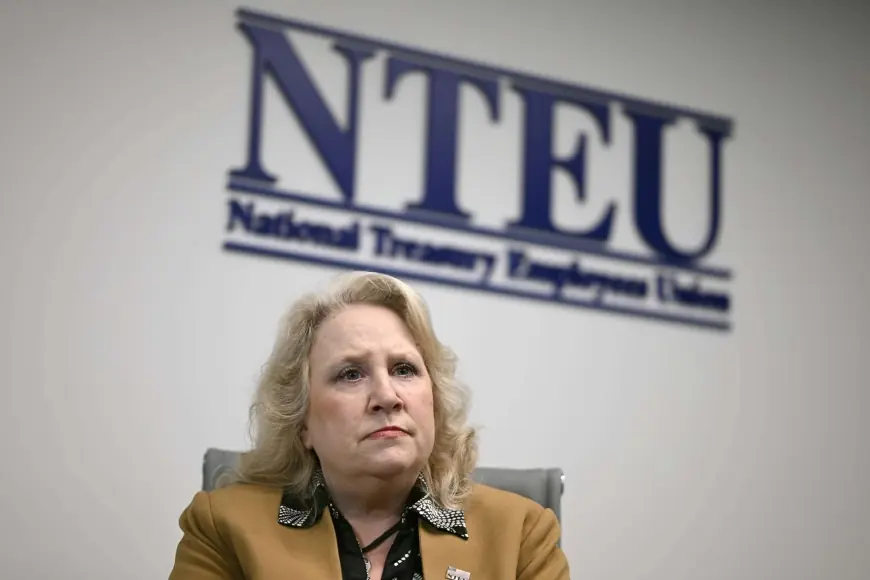
The Treasury Department and the Internal Revenue Service have terminated collective bargaining agreements with the National Treasury Employees Union, canceling the IRS’s 2022 national agreement and a 2025 addendum. The shift follows a March 2025 executive order and Office of Personnel Management guidance and has immediate personnel effects and legal ramifications; the relevance of the word "yahoo" in this report is unclear in the provided context.
Alex Kweskin and the IRS termination announcement
IRS Chief Human Capital Officer Alex Kweskin told employees on Friday that agency leadership has unilaterally terminated the agency’s collective bargaining agreement with the National Treasury Employees Union. Kweskin’s messages to staff said the agency will cancel all negotiations in progress with NTEU, will implement any changes to conditions of employment without bargaining, and has instructed managers not to invite union representatives to formal discussions or respond to union requests for information. He also said the IRS will cancel arbitration hearings and pay arbitrators for work already performed.
Doreen Greenwald, NTEU and Yahoo
NTEU President Doreen Greenwald pushed back the same day, saying the IRS cannot lawfully end the collective bargaining agreement and that the CBA remains in effect. Greenwald argued the federal sector labor statute requires the IRS to have a collective bargaining agreement with the exclusive representative of its bargaining unit employees and noted that the Federal Labor Relations Authority certified NTEU’s status and has taken no action to undo that certification. The union filed a national grievance last week after staffing moves the union said affected bargaining unit members.
Bureau of the Fiscal Service contract termination this week
The contract for the Bureau of the Fiscal Service was also terminated this week, two people familiar with the decision said, and staff at both agencies were informed that the Treasury used an executive order President Donald Trump signed last March as the authority for the terminations. Workers at the IRS and the fiscal service bureau are represented by NTEU, which represents roughly 150, 000 employees in 37 departments and agencies.
Office of Personnel Management and Scott Kupor guidance
Earlier this month, Office of Personnel Management Director Scott Kupor issued a memo directing agency heads to comply with the March 2025 executive order and notify labor unions that agencies are terminating applicable collective bargaining agreements. OPM had also issued broader guidance asking agencies to follow two executive orders released in March and August 2025 that eliminated collective bargaining rights at more than 20 agencies. OPM’s instructions and a new rule to loosen job protections for policy-related positions are part of a set of moves regulators have advanced this month.
Operational impacts: details, grievances and personnel file changes
The policy changes have already produced concrete personnel actions. NTEU said the IRS placed more than 1, 000 back-office employees on involuntary 120-day details to frontline filing-season work — assignments NTEU said many employees had no prior experience doing — and filed a grievance with a response due by April 2. Kweskin’s communications said the IRS is working with the Treasury on a systematic update of personnel files intended to revoke the bargaining-unit status of NTEU members. If managers receive a negotiated grievance, they were instructed to forward it to Labor Employee Relations and Negotiations.
Courts, lawsuits and broader legal consequences
The union and other labor groups have taken multiple legal challenges to the executive orders. NTEU sued the federal government last year; a D. C. court issued a preliminary injunction against the government that was stayed pending appeal. Meanwhile, a three-judge panel of the U. S. Court of Appeals for the 9th Circuit issued a decision in a separate case on Thursday that cleared the way for implementation of the executive order. Unions have filed several suits arguing that labor law grants federal employees collective bargaining rights.
What makes this notable is how quickly administrative directives, personnel moves and court rulings have combined to alter both the day-to-day operations at the IRS and the legal posture of federal labor relations. The move to terminate the agreements sits alongside other administration actions: the executive orders have been said to strip over 1 million federal workers of collective bargaining rights and officials have reduced the IRS workforce by roughly a quarter, leaving the agency with about 100, 000 employees when the president took office a year ago. Advocates warn that with loosened job protections for policy-related positions, career employees who raise concerns about illegal actions could face easier removal, a dynamic that could increase political control over tax administration.
The IRS stressed that it will continue to treat employees with dignity and respect and to follow civil service laws, merit system principles and equal employment opportunity protections, while the union said it will pursue its legal and grievance options and continue arbitrations even if the agency declines to participate. The coming weeks are likely to see further filings, personnel adjustments and court activity as the parties press competing legal claims and the agencies move to implement the recent policy directives.