

























US Attacks Iran: Major Combat Operations Ignite Regional Retaliation and Global Jitters

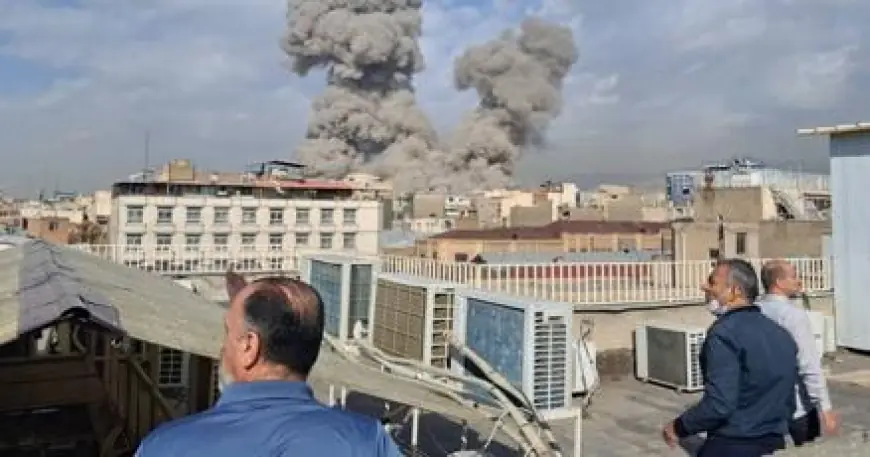
Early Saturday, Feb. 28, 2026, US attacks Iran in a coordinated wave of strikes alongside Israel, hitting multiple targets across Iran as President Donald Trump announced “major combat operations.” The escalation quickly widened beyond Iranian territory, with missile and drone activity reported across Israel and parts of the Gulf, prompting emergency measures, flight suspensions, and renewed fears of a broader regional war.
US Attacks Iran: What Happened and When
US attacks Iran unfolded in rapid phases, beginning with strikes that produced explosions and smoke in and around Tehran and other locations. Iran’s authorities moved to restrict air movement, and warnings of potential retaliation spread across the region as air-raid sirens sounded in Israel and civil-defense guidance expanded.
Trump’s statement framed the operation as a decisive military action, signaling a shift from pressure-and-deterrence toward open combat. The strikes appeared designed to degrade Iranian military capabilities and disrupt sensitive infrastructure, while Israel simultaneously raised its domestic emergency posture.
Iran’s Response and the Expanding Regional Front
Iran vowed a forceful response, and retaliation followed with missiles and drones aimed at Israel and at sites tied to US military presence in the Gulf region. Defensive intercepts were reported, and security measures intensified in several countries hosting US forces or supporting regional air operations.
The immediate result was a fast-moving cycle of action and counteraction: strike announcements, incoming-launch warnings, intercept claims, and emergency alerts. While full battle-damage assessments remained unclear through the morning, the operational tempo suggested both sides were preparing for additional rounds rather than a quick de-escalation.
Airspace Closures, Airline Disruptions, and Civil Alerts
The conflict rapidly disrupted civilian travel. Airlines paused or rerouted flights over large parts of the Middle East, with multiple carriers suspending service to affected hubs and adjusting long-haul routes to avoid high-risk corridors. Iran’s airspace restrictions compounded the disruption, pushing traffic into longer detours and creating knock-on delays.
Governments also issued safety guidance for citizens in the region, including advisories about remaining near shelters and limiting movement. In Iran, internet connectivity appeared sharply reduced, complicating on-the-ground verification and raising concerns about communication and emergency access for civilians.
Market Shock: Oil, Crypto, and Risk Assets React
Financial markets braced for volatility as traders priced in a heightened risk premium. Oil moved higher on fears that a prolonged conflict could threaten regional production, pipelines, or shipping routes. Crypto markets also swung lower, reflecting broad risk-off sentiment and rapid repositioning during a geopolitical shock.
Beyond energy and crypto, investors weighed the possibility of further strikes, spillover into neighboring states, and disruption to trade. The central market question became whether the conflict stays contained to military sites and direct retaliation—or expands into shipping, infrastructure, or wider cross-border attacks.
Key Immediate Impacts at a Glance
| Area | What Changed on Feb. 28, 2026 (ET) | Why It Matters |
|---|---|---|
| Regional security | Missile/drone alerts and intercept activity expanded | Raises risk of miscalculation and wider escalation |
| Air travel | Large-scale diversions and flight suspensions | Immediate economic impact and stranded travelers |
| Energy markets | Higher war-risk premium in crude pricing | Inflation and fuel-price sensitivity in US/UK/Canada/Australia |
| Communications | Apparent connectivity restrictions inside Iran | Limits emergency communication and transparency |
| Diplomacy | Negotiation pathways narrowed under open combat | Harder to restore de-escalation channels quickly |
What Happens Next for US, UK, Canada, and Australia
For Washington, the next 24–48 hours hinge on whether Iran’s retaliation intensifies or shifts toward asymmetric responses, including cyber activity or strikes by allied groups. Any additional attacks on US personnel or facilities could trigger further US action, deepening the confrontation.
Allies in the UK, Canada, and Australia face immediate decisions on force protection, travel warnings, and how to position diplomatically as the conflict evolves. Each also has domestic exposure through energy prices, aviation disruption, and broader market volatility.
The most urgent near-term indicator will be the pace and scale of follow-on strikes through Saturday and Sunday, Feb. 28–March 1, 2026 (ET). If both sides continue trading blows, the region could move from a high-intensity shock event into a sustained campaign—one that reshapes security calculations well beyond the Middle East.