























Nets Vs Celtics: Boston's historic shooting performance forces immediate lineup and matchup consequences as Tatum's return hangs in the balance

In the nets vs celtics game that landed as a blowout on the scoreboard, the immediate impact falls first on opposing defenses and Brooklyn's morale. Boston’s offense delivered one of the most efficient displays in the shot-clock era, while the Celtics also face a practical roster decision with Jayson Tatum’s possible return looming — a development that could reshape matchups for Sunday’s home game.
Who feels the impact now: matchups, rotations and league perceptions
Here’s the part that matters: teams preparing for Boston must account for a lineup capable of staggering shooting efficiency and bench scoring, not simply the presence or absence of a single star. The Nets will need to re-evaluate defensive matchups after falling well behind on both shooting and third-quarter control; the Celtics — riding a five-of-six win run since the All-Star break — can lean on newly integrated pieces while monitoring how a returning Tatum would alter roles.
Nets Vs Celtics — the box-score essentials and how the game unfolded
Boston beat Brooklyn 148-111, shooting a season-high 66. 7% from the field (52-of-78) and connecting on 22 three-pointers. The Celtics also posted a 64. 7% mark from beyond the arc, which translated into an 80. 8% effective field goal percentage; effective field goal percentage adjusts for three-pointers being worth more than two-point shots.
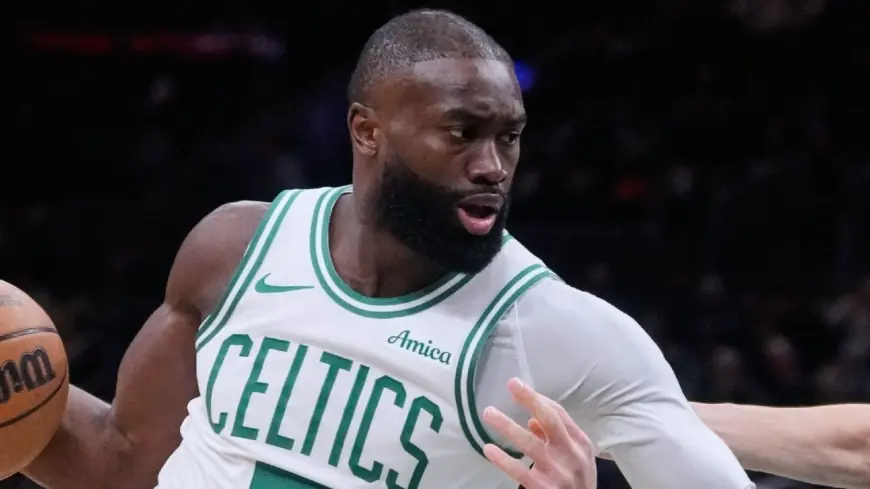
Jaylen Brown led Boston with 28 points, nine assists and seven rebounds. Nikola Vucevic added 28 points and 11 rebounds for his third double-double since joining the team. Payton Pritchard contributed 22 points, and Boston’s bench combined for 77 points. Michael Porter Jr. scored 18 for Brooklyn, which has lost seven straight games.
Boston opened decisive separation in the third quarter, outscoring Brooklyn 43-26; the Nets managed only seven points over the final 6: 23 of that period. In the pivotal quarter Boston shot 15 of 19 with 12 assists and hit 5 of 7 from three-point range. The Celtics’ lead reached as many as 41 points in the fourth, though they led just 66-57 at halftime despite shooting 62% (24 of 39) and 60% from three (12 of 20).
Turnover accounting in the available summaries shows a discrepancy: one account lists only three Celtics turnovers after halftime, while another notes only four turnovers in the second half — unclear in the provided context which figure is definitive. Brooklyn converted Boston turnovers into 12 points (the timing detail in the available text is unclear in the provided context).
Numbers and historical context
- Final score: Boston 148, Brooklyn 111
- Field-goal rate: 66. 7% (52-of-78) — season high for Boston
- Three-pointers made: 22; 3P percentage noted at 64. 7%
- Effective FG%: 80. 8% — identified as the highest in the shot-clock era
- Historical placement: the team’s overall shooting was cited as the club’s third-highest single-game percentage in the shot-clock era (since 1954–55), behind single games in 1984 and 1990
- Bench points: 77
- Team form: Boston has won five of six since the All-Star break; Brooklyn has lost seven straight
It's easy to overlook, but the combination of elite accuracy and deep bench scoring is what amplified this outcome beyond a usual star-led outburst.
Tatum’s status, schedule signals and the short clock to a decision
Attention now shifts to Jayson Tatum and an approaching scheduling window. Tatum ruptured his right Achilles tendon in May, 41 weeks ago, in the waning minutes of Boston’s Game 4 loss to the New York Knicks in the Eastern Conference finals. He practiced with the team’s G League affiliate two weeks ago and said he had not decided whether he would return, noting he felt a bit better each day and that returning would follow the plan; he did not provide a percentage estimate for his availability.
The Celtics are required by the league to release an initial injury report by 5 p. m. ET on Saturday ahead of Sunday’s home game against the Philadelphia 76ers; the Sunday game was moved into an 8 p. m. ET prime-time slot, which has generated speculation about a possible return. Boston enters that stretch at 39-20 and in second place in the Eastern Conference standings.
- Boston’s offensive outburst forces opponents to prioritize rotation depth and perimeter coverage over single-matchup strategies.
- Brooklyn faces immediate pressure to fix third-quarter defensive lapses and to address a seven-game losing string that now intersects with morale questions.
- The presence or absence of Jayson Tatum on Sunday will materially alter how Boston deploys its rotation; a confirmed return would change usage patterns for Brown and the newly acquired Vucevic.
- One forward sign to watch: the team’s official injury report due by 5 p. m. ET on Saturday; that filing will be the clearest public signal about availability in the short term.
- If you’re wondering why this keeps coming up, the team’s 66. 7% night and an 80. 8% effective field-goal rate are not flukes in isolation — they are practical reasons opponents must adjust immediately.
The real question now is how opponents and Boston itself adapt: will defenses force more isolation, or will lineups change to chase shooters? Either way, Sunday’s roster notices will be decisive for the near-term outlook.
Writer’s aside: What’s easy to miss is how quickly a single explosive performance can reshape opponent scouting priorities; the Celtics have momentum, but the practical test will be whether that efficiency sustains under different matchups and with Tatum’s status shifting week to week.