
























Mum and Daughter Discover Giant Coral: Possibly the Largest Known Colony on the Great Barrier Reef

A mother and daughter taking part in a community science project have identified an immense coral colony on the Great Barrier Reef that specialists say may be the largest documented and mapped colony in the world. The find matters because its size and apparent health offer a rare opportunity for long-term measurement and genetic study as bleaching events become more frequent.
Coral discovery by Jan Pope and Sophie Kalkowski-Pope
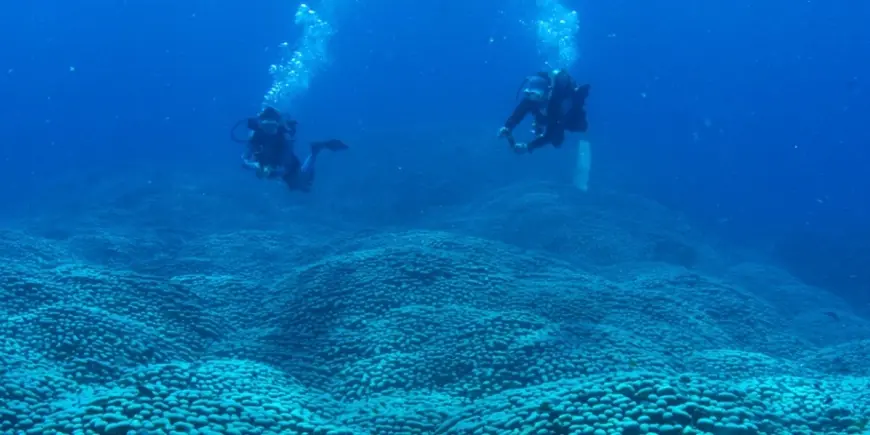
Jan Pope first encountered the structure while scuba diving late last year on an uncharted section of the reef a few hours offshore from Cairns. The colony stretched around her for hundreds of feet and she had never seen anything so large. Pope returned two weeks later with her daughter, Sophie Kalkowski-Pope, and both documented the site with extensive photos and video.
Measurements put the colony at 111 metres and 3, 973 sq m
Scientists and technicians used special underwater cameras, measurements and 3D computer models to map the formation. The structure measures approximately 111 metres in maximum length and covers an estimated 3, 973 square metres, which equates to more than 40, 000 square feet and about half the size of a soccer field. The 111-metre span is roughly the length of a Premier League football pitch.
Citizens of the Reef and the Great Reef Census
The discovery was made as part of the Great Reef Census, a citizen science effort led by conservation charity Citizens of the Reef that enlists divers, boat owners and volunteers from around the world. The census uses crowd-sourced images to monitor coral cover across the Great Barrier Reef and has surveyed about a quarter of the reef since 2020. The organisation called the structure "among the most significant coral structures ever recorded on the Great Barrier Reef, and the largest documented and mapped coral colony in the world. " After Jan and Sophie alerted the charity, its team made checks and coordinated mapping.
Species identification: Pavona clavus and a Solomon Islands comparison
The colony is composed of the coral species Pavona clavus, known for its capacity to form large, hardy aggregations. Tom Bridge, curator of corals at the Queensland Museum and senior lecturer at James Cook University, said Pavona clavus is uncommon and hard to find but capable of producing very large colonies where conditions allow. He noted that in 2024 a Pavona clavus colony measuring just over 1, 000 square metres was discovered in the waters of the Solomon Islands, underscoring that exceptionally large colonies do occur.
Scientific follow-up: genetic testing and monitoring plans
Researchers have highlighted two key questions: whether the formation is a single organism descended from one original polyp, or multiple colonies that have coalesced. Confirming that would require genetic testing across the structure; Kalkowski-Pope said more than 300 individual samples would be needed because of the colony's size. Serena Mou of the Queensland University of Technology Centre for Robotics helped produce the 3D maps and said the detailed models allow scientists to return in future months and years to make direct one-to-one comparisons and track change over time.
Context of the Great Barrier Reef and the risks from bleaching
The Great Barrier Reef spans roughly 130, 000 square miles, about half the size of Texas, and still contains vast unexplored stretches. Experts warn that very large coral colonies are becoming exceedingly rare as bleaching events grow in both severity and frequency. Bridge warned that for colonies that might be dozens or hundreds of years old, the chances of escaping the conditions that trigger bleaching are diminishing. Rising ocean temperatures make corals vulnerable to bleaching, and the find is being framed as a reminder of the importance of protecting remaining healthy reefs.
Pope, who has been diving on the Great Barrier Reef for 35 years, described the site as "a very surreal underwater landscape" that "looks like a rolling meadow. " Sophie, who works as marine operations coordinator at Citizens of the Reef and is an experienced diver and underwater photographer, wrote that the discovery was "so special to share" with her mother and that it shows how everyday people can contribute when given the chance.
Teams involved in the census and university partners will continue mapping and plan genetic sampling and repeat surveys to understand how the colony changes over time and to clarify whether it represents a single organism or multiple merged colonies.