






















How Monarch Legacy Of Monsters Season 2 Reorients Shared-World TV — Who Feels It First and Why

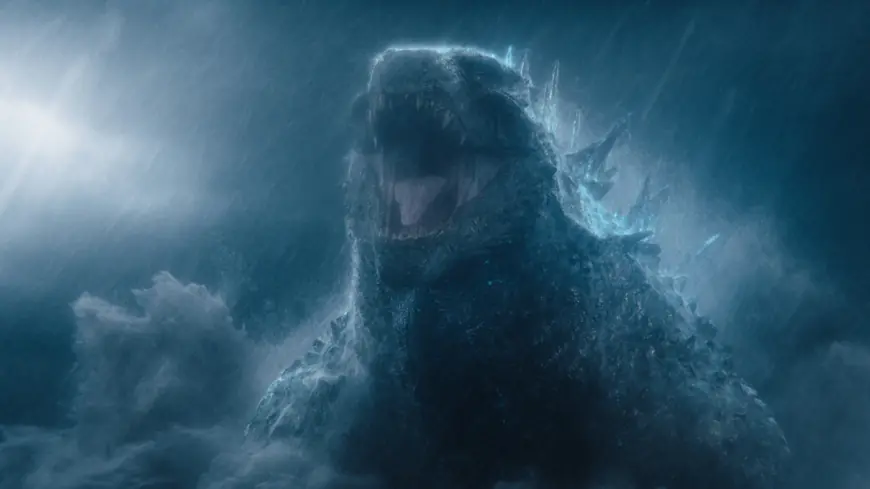
The clearest immediate beneficiary is the audience that wants a TV series to feel like a true corner of a film universe: monarch legacy of monsters season 2 hands them that coherency while still standing on its own. Creators and franchise architects also gain a fresh template — one that leans on nonhuman marquee characters, tighter stakes, and confident scale so that the series can connect to movies without turning into a waiting room for big-screen payoffs.
Monarch Legacy Of Monsters reshapes who a shared-universe show needs to serve
What changes first is the balance of expectations. By using titans — not Hollywood A-listers — as the shared currency, the series avoids the scheduling and budget traps that hampered early shared-universe TV experiments. Godzilla and Kong can appear without the logistical gymnastics that come with star-driven cameos; even when they’re absent the season features Titan activity, including a new creature called Titan X. That design choice makes the world feel filmic on a television budget and keeps the human story front-and-center instead of sidelined.
How Season 2 threads film events into its own story
Season 2 opens with a premiere titled "Cause and Effect" and takes place after the events of the 2014 Godzilla film, with the current action set in the year 2017. The series originally debuted in late 2023 and was a hit with fans and critics, prompting a second season to be announced months after the first ended; the new season premieres on February 27. The show splits narrative time between two half-siblings searching for their missing father in the present day and a group of researchers in the fledgling days of Monarch decades earlier, deliberately connecting those timelines.
Reviewers have noticed practical shifts: plots are easier to follow this season, Titans are far more present, and a mix of Kong, Godzilla and the original Titan X receive generous screen time bolstered by feature-film-quality visual effects. Pace-wise the first half moves rapidly with major set pieces and plot turns across both timelines; the back half slows before introducing a clever device that delivers emotional closure. Critics describe the kaiju fights as explosive and brutal, and note there are some exposition dumps and narrative drops used to propel the storyline.
Characters, casting and the series’ human engine
Here’s the part that matters: people still care about the people. The series is broadly praised for making its human characters compelling in a universe dominated by monsters. The human ensemble is seen as the most consistently engaging since the 2017 Kong: Skull Island movie. Performers called out for anchoring the season include Anna Sawai and Mari Yamamoto, and the cast across seasons also features Kurt Russell, Wyatt Russell and Amber Midthunder. The main protagonist May is played by Kiersey Clemons; Brenda Holland, an Apex CEO in the story, is played by Dominique Tipper. May’s harrowing escape from Skull Island and a tense exchange with Brenda are pivotal moments that reveal larger plans for Titan X and the other kaiju.
Apex Cybernetics, coexistence plans and franchise ripple effects
The season leans into the presence of a rival tech firm, Apex Cybernetics, and in doing so fills gaps between the series and the films. Brenda Holland’s line of thinking — a pragmatic push toward coexistence with Titans — echoes ideas earlier explored in the franchise and is positioned as forward-looking within the Monarch timeline. At this stage in the story that notion hasn’t taken hold broadly, but subsequent films in the universe make coexistence a central thread. The series’ portrayal of Apex hints at future mechanical escalation (the creation of Mechagodzilla is cited as a later, spectacular disaster linked to Apex) while also scaffolding a different kind of follow-on relevance for a divisive sequel that argued for living with Titans.
- 2014 — the original Godzilla film provides the early cinematic touchstone referenced by the series.
- 2017 — the season’s present-day action is explicitly set in this year.
- Late 2023 — the series debuted; a second season was greenlit months after the first concluded, with the new season premiering on February 27.
It’s easy to overlook, but the creative choice to foreground titans rather than bank on repeat human characters is the bigger tactical shift here; it both sidesteps the A-list cameo problem and gives the show more freedom to feel like part of the film universe without being subsumed by it. A short aside: the show’s methodical retconning — such as making Brenda’s coexistence thinking feel inevitable — quietly makes other franchise entries more coherent than they previously read.
Critical reaction centers on two things at once: season 2 is praised for cinematic Titan battles and it’s celebrated for deeper character work, even when critics flag occasional exposition-heavy moments. The real question now is whether this model will become the preferred blueprint for other film-to-TV tie-ins or remain a MonsterVerse-specific success.