























Scary Movie Reboot Economics: Scream 7’s $59M Debut Rewires Fans, Talent and Studio Strategy

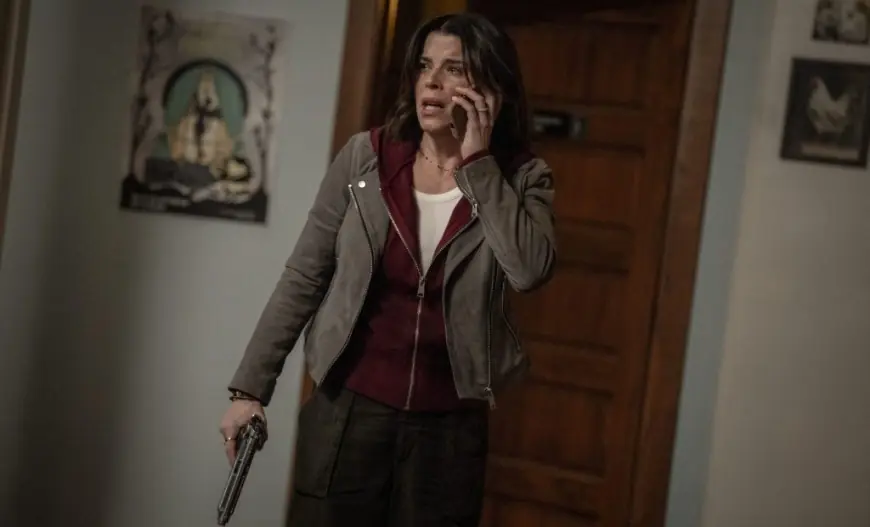
For fans, talent and studio balance sheets, the latest scary movie weekend matters because it rewrites how nostalgia translates into immediate box-office dollars. Scream 7 is headed to a franchise-opening record of $59 million after a $28 million Friday that included previews, with a $7. 8 million single-day preview figure and earlier preview tallies also in circulation. Neve Campbell’s return and Kevin Williamson in the director’s chair are being credited for shifting word-of-mouth and pre-release enthusiasm in ways that affect opening-weekend economics and marketing plays.
Immediate impact on audiences, cast and studio calculations
Here’s the part that matters: the film’s big first-day numbers shift how studios think about front-loaded horror releases. Industry chatter points to strong early turnout driven by nostalgia and the return of legacy talent, which has immediate implications for marketing spend and distribution pacing. Some rival releases are modeled at well over $60 million for the weekend, but caution remains because horror titles can concentrate grosses in the first day or two.
Scary Movie metrics: previews, social reach and front-load risk
Preview performance and social-universe reach are central to interpreting the opening. The film posted $7. 8 million in preview figures for a single Friday, and another promotional update noted $7. 5 million in previews earlier in the week. By comparison, the 2022 revival posted $13. 3 million in previews/first Friday—44% of its three-day total of $30 million (and $33. 8 million over a four-day MLK weekend). Scream VI’s combined previews/first Friday was $19. 2 million, which represented 43% of that film’s $44. 4 million opening.
A pre-release social analytics snapshot put the current film’s universe at 264. 5 million, about 11% above typical horror-franchise norms across major platforms, though that reach trails the previous entry’s 360. 5 million by roughly 27%. Performer social followings show a gap: Neve Campbell contributes 672, 000 social fans, while another franchise star has an established pre-activation audience of 20. 7 million. Conversation tone is described as mixed-positive, with improved word of mouth linked to Campbell’s substantive return rather than a cameo.
Event particulars and box-office context
Scream 7 posted a $28 million Friday that included previews and is being projected to reach a franchise-best three-day opening of $59 million. The prior franchise opening record was Scream VI with a $44. 4 million domestic start. Industry commentary notes the weekend frame looks to be ahead of the same date range from a year ago, when comparable releases totaled $54. 4 million. One market ticker moved higher post-announcement, with PSKY at $13. 51 and a 21% uptick at the time of the post.
Questions remain about how front-loaded the run will be—horror films often concentrate grosses early—and one studio interaction mentioned in coverage is incomplete in the provided context: "Paramount didn’t return request for"—unclear in the provided context.
Creative return and the film’s tone: Williamson, Campbell and a brutal opening
Creatively, Scream 7 re-centers Neve Campbell’s Sidney Prescott and places Kevin Williamson in the director’s chair. Williamson’s history is noted: he earned his first screenplay credit in 1996 for the original film and later wrote Scream 2 and Scream 4. For this installment he shares screenplay duties with James Vanderbilt and Guy Busick, who wrote entries in the series previously, and Williamson also directs.
The movie opens with a violent sequence at Stu Macher’s house, now an "experience destination" packed with Stab memorabilia, crime-scene outlines and plaques marking where characters died. Characters introduced in this segment include Scott (played by Jimmy Tatro), a devoted "Stab head, " and his girlfriend Madison (played by Michelle Randolph). Madison, described with a pink hoodie and long blonde hair, knows horror films and fights back but becomes a shocking early casualty—setting a tone that intentionally rejects pure nostalgia and signals a more vicious level of violence than the original Scream. That intensity is compared to trends that followed earlier franchise entries and to a prolonged assault sequence in a recent installment featuring Jenna Ortega.
- Preview tallies: $7. 8M (Friday), earlier mention of $7. 5M preview figure.
- Friday total including previews: $28M; projected opening: $59M.
- Previous franchise opening: Scream VI — $44. 4M domestic; its previews were $5. 7M and global debut $66. 4M.
- 2022 revival previews/first Friday: $13. 3M (44% of its three-day $30M; four-day MLK weekend $33. 8M).
If you’re wondering why this keeps coming up: the return of franchise staples to central storytelling is directly tied to the improved word of mouth and preview performance noted above, rather than mere promotional cameo appearances.
Key affected groups include theatrical investors, legacy-cast performers who can drive opening-night turnout, and studios weighing marketing strategies for front-loaded horror. The real question now is how sustained the box-office legs will be after a front-heavy start.
Time layer: the franchise began with a credited screenplay in 1996, saw a notable revival in 2022 with strong preview share, and posted a larger 2023 opening that set the recent benchmark—details that frame why this current opening is being measured against those earlier thresholds.
It’s easy to overlook, but the combination of legacy creative leadership and a deliberate, shock-focused opening sequence creates a clearer link between casting choices and immediate commercial returns—an angle studios will track closely in the coming days.