























What Is Family Voting: Observers Flag Secret-ballot Breaches at Gorton and Denton

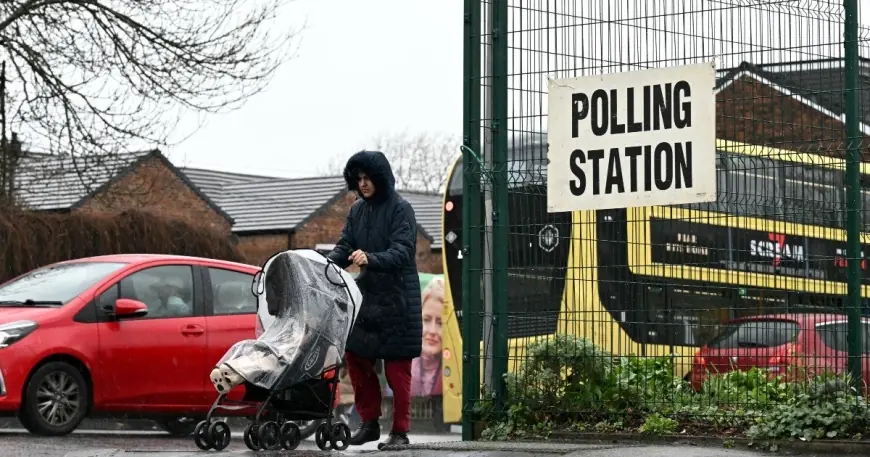
Nigel Farage has reported allegations of "family voting" at the Gorton and Denton by-election to Greater Manchester Police and the Electoral Commission after independent observers documented multiple apparent breaches of the secret ballot. The question of what is family voting has moved from definition to enforcement as Democracy Volunteers says it recorded 32 cases while observing 545 voters, prompting calls for police and electoral scrutiny.
What Is Family Voting — definition and legal context
What Is Family Voting is now a central issue in the constituency. Observers and fact‑checkers have been debating what is family voting and how to detect it: it is described as accompanying voters into or near polling booths and influencing them into voting in a particular way, for example by entering the polling booth with them. The Ballot Secrecy Act enacted in 2023 made such conduct more clearly a breach of the secret ballot, and a 2022 government press release had earlier noted cross‑party concerns about so‑called family or community voting in some areas.
Democracy Volunteers' observations in Gorton and Denton
Democracy Volunteers, the organisation founded by Dr John Ault and supported by the Conservative peer and psephologist Prof Robert Haywood, deployed four accredited election observers across the constituency. The team attended 22 of the 45 polling stations while polls were open, spending between 30 and 45 minutes in each location and working in pairs.
The group said it observed family voting in 15 of the 22 polling stations reviewed, logging 32 cases in total and nine cases in a single polling station. Its observers sampled 545 voters casting votes and concluded that 12% of those voters either directed or were affected by family voting; the 15 of 22 figure represents 68% of the polling stations they checked. The director, John Ault, said the levels seen were the highest in Democracy Volunteers' 10‑year history of observing elections in the UK and that the data was unusually high compared with other recent by‑elections.
The team also noted instances of voters being turned away—each case attributed to registration rules for Westminster elections, for example when voters had EU citizenship and were eligible only for local contests—and they reported seeing voters taking photographs of ballot papers. Observers recorded "one person being authorised to vote despite them already"—unclear in the provided context.
Nigel Farage reports allegations to Greater Manchester Police and the Electoral Commission
Following the observers' statement, Nigel Farage lodged a formal complaint with Greater Manchester Police and the Electoral Commission and urged a full investigation. He asked the watchdog to work with police "with a view to prosecutions" and to assess whether the extent of irregularities might call the validity of the election result into question. Farage characterised what was witnessed as "deeply concerning" and warned of potential coercion with postal votes, saying Reform UK would push for action if it did not follow.
At the by‑election, Reform UK finished second to the Green Party by more than 4, 000 votes, a margin Farage has challenged in his statements about the conduct of voting in parts of the constituency.
Electoral Commission and Greater Manchester Police begin review
The Electoral Commission said it was taking the claims very seriously and would carefully consider the report, noting it was in close contact with the returning officer and Greater Manchester Police to speedily and carefully review the concerns and all information available. Greater Manchester Police confirmed a report has been made and said it was in the process of reviewing that report and would provide a further update in due course.
Political responses from Labour, the Greens and Reform UK
Political leaders offered a range of reactions. The Green Party pushed back against suggestions the result was undermined, with a spokesman describing the allegations as an attempt to delegitimise a "historic" by‑election win achieved by a comfortable margin and saying the victory showed Greens could beat Reform despite the latter's funding. Labour called the reports "extremely worrying and concerning"; Anna Turley, the Labour party chair, said evidence and the full report must be seen before deciding what authorities should investigate. Green leader Zack Polanski said he would back an investigation and supported full transparency about the democratic process. Reform UK chair David Bull said "electoral fraud is a stain on democracy" and expressed support for reporting and ensuring any process is carried out in the spirit and fairness of the law. Separately, the broader national Labour leader said he would fight on after the by‑election defeat to the Greens.
What makes this notable is the convergence of a detailed observer dataset—four accredited observers, 22 polling stations examined, 32 alleged incidents and a 12% effect rate on those observed—with formal complaints to both policing and electoral authorities, which has moved the matter from local observation to institutional review and potential legal action.