























Claude at the center of a Pentagon standoff that could change how the US buys AI

The immediate consequence is stark: Anthropic’s leadership has drawn a red line that could force the US defence establishment to either accept narrower contractual safeguards or proceed without the company’s technology. CEO Dario Amodei framed the choice as preferable to allowing tools such as claude to be applied in ways he says would weaken democratic values, even if that means leaving a major government contract on the table.
What this could mean for procurement and access to Claude
By refusing the Pentagon’s demand that it accept "any lawful use, " Anthropic has elevated the dispute into a possible policy test for how the government secures advanced AI. The Department’s push included threats to remove the firm from its supply chain and to pursue authorities that could compel compliance; the company has said it would rather be offboarded than permit use cases it objects to. Here’s the part that matters: those moves are not theoretical—officials have signalled specific tools that could be deployed if Anthropic does not accept new contract language.
How the stand-off unfolded
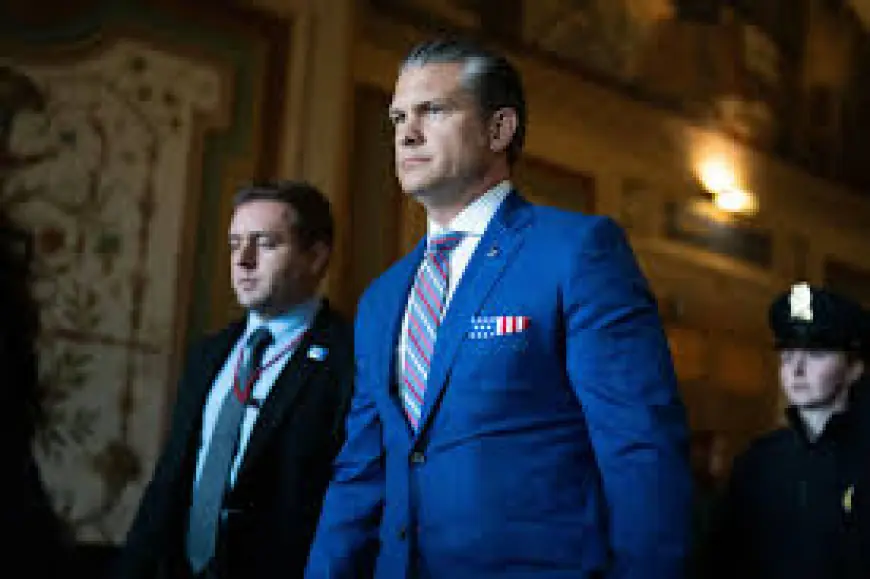
The exchange followed a meeting between Dario Amodei and US Secretary of Defense Pete Hegseth. Two days after that meeting, Anthropic made clear it would not accept contractual language they say would permit mass domestic surveillance or fully autonomous weapons. The company also said it received updated contract wording from the Department on a Wednesday night that it viewed as offering little real protection and containing legal phrasing that could nullify safeguards.
Positions and public pushback
Anthropic’s leadership has emphasised that the contested use cases—mass domestic surveillance and fully autonomous weapons—were never part of its contracts with the Department of War and should not be added now. it would help ensure a smooth transition to another provider if the Department chose to offboard it.
From the Department side, a senior defence official criticized Amodei in a social media post and in a subsequent interview argued that the military should be trusted to use AI appropriately. That official also maintained that the kinds of uses Anthropic fears are already barred by law and Pentagon policy and defended the Department’s reluctance to accept Anthropic’s requested contract language by invoking the need to prepare for what China is doing.
Forces the Pentagon has threatened to deploy
Officials have raised two concrete pressure points. First, the Defence Production Act was mentioned as a mechanism that could be invoked if Anthropic does not comply; that authority lets a president designate certain companies or products as essential so the government can require them to meet defence needs. Second, the Department could label the company a "supply chain risk, " a designation meant to mark a provider as not secure enough for government use.
Key takeaways
- Anthropic will not accept contract language it believes could permit mass surveillance or fully autonomous weapon use of its systems.
- The contested wording was delivered in an updated contract draft on a Wednesday night and was judged by the company to offer minimal progress.
- If offboarded, Anthropic says it will work to enable a smooth transition to another provider.
- Defence officials have publicly defended their stance and pointed to broader strategic concerns tied to China.
- Officials have threatened invocation of the Defence Production Act and designation as a supply chain risk if compliance is not achieved.
- An anonymous former Department of Defense official described the grounds for those measures as extremely flimsy.
The real question now is whether the Department will escalate to statutory tools or retreat to negotiate clearer, binding safeguards that satisfy both sides.
Two small timing details add context: the CEO’s remarks came two days after the meeting with the Secretary, the contract wording update arrived on a Wednesday night, and a public rebuke from the Undersecretary appeared on a Thursday night; separately, the term "Department of War" was invoked as a secondary name for the Defense Department under an executive order signed by US President Donald Trump in September. These markers show the dispute moved quickly over days rather than weeks.
What's easy to miss is that Anthropic framed its stance as operationally practical: it offered to support a transfer to another provider if forced out, suggesting the company intends to limit reputational as well as contractual fallout.
A representative of the Defence Department could not be reached for comment on the record. An Anthropic spokeswoman said the narrow safeguards at the heart of negotiations have been the central issue for months and that new contract language looked like a compromise on paper but included legal phrasing that could nullify those safeguards.
Emil Michael, the US Undersecretary for Defense, attacked Amodei on social media and later said in an interview that, at some level, the military must be trusted to do the right thing. He also said the uses Anthropic fears are already barred by law and Pentagon policy. A former Department official who asked not to be named called the Secretary’s proposed measures extremely flimsy.
The situation remains active and details may evolve as negotiations continue.