























Thunder Vs Pistons: Pistons Rally Past Depleted Oklahoma City as Bench Sparks Victory

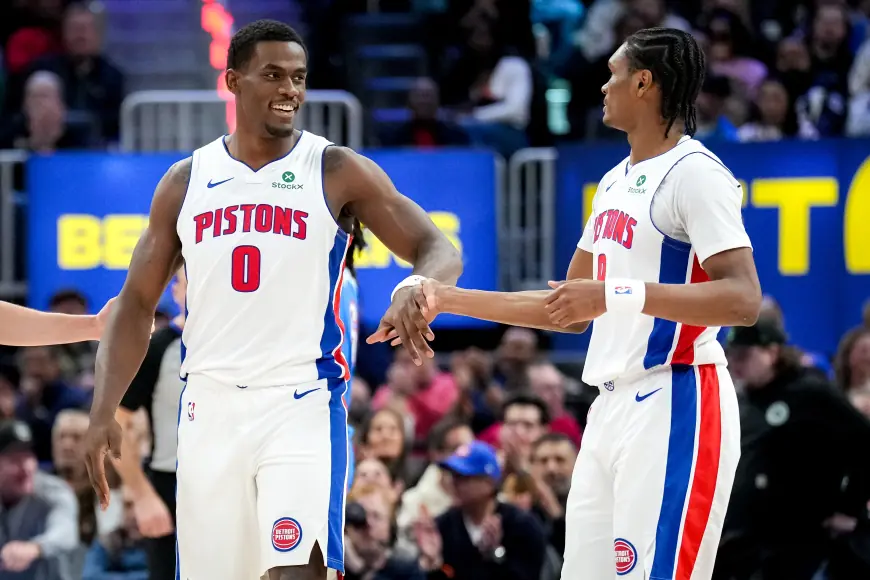
Detroit defeated a heavily shorthanded Oklahoma City team in a game that underscored depth and timely plays. The thunder vs pistons matchup swung on interior scoring from Jalen Duren and energetic contributions from Detroit's role players, even as Oklahoma City rallied late.
Injuries and availability for Oklahoma City
Oklahoma City entered the game missing a majority of its rotation: Shai Gilgeous-Alexander, Jalen Williams, Isaiah Hartenstein, Chet Holmgren, Alex Caruso and Ajay Mitchell were all listed as out. With those absences, the Thunder turned to second- and third-stringers; seven different Oklahoma City players scored in the first quarter as the club briefly led 17-16 halfway through that period.
Early momentum and a 15-2 run
That bench production helped Oklahoma City to a decisive 15-2 run that closed the first quarter and left the Thunder ahead 34-22. Even with the depleted roster, Oklahoma City’s depth allowed it to remain competitive early; coaches used zone looks later as an adjustment when Detroit began to pull away.
Thunder Vs Pistons: Jalen Duren and Detroit’s inside attack
Detroit found its primary offense through Jalen Duren. Early in the game, Duren led Detroit in field-goal attempts and logged eight points and three rebounds; by halftime he was the focal point in the paint as the Pistons closed the second quarter on a 10-2 run to take a 58-52 lead. Duren finished the half leading the team and ultimately paced Detroit with 18 points and seven rebounds, as Oklahoma City lacked an answer down low and Jaylin Williams was the lone Thunder big available to match him.
Bench lifts: Ron Holland, Paul Reed and Ausar Thompson
Detroit’s bench — described in coverage as the team’s 9-to-5 crew — supplied critical possessions. Ron Holland and Paul Reed combined for offensive rebounds that created extra chances, including a sequence where the pair pulled three straight boards over the Thunder defense and Holland converted a putback. Caris LeVert picked up his third foul in the second quarter, prompting coach decisions that sent Ausar Thompson into the game.
Ausar immediately impacted the contest in the second quarter: he blocked a shot pinned against the backboard and in the next sequence threw a transition alley-oop to Jalen Duren. Coverage noted Thompson’s ability to operate with the ball when opponents did not respect his three-point shot — he frequently attacked, kicked to open shooters, and scored from the right elbow.
Cade Cunningham, third quarter surge and rotation notes
Detroit extended its advantage in the third quarter, forcing an Oklahoma City timeout after Cade Cunningham delivered a chase-down block and the Pistons converted in transition on a bucket by Duncan Robinson to push the margin into double digits. Kevin Huerter, newly acquired, received minutes late in the quarter as Detroit continued to manage rotations around Duren’s presence in the paint.
Late Thunder charge and shooting from deep
With Detroit up 94-80 heading into the fourth, Oklahoma City shifted toward perimeter offense. The Thunder attempted a heavy volume of threes, including 10 attempts from Jaylin Williams, who finished with a career-high 30 points. Oklahoma City shot 18-for-49 from three-point range as a team; coverage noted Detroit’s season-high in attempts for a single game is 43. Those triples fueled an 11-2 run that trimmed Detroit’s lead to five with 5: 30 remaining.
Guards Aaron Wiggins, Cason Wallace and Jarden McCain each contributed at least 20 points in the comeback push. Every time the Thunder made the game close, Cade Cunningham continued to find ways to attack and keep Detroit a step ahead. The account concluded that the overall performance fell short of what might be expected in tighter circumstances.
What makes this notable is how Detroit managed the game without allowing Oklahoma City’s late three-point barrage to fully erase a lead built on interior dominance and timely bench contributions. The result highlighted both the importance of depth when a roster is depleted and the challenge of defending sustained perimeter shooting late in games.