


















Cognizant Classic 2026 and the Money-Driven Reshuffle: Why a Wave of WDs Exposes Tour Tradeoffs

The immediate consequence is simple: a tournament that once launched the Florida swing is now fighting for legitimacy. The cognizant classic 2026 finds itself squeezed by a new calendar that funnels top players into a handful of massive, limited-field events — and recent withdrawals make that squeeze visible. For the Palm Beaches, the practical change is fewer stars teeing it up and a field that looks more like a stepping stone than a destination.
Cognizant Classic 2026 — what the shift means for the event’s status
Here’s the part that matters: the Cognizant Classic’s decline in marquee names makes it harder to market and to justify its traditional purse and place in the schedule. The Signature Event model has created two tiers — star-studded, limited-field events with very large purses and full-field weeks that now mostly carry players hoping to qualify into the bigger events. That segmentation has already translated into visible consequences this week, and it is driving conversation about whether the tournament remains a prime stop or a casualty of scarcity-focused scheduling.
What changed on the calendar and who pushed the field to thin out
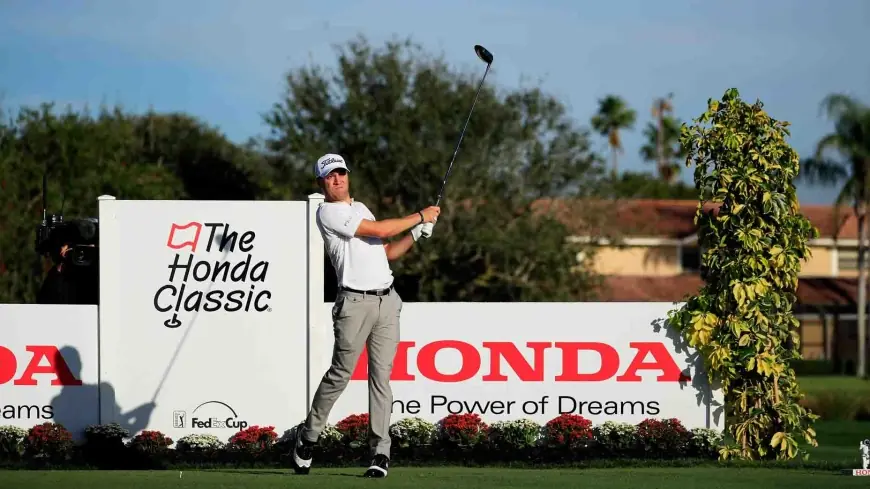
Over the last decade-plus the tournament shifted from a prime Florida stop to a squeezed position. In the mid-2010s the event — formerly known as the Honda Classic — was a must-watch at PGA National and drew past champions such as Rory McIlroy, Justin Thomas, Adam Scott and Rickie Fowler; other stars who have teed it up include Tiger Woods, Justin Rose, Sergio Garcia and Brooks Koepka.
That relative strength dated from a time when the Players Championship was played in May, leaving room on the calendar between Riviera and the old WGC at Trump Doral, and when purses around $6 million made it competitive with venues like Pebble Beach, Riviera and Bay Hill. The timeline of change includes several clear pivots:
- Mid-2010s: Honda Classic was a prominent stop in the Florida swing with roughly $6 million purses and strong fields.
- 2019: The Players Championship moved to March and the Arnold Palmer Invitational was slotted between it and the Honda, shifting the order.
- 2023: The arrival of LIV Golf and the launch of the Signature Event model concentrated top players into higher-purse West Coast events ($20 million) and into the API ($20 million) and the Players ($25 million).
Field fallout this week and who remains
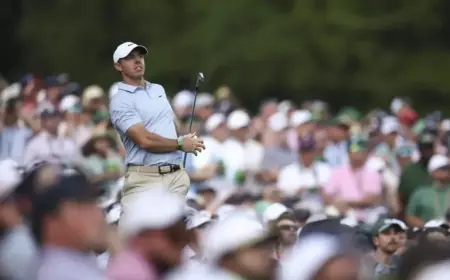
The vulnerability of the Cognizant’s position was underscored when three pre-event favorites — Ben Griffin, Adam Scott and Jacob Bridgeman — withdrew from this week’s field. The tournament now lists just one player inside the world top 30 (Ryan Gerard) and only eight players inside the top 50. Brooks Koepka, Billy Horschel and Gary Woodland are among those still committed, but the overall buzz has faded compared with when the event functioned as the start of the run to the Masters.
Betting, DFS and course profile: how to approach a weak, tricky field
If you’re wondering why this keeps coming up, the betting angle matters because a weaker field and a penal course change the framing from outright favorites to placement equity. After a week that reminded many how humbling golf can be, the recommended approach is defensive: manage exposure, protect bankroll and prize placement over chasing winners in a puzzling lineup.
- Odds listings (with ties) were shown by a major sportsbook and are subject to change: a set reads Top 20 +168, Top 10 +360, Top 5 +760, To win +4700; another reads Top 30 +255, Top 20 +375, Top 10 +880, Top 5 +2050, To win +16500.
- Christiaan Bezuidenhout ($8, 700 on DFS pricing) profiles as a short-game specialist: high marks around the green, strong putting within this field, good scrambling and bogey avoidance, and fairway-finding that suits PGA National’s recovery demands.
- Andrew Putnam ($6, 800) is a placement candidate — top-10 around the green, top-20 in putting, top-five in bogey avoidance and driving accuracy; recent results include a T2 at American Express and a missed cut at Torrey Pines (the latter is less relevant on a course that doesn’t reward length).
- Nicolai Højgaard is listed at $9, 400 on DFS pricing; the available context about his standing ends mid-sentence and is unclear in the provided context.
Both Bezuidenhout and Putnam were singled out as solid DFS options, and the write-up emphasized that betting and fantasy share the same core inputs: course fit, pricing inefficiencies and outcome probabilities. The pragmatic advice was to treat long-shot outright plays like lottery tickets and to prioritize cut-making and low-damage scoring on a course that punishes big numbers.
It’s easy to overlook, but the practical lineup effect is immediate: withdrawals amplify the course’s reward for touch and precision over brute distance, shifting the projection model for bettors and roster builders alike.
What the next moves could look like
New leadership on the tour — including the new CEO and a Future Competitions Committee chaired by Tiger Woods — is actively reworking the schedule with scarcity in mind. That effort already helps explain why the Cognizant now follows two West Coast $20 million events and sits ahead of the API and the Players; those sequencing pressures are central to why players prioritize some weeks over others. The real question now is whether scarcity will preserve the top events while hollowing out traditional weeks like the Cognizant, or whether the format can be adjusted to restore balance.
Writer's aside: the pattern is familiar from previous calendar shifts—top players congregate where the money and status concentrate, and historic stops must either reinvent their value proposition or accept a new role.