

















Thunder Vs Pistons: Detroit Prevails as Oklahoma City Plays Without Top Six

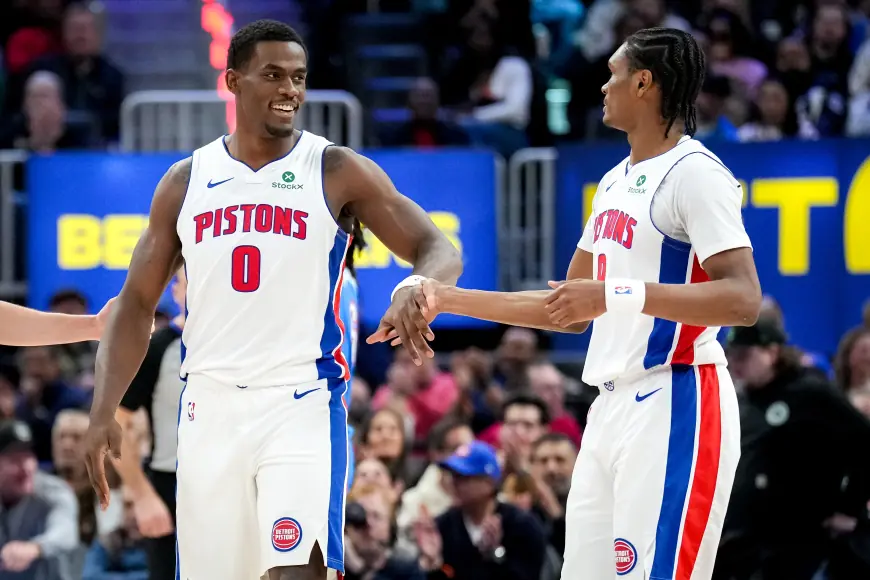
The Thunder vs Pistons matchup unfolded as a test of depth, with Oklahoma City missing the bulk of its rotation and Detroit converting that disruption into a home victory. The absence of multiple starters forced the Thunder’s reserves into extended roles, a dynamic that shaped the game from a 17-16 opening lead through a 94-80 margin into the fourth quarter.
Thunder Vs Pistons: Depleted Oklahoma City rotation
Oklahoma City entered the game without Shai Gilgeous-Alexander, Jalen Willians, Isaiah Hartenstein, Chet Holmgren, Alex Caruso and Ajay Mitchell, leaving the Thunder to rely on second- and third-string players. The bench response was immediate: Oklahoma City held a 17-16 lead midway through the first quarter and then saw seven different Thunder players score in the first period, finishing that quarter on a 15-2 run to lead 34-22.
Jalen Duren dominates inside for Pistons
Detroit countered through size. Jalen Duren repeatedly attacked the paint early—he led the team in field-goal attempts and posted eight points and three rebounds in an early stretch—and finished the half with 18 points and seven rebounds as Detroit closed the second quarter on a 10-2 run to lead 58-52. The absence of Oklahoma City’s big men left Jaylin Williams as the lone interior defender most often assigned to slow Duren, and Duren’s presence down low consistently produced extra looks for the Pistons.
Ausar Thompson's impact after replacing Caris LeVert
When Caris LeVert picked up his third foul, Ausar Thompson entered and altered the game on both ends. Thompson produced a signature sequence—a block pinned against the backboard that turned into a transition alley-oop to Duren—and operated with the ball effectively when opposing defenders sagged off his jumper. He repeatedly attacked closeouts, kicked to open shooters and converted from the elbow, supplying a spark that helped Detroit reclaim the lead late in the second quarter.
Ron Holland and Paul Reed create extra possessions
Detroit’s 9-to-5 group supplied energy on the glass. Ron Holland and Paul Reed combined for multiple offensive rebounds, including a sequence of three straight boards that led to a Holland layup, giving the Pistons extra possessions at a crucial stretch. The pair’s work on the offensive glass helped offset early defensive lapses and aided the team’s midgame surge.
Jaylin Williams' career night and Thunder three-point surge
Outside shooting fueled Oklahoma City’s comeback attempts. Jaylin Williams attempted 10 three-pointers and finished with a career-high 30 points, while the Thunder collectively shot 18-for-49 from long range. Oklahoma City’s perimeter push trimmed Detroit’s lead in the fourth: an 11-2 Thunder run made the game a five-point contest with 5: 30 remaining. Guards Aaron Wiggins, Cason Wallace and Jarden McCain each contributed at least 20 points during the rally, forcing Detroit to rely on its interior game and veteran scoring to stay ahead.
Cade’s defense and Detroit’s late control
Detroit extended the margin through the third quarter, taking a 94-80 advantage into the final period after a sequence that included a chase-down block by Cade and a transition bucket from Duncan Robinson that pushed the lead into double digits. Newly acquired Kevin Huerter received minutes late in the quarter. Oklahoma City employed a heavy zone defense in the fourth, but Cade consistently broke through it to keep the Pistons ahead when the Thunder crept back into contention.
What makes this notable is how injuries reshaped roles: the Thunder’s missing starters created repeated matchups that favored Detroit’s interior scoring and offensive rebounding, while Oklahoma City’s reliance on three-pointers produced periodic surges but left it vulnerable when those shots cooled. The timing matters because Detroit’s late second-quarter run and sustained third-quarter control established a cushion that absorbed the Thunder’s fourth-quarter charge.
By the final frame Detroit’s combination of Duren inside, Thompson’s playmaking and sustained offensive rebounding preserved the win against a Thunder roster forced to circulate new lineups. It wasn’t the performance you’d hope to see, but the result reflected the immediate consequences of the Thunder’s extensive absences and the Pistons’ ability to convert that mismatch into a victory.