
























Total Lunar Eclipse Blood Moon to paint the sky March 3

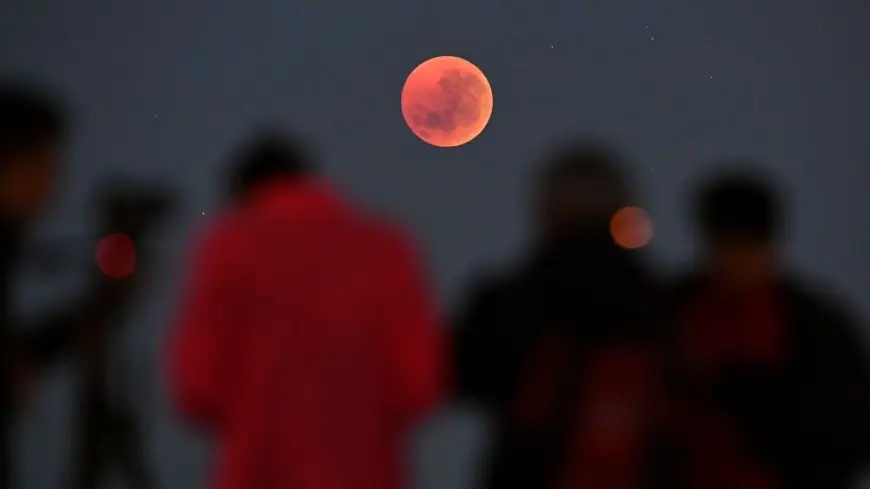
The Total Lunar Eclipse Blood Moon on March 3, 2026, will turn the moon a coppery red in the early hours, offering skywatchers across North America, Australia, New Zealand and eastern Asia a dramatic sight and the first lunar eclipse of 2026.
Total Lunar Eclipse Blood Moon timing and duration
Totality — when the moon is fully immersed in Earth’s shadow — will last 58 minutes on March 3, running from 6: 04 a. m. EST (1104 GMT) to 7: 02 a. m. EST (1202 GMT), giving observers in the path nearly an hour of the deep red coloration that earns the event the name blood moon.
Where the eclipse will be visible
The long-lasting blood moon on March 3 will be visible across the night side of Earth, with the best views expected from the western half of North America, Australia and the Pacific; billions of people live within the path of the eclipse, though exactly what an observer sees will depend on their location.
How the eclipse creates a blood moon
A total lunar eclipse occurs when Earth sits between the moon and the sun; with the moon in Earth’s shadow, only sunlight filtered through Earth’s atmosphere reaches the lunar surface, turning it red and producing the coppery hue observers will see on March 3.
Minnesota viewing notes and local timing
Minnesotans who set alarms for 5 a. m. on March 3 will have a rare astronomical treat: a total lunar eclipse visible early that morning; those who wake early may see a yellow sun rising above blue skies while a red moon sets on a darkened western horizon. Astronomers say the event will tint the moon red for nearly an hour on March 3 and will be visible in east Asia, Australia, the Pacific and the Americas.
Context from astronomers and agencies
John Zimitsch, vice president of the Minnesota Astronomical Society, urged people to look up and experience the event in person, saying the ancients saw the moon turn an orange ruddy color and encouraging observers to "look up" and put down their cellphones; that advice appears alongside the practical timing and viewing tips for March 3. Officials at the National Aeronautics and Space Administration said March 2025 was the last total lunar eclipse visible to the Americas, and the last one before that was three years earlier.
Next eclipses and visibility notes
Astronomers predict the next total lunar eclipse will be on New Years Eve 2028, while the next total lunar eclipse visible in the Americas will not occur until June 2029. Observers who want exact local visibility should check a local city entry on Time and Date to see whether the eclipse will be visible from their location; in New York, for example, observers will see the moon slip into totality and turn blood red, but the maximum eclipse will occur after moonset and will not be visible.
Viewing tips, coverage and other items in the reporting
For the best view on March 3, get somewhere dark with clear skies; lunar eclipses are safe to watch with the naked eye as the moon shifts from a bright silver to deep red. Coverage mentions a lunar eclipse live blog and notes that some shopping links in related coverage may earn an affiliate commission. The story also references a monthly entertainment newsletter and a sci‑fi reader's club tied to space coverage.
Miscellaneous items included in the original coverage
The provided material also includes two additional, unrelated lines: a note that the redesigned flag was waved and draped over shoulders during protests against immigration enforcement, and an observation that detainee flights appear to be going out less often though exact numbers are hard to gauge. For Minnesotans hoping for specific observing advice, an item labeled as astronomers' advice appears but the list that should follow is unclear in the provided context.
Kyeland Jackson is listed as a general assignment reporter in the original coverage; the next confirmed dates and windows to watch are the March 3, 2026 eclipse itself and the announced future total eclipses on New Years Eve 2028 and June 2029 for the Americas.