























Total Lunar Eclipse Blood Moon: Early-morning viewing guide for Minnesotans, Mainers and North America

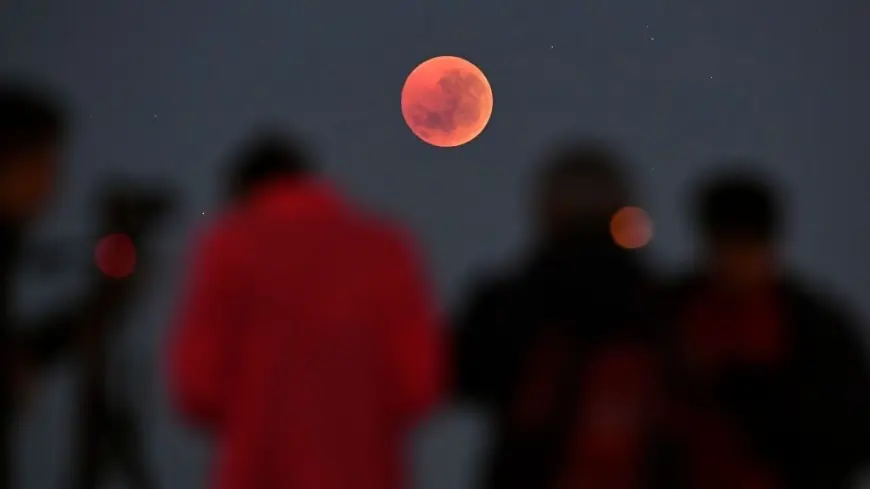
The Total Lunar Eclipse Blood Moon will arrive in the early hours of March 3, and for certain communities the effect is immediate: Minnesotans setting a 5 a. m. alarm, Mainers on a western horizon, and western North America viewers stand to see the spectacle directly. This is a practical primer for those groups — what to expect, when the moon turns coppery red, and which viewers will miss the peak even if they see partial darkening.
Who should plan to wake up — and why it matters for local observers
Early risers in Minnesota and Maine are singled out in recent coverage because local timing aligns with moonset and sunrise dynamics: in some places a red moon will be setting at the western horizon as a yellow sun rises. Minnesotans who set alarms for 5 a. m. on March 3 are specifically noted as likely to witness a total lunar eclipse. Here’s the part that matters for those groups: getting to a dark spot on the western horizon increases the chance of seeing the moon both redden and set against morning light.
Total Lunar Eclipse Blood Moon: viewing window and where it’s strongest
The event will be visible across a broad swath of the globe, including North America/the Americas, Australia, New Zealand, eastern/east Asia and the Pacific. Coverage emphasizes that the best views will come from the western half of North America, Australia and the Pacific. Observers are reminded that exactly what they see depends on their local position along the eclipse path — in some cities the deepest moment of the eclipse will happen after moonset and therefore won’t be visible.
Event details and timing to plan around
Totality — the period when the moon is fully immersed in Earth’s shadow and appears red — will last 58 minutes, from 6: 04 a. m. EST (1104 GMT) to 7: 02 a. m. EST (1202 GMT). The moon will tint red for nearly an hour on March 3 as Earth passes between the moon and the sun. Astronomers predict the eclipse will be visible in east Asia, Australia, the Pacific and the Americas and will last about an hour for many observers.
Practical viewing notes: safety, positioning and what you’ll see
Unlike solar eclipses, lunar eclipses are safe to watch with the naked eye; no protective eyewear is necessary. Expect a gradual shift from a bright silver moon to a deep red as Earth’s shadow sweeps across the lunar disk — a visual often described as watching the moon’s phases at high speed. The coverage advises that the best views come from dark locations with clear skies, and that observers who can get to a dark site will see the effect more dramatically.
For Minnesotans hoping to catch a glimpse, astronomers advise them to: unclear in the provided context
Context, curiosities and other items that appeared alongside eclipse coverage
Recent coverage bundled the eclipse details with a few unrelated items and site notices: a reminder that purchases through some site links may earn an affiliate commission; invitations to sign up for a monthly entertainment newsletter and a skywatching newsletter; a promotion for a sci‑fi reader club; and a running live blog for lunar eclipse updates.
There were also distinct, unrelated local-reporting notes included in the same coverage set: one item mentioned observers of detainee flights saying fewer are going out and uncertainty about exact numbers. Separately, Eddie Darren Duncan, 23, was described as being seen waving a gun outside an IHOP restaurant on a Monday afternoon and, when local officers approached, he shot at their vehicles, with that sequence noted as drawn from court records. Kyeland Jackson is credited as a general assignment reporter for a regional paper in one of the pieces. These items are not connected to the eclipse itself but appeared alongside it in recent coverage.
It’s easy to overlook, but the coverage also paraphrases a long-standing explanation of the term: a total lunar eclipse happens when Earth sits between the moon and the sun and only refracted sunlight, filtered through Earth’s atmosphere, reaches the lunar surface — producing the coppery or ruddy color called a "blood moon. " A spokesperson identified as the vice president of the Minnesota Astronomical Society, John Zimitsch, is paraphrased noting that ancient observers saw the color without understanding the physics; he urged people to look up, put down their cellphones, and experience the event in person.
- Key takeaway: The Total Lunar Eclipse Blood Moon is broadly visible but local timing matters — some places will miss maximum eclipse because it occurs after moonset.
- Key takeaway: Watch from a dark spot with a clear western horizon for the best chance to see the reddening and moonset together.
- Key takeaway: Lunar eclipses are safe to view with the naked eye; no filters are required.
- Key takeaway: Recent coverage included unrelated local incidents and site notices; expect a mix of astronomy guidance and general newsroom items in roundups.
Micro timeline: March 3 — the total lunar eclipse and nearly one hour of reddening; March 2025 — the last total lunar eclipse visible to the Americas; New Year’s Eve 2028 — the next total lunar eclipse; June 2029 — the next total lunar eclipse visible in the Americas. The real question now is how clear local skies will be for those early-morning viewers.
Writer’s aside: The bigger signal here is how widely visible this eclipse is reported to be, and how much viewing success will hinge on local horizon timing more than on rare equipment or special safety measures.