






















To Be In Latin: A Contextual Rewind on the Manifesto Against Imperialist Aggression in Latin America


The region’s dispute over influence landed at center stage after a brutal strike on Venezuela and the alleged kidnapping of its president, prompting a Mexican assembly that framed a continental response. The phrase to be in latin anchors this dispatch: the gathering on 24 January, 2026 and the Manifesto against imperialist aggression were presented as a direct reaction to escalations — a moment where history, policy shifts, and calls for unified working-class resistance intersect.
To Be In Latin — tracing why the present escalated from a long history
The manifesto’s authors opened with a sharp historical claim: no single Latin American country is untouched by blood spilled by American imperialism, a condition said to have persisted for over a hundred years. That long arc of intervention is now described as colliding with a U. S. in “an era of decay, ” which, the document asserts, has refocused U. S. attention on its backyard. Examples listed as recent tactics include the strangulation of the Cuban Revolution, weaponised tariffs, threats against presidents, and the kidnapping of Maduro; these items are presented as part of an effort to retrench in the hemisphere and push China out of the continent.
Assembly in Mexico City: who met, what they decided
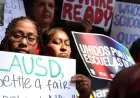
The Mexican section of the Revolutionary Communist International convened an anti-imperialist assembly in Mexico City on 24 January, 2026. The event included 250 participants in person and online from Argentina, Bolivia, Brazil, Chile, Colombia, Cuba, El Salvador, Mexico, Puerto Rico, United States, and Venezuela. Comrades contributed accounts of the fight against imperialism in their countries and argued for revolutionary methods to meet what they described as escalating threats from the US. Delegates discussed and unanimously approved the Manifesto against imperialist aggression in Latin America and published it in full alongside the assembly record. The assembly urged those who agree with its ideas to fight alongside its organizers and to join the Revolutionary Communist International. A social-media post amplified the announcement, and the text was also made available in Spanish online.
Escalation markers that the manifesto highlights
- The brutal bombing of Venezuela by US imperialism on 3 January is singled out as a pivotal event that brought a new reality into focus across Latin America, including Mexico.
- Alongside the bombing, the document lists the kidnapping of Venezuela’s president and the anti-migrant policy of the US as evidence of a shift in tactics.
- It also cites the abandonment of NATO by US imperialism and what it calls the breaking of established rules in the world order; those developments are characterized as signs of a new global age.
How authors link regional events to global strategy and political shifts
The manifesto places recent regional aggression in the context of broader global change. It says a year has passed since Trump began his second term as head of the US government, a period described as having shaken the world. The document frames that leadership as an outcome of a larger period of capitalist bankruptcy, crisis, war, and revolution, and ties it to the relative decline of US imperialism and the rise of other powers such as Russia and China. It argues that the response by that administration was to end conflicts not seen as directly in the national security interest of US imperialism and to focus attention on reinforcing dominance in what it considers its backyard—turning away from European allies in the war in Ukraine. The manifesto claims this strategy created a global earthquake that left Europe, particularly German imperialism, exposed, and asserts Europe was dragged into the war in Ukraine by Biden.
Implications, appeals, and the contours of the response
Here’s the part that matters: the assembly frames the situation as a grave threat to Latin American workers because, the manifesto argues, domestic ruling classes would rather cede control to external powers than defend national independence. The document presents revolutionary struggle and a united working-class front across the Americas as the sole defense. It calls for coordinated action and membership in the Revolutionary Communist International as immediate responses.
- The manifesto treats historical intervention and a recent sequence of violent acts as connected trends that justify revolutionary organization.
- Stakeholders identified explicitly include Latin American workers, national ruling classes, and the governments named in the assembly contributions.
- Signals that would confirm a further shift, as framed in the text, are continued military strikes, additional high-profile kidnappings, or expanded economic measures aimed at limiting other powers’ influence in the region.
- The assembly’s unanimous approval is presented as an organizational signal of consolidated intent rather than a regional consensus of governments.
It’s easy to overlook, but the document mixes broad historical claims with a tightly dated organizing moment: the 24 January, 2026 assembly and the 3 January bombing are used as bookends for the argument. The real test will be whether the manifesto’s call for united working-class action translates into sustained regional coordination.
Writer’s aside: the assembly’s language is uncompromising and rooted in a particular political framework; readers should note that some descriptions are framed as claims rather than uncontested facts.