
























Where to See the Total Lunar Eclipse Blood Moon in the Early Hours of March 3

The total lunar eclipse blood moon on March 3, 2026 will transform the moon into a coppery red sight visible across large swaths of the globe; this guide explains where it will be seen, when totality occurs, how Minnesotans can tune in and a note on concurrent local events mentioned alongside eclipse coverage.
Total Lunar Eclipse Blood Moon: what will change on March 3
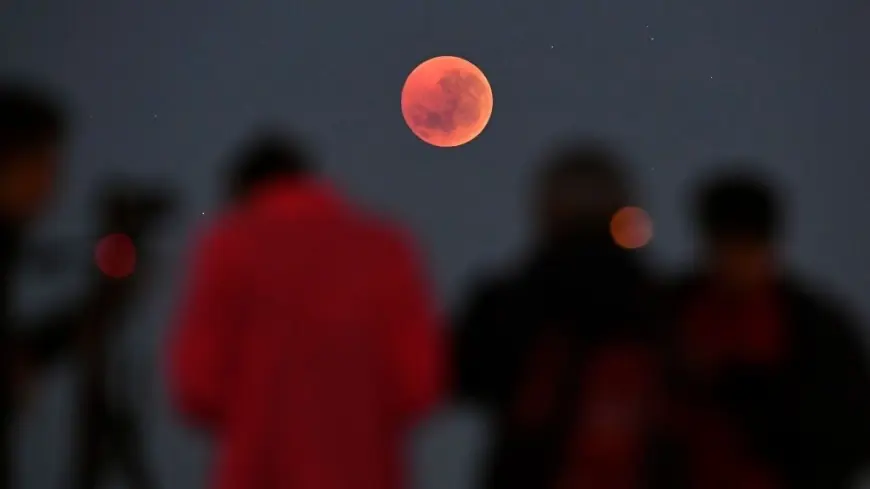
The March 2026 total lunar eclipse will bring a dramatic blood moon to skies across North America, Australia, New Zealand and eastern Asia for observers who are positioned to see it. A total lunar eclipse happens when Earth sits between the moon and the sun; with the moon in Earth’s shadow, the only sunlight reaching the lunar surface is filtered through Earth’s atmosphere and turned red, which is why the phenomenon earns the name blood moon. The first lunar eclipse of 2026 will transform the moon into a coppery red blood moon in the early hours of March 3 for skywatchers in North America.
Visibility and best viewing locations
The long-lasting and impressive blood moon on March 3 will be visible to billions within the path of the eclipse, but exactly what observers see will depend on location. Though the event will be visible across the night side of Earth on March 3, the best views are expected from the western half of North America, Australia and the Pacific. For the clearest experience, get somewhere dark with clear skies.
Timing and what to expect in North America
Totality, when the moon is fully immersed in Earth’s shadow, will last 58 minutes, from 6: 04 a. m. EST (1104 GMT) to 7: 02 a. m. EST (1202 GMT). That translates to the following local times in North America: unclear in the provided context. In New York, observers will see the moon slip into totality and turn blood red but maximum eclipse, when the moon moves deepest into Earth’s shadow, will occur after moonset and won’t be visible from that city.
Unlike solar eclipses, lunar eclipses are safe to watch with the naked eye. During the eclipse you will gradually see the moon shift from a bright silver to a deep red as Earth’s shadow sweeps across it — a progression described as like watching all the phases of the moon at high speed.
How Minnesotans can watch the Blood Moon
Minnesotans who set alarms for 5 a. m. on March 3 will have a rare astronomical treat: a total lunar eclipse. Observers in Minnesota should expect the moon to tint red for nearly an hour as Earth gets between the moon and the sun. Astronomers note the event is expected to be visible in east Asia, Australia, the Pacific and the Americas, and that, overall, the eclipse will last about an hour.
Those who wake early that day may see a yellow sun rising above blue skies while a red moon sets on a darkened western horizon. Lunar eclipses happen more often than solar eclipses, but total eclipses that produce a blood-moon appearance are less common. Officials at the National Aeronautics and Space Administration note that March 2025 was the last total lunar eclipse visible to the Americas; the last one before that was three years earlier. Astronomers predict the next total lunar eclipse will be on New Years Eve 2028, though the next one visible in the Americas won’t happen until June 2029.
John Zimitsch, vice president of the Minnesota Astronomical Society, observed that ancient observers saw the orange-ruddy tint without knowing the underlying physics. He urged people to look up and put down their cellphones, saying that seeing astronomical events in person is a wonderful experience.
Practical notes, live updates and other items mentioned in coverage
A lunar eclipse live blog is available for people who want near-real-time updates and commentary on visibility and unfolding conditions. To determine whether the eclipse will be visible from a particular city, online visibility tools allow users to enter their location and see local visibility details and exact timings.
Other items appearing alongside eclipse coverage included local operational observations and an unrelated criminal incident. Observers of detainee flights say fewer flights are going out, amid other decreased activities, but it’s hard to gauge exact numbers. Separately, court records show Eddie Darren Duncan, 23, was seen waving a gun outside an IHOP restaurant on a Monday afternoon; when local officers approached him, he shot at their vehicles. Kyeland Jackson is listed as a general assignment reporter in connection with some coverage that referenced the eclipse.
What to remember before you watch
- The total lunar eclipse blood moon is visible without special eye protection.
- Best viewing requires dark, clear skies and an unobstructed western horizon for places where the moon will set during totality.
- Timing for totality is 6: 04 a. m. EST (1104 GMT) to 7: 02 a. m. EST (1202 GMT); local time translations should be checked with an online visibility tool if needed.
Observers planning to see the March 3 event should prepare for early rising and check local skies; details may be refined in live coverage as the eclipse approaches.