











Nfl Combine Schedule: How this week’s workouts could reshuffle draft boards and force roster moves

The consequence is immediate: the nfl combine schedule compresses interviews, medicals and on-field testing into a few critical days that could change where players are picked and which veterans are traded. More than 300 prospects are in Indianapolis for official measurements, medical evaluations, team interviews and workouts in front of scouts, coaches and front-office executives — a concentrated window where standout displays can raise a player's draft stock and off-field developments can trigger roster decisions.
Why this week matters for draft positioning and short-term team decisions
Here’s the part that matters: some prospects arrive locked into a draft range while others can move dramatically after a single explosive workout. Analysts and scouts on-site are tracking who might vault into earlier rounds and which prospects have the most to prove. The combine also coincides with personnel chatter that could become consequential immediately — one team is moving toward exploring a trade involving a starting quarterback, and that kind of uncertainty amplifies how much a single week of testing can shift draft-board thinking.
- Implication: Major testing days can elevate mid-round players into first- or second-round conversations.
- Affected groups: prospects on the bubble, teams weighing trades or draft picks, and local fans tracking invitees.
- Signal to watch: unusually strong or weak medical reports and one-off elite testing numbers from established prospects.
- Near-term change: trade exploration for a starting quarterback suggests teams may value immediate returns and not wait through multiple draft cycles.
Nfl Combine Schedule and on-field timing — conflicting details noted
The event is staged at Lucas Oil Stadium in Indianapolis and includes a compact calendar of interviews, measurements, medical exams, on-field drills and bench press sessions. Exact timing for on-field workouts differs across available schedules; that conflict is unclear in the provided context and may be evolving.
- One schedule lists the dates for the event as Feb. 23 through March 2, with on-field workouts running Feb. 26 through March 1.
- A day-by-day breakdown appears in separate notes: kickers on a midweek session, defensive linemen and linebackers (and special teams) kicking off a primary testing block on a Thursday; defensive backs and tight ends listed for a Friday session; quarterbacks, wide receivers and running backs slated for a Saturday session; offensive linemen finishing on Sunday.
- An alternate timeline places kickers on Wednesday, Feb. 25 at 3: 00 PM ET, and lists defensive linemen/linebackers at 3: 00 PM on Thursday; defensive backs/tight ends at 3: 00 PM Friday; running backs/quarterbacks/wideouts at 3: 00 PM Saturday; and offensive linemen at 3: 00 PM Sunday.
Because the times for Saturday and Sunday differ between sources (1: 00 PM ET vs. 3: 00 PM ET in separate notes), the precise session hours are unclear in the provided context; schedule subject to change.
Top prospects and workout predictions to watch on the field
Several draft analysts on-site have flagged specific players whose testing could alter their draft range. Highlights from those breakdowns include:
- Matt Miller highlighted Kenyon Sadiq, tight end from Oregon (6-foot-3, 245 pounds). Expectations cited include a vertical jump north of 41 inches and a low-4. 5 40-yard dash. Some teams project him as a top-20 talent while others see him toward the back end of Round 1; strong testing could push him upward.
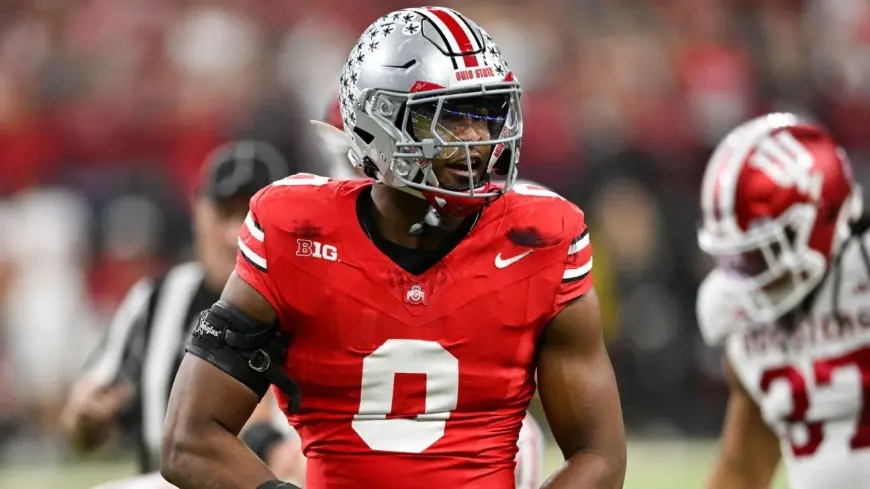
- Jordan Reid singled out Sonny Styles, linebacker from Ohio State (6-foot-4, 243 pounds). Projected testing includes a mid-to-high-4. 5 40-yard dash, a vertical over 40 inches and a broad jump that could touch 11 feet. He is already viewed as a potential top-10 pick and is expected to draw attention in both testing and on-field drills.
- Mel Kiper Jr. emphasized Kadyn Proctor, offensive tackle from Alabama (6-foot-7, 366 pounds), noting explosive traits and strength. Two season examples were noted: an 11-yard screen reception against Georgia and a drive for a first down against Missouri; strong combine numbers could help cement his status as an NFL left tackle and Round 1 selection.
- Field Yates highlighted Monroe Freeling, offensive tackle from Georgia (6-foot-7, 315 pounds) as one of the top O-line athletes expected to work out in Indianapolis and a prospect ranked among the top 15 in the class.
Measurements, medical notes and notable absences
Several measurement items and schedule choices have drawn attention:
- Arm-length notes: Miami edge Rueben Bain Jr. recorded an arm length of 30 7/8 inches. Texas A& M’s Cashius Howell measured 30 1/4 inches; that 30 1/4-inch mark is identified as the shortest arms ever recorded for an edge rusher in the mockdraftable database.
- Clemson defensive tackle Peter Woods will not work out at the combine and will perform fully at Clemson’s Pro Day on March 12.
- Fernando Mendoza elected not to throw at the combine; a two-minute segment examined his combine week after that decision (2: 00 runtime noted).
- An on-site reporter noted one new tweak to the combine workouts that could matter for how players showcase athletic traits.
The real question now is how teams will weigh these measurements against game tape and medical findings when finalizing draft boards.
Players from North Carolina invited to the combine and local context
Participation from North Carolina high-school alumni is down from last year: last year 13 Tar Heel State natives were invited; this year the list includes five names. The invitees and their listed details are:
- No. 25 KC Concepcion — Chambers High School (Charlotte, N. C. ). Position: WR. Height: 5-11. Weight: 190. High School Class: 2023. College: Texas A& M.
- No. 176 Vincent Anthony Jr. — Jordan High School (Durham, N. C. ). Position: EDGE. Height: 6-6. Weight: 250. High School Class: 2022. College: Duke.
- No. 215 J'Mari Taylor — West Mecklenburg High School (Charlotte, N. C. ). Position: RB. Height: 5-9. Weight: 200. High School Class: 2020. College: Virginia.
- No. 220 Nick Barrett — Eastern Wayne High School (Goldsboro, N. C. ). Position: DT. Height: 6-3. Weight: 320. High School Class: 2021. College: South Carolina.
- No. 272 Diego Pounds — Millbrook High School (Raleigh, N. C. ). Position: OT. Height: 6-6. Weight: 340. High School Class: 2021. College: Ole Miss.
Note: If any players are missing from this list, please send corrections to jbryant@wral. com; the compiler acknowledged the possibility of missed entries when scanning the invite list.
Writer's aside: It’s easy to overlook how a small measurement or a late decision to skip an event can ripple through evaluations; teams rarely change their entire board on one number, but the context around those numbers often matters more than the raw figure itself.
Additional roster movement context: The Indianapolis franchise is exploring a trade partner for quarterback Anthony Richardson. Team discussions included a meeting with Richardson’s agent this morning and a mutual conclusion to examine trade options. Richardson lost out to another quarterback in the starting competition, battled injuries during the season, and has made 15 starts in 17 games since being selected with the No. 4 pick in 2023. Those personnel moves may influence how urgently teams value immediate starters versus draft-upside players.
Short timeline of public sessions (compressed)
- Event window listed as Feb. 23–March 2; on-field workouts noted in one schedule as Feb. 26–March 1.
- Team interviews were listed as having kicked off on Monday ahead of measurements and on-field work.
- Pro Day alternative: Peter Woods (Clemson) scheduled to work out fully at March 12 pro day rather than at the combine.
Expect schedule clarifications to arrive as the week proceeds; details on exact session hours are unclear in the provided context.