























Total Lunar Eclipse Blood Moon: Where to see the total lunar eclipse blood moon on March 3

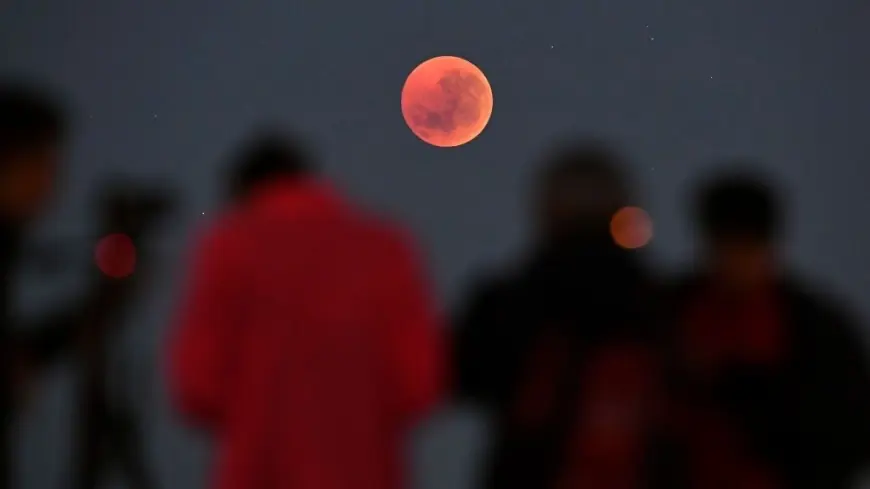
The total lunar eclipse blood moon will arrive in the early hours of March 3, 2026, and transform the moon into a coppery red spectacle for skywatchers. The first lunar eclipse of 2026 will be visible across broad swaths of the night side of Earth, but what observers see will depend on their location.
Total Lunar Eclipse Blood Moon
The March 2026 total lunar eclipse will bring a dramatic blood moon to skies across North America, Australia, New Zealand and eastern Asia. A total lunar eclipse occurs when Earth sits between the moon and the sun; with the moon sitting in Earth's shadow, the only light reaching the lunar surface is filtered through Earth's atmosphere, which turns it red, earning it the name blood moon.
Timing and totality details
Totality, when the moon is fully immersed in Earth's shadow, will last 58 minutes, from 6: 04 a. m. EST (1104 GMT) to 7: 02 a. m. EST (1202 GMT). The moon will tint red for nearly an hour on March 3 as the Earth gets between the moon and the sun. Observers in some locations will see the moon slip into totality and turn blood red but the maximum eclipse — when the moon moves deepest into Earth's shadow — may occur after moonset and therefore not be visible in those places.
Where it will be visible
The long-lasting and impressive blood moon on March 3 will be visible to billions within the path of the eclipse. Though the blood moon total lunar eclipse will be visible across the night side of Earth on March 3, the best views will be from the western half of North America, Australia and the Pacific. Astronomers also list east Asia, Australia, the Pacific and the Americas among regions where the eclipse is expected to be visible.
How Minnesotans can watch
Minnesotans who set their alarms for 5 a. m. on March 3 will have a rare astronomical treat: a total lunar eclipse. Those who wake early that day will see a yellow sun rising above blue skies while a red moon sets on a darkened western horizon. Astronomers predict the lunar eclipse, expected to be visible in east Asia, Australia, the Pacific and the Americas, will last about an hour. For Minnesotans hoping to catch a glimpse of the ruddy moon, experts advise getting somewhere dark with clear skies.
"The ancients had no idea the physics and what was going on. They just saw the moon turning... this orange ruddy [color]. That's where the 'Blood Moon' comes from, " said John Zimitsch, vice president of the Minnesota Astronomical Society. "Look up. Put down your cellphone. You can go online and you're going to be able to see pictures, but seeing astronomical events in person is a wonderful thing. " He added: "There's something inside of us that draws us to these astronomical events. Maybe it's just primitive. And no one's using photoshop or AI when you're actually looking at it. It's real. "
Context and historical notes
Officials at the National Aeronautics and Space Administration report that March 2025 was the last total lunar eclipse visible to the Americas; the last one before that was three years earlier. Astronomers predict this total lunar eclipse will not be visible in the Americas again until June 2029. Because lunar eclipses occur when Earth blocks sunlight’s path to the moon, unlike solar eclipses they are completely safe to watch with the naked eye. As the event unfolds viewers will gradually see the shift from a bright silver moon to a deep red as Earth's shadow sweeps across it.
Local news items
Separately, reporting included other local developments: Eddie Darren Duncan, 23, was seen waving a gun outside an IHOP restaurant on Monday afternoon; when local officers approached him, he shot at their vehicles, court records show. Gov. Tim Walz says the federal government's steps have nothing to do with the state's Medicaid fraud crisis. Families and advocates are calling on the Minnesota Legislature to make assisted living facilities provide the services they pay for. Kyeland Jackson is a general assignment reporter.
You can keep up with the latest lunar eclipse news with a live blog dedicated to the event. If you want the best view, plan for darkness and clear skies and remember that conditions and visibility will vary by location.