























Nasa Astronaut Medical Emergency Forces Early Crew-11 Return and Disrupts ISS Operations

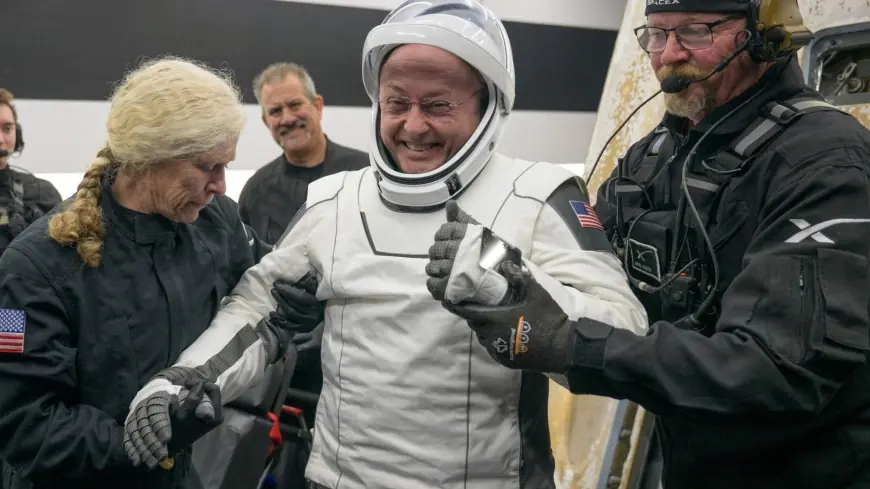
The Nasa Astronaut Medical Emergency on Jan. 7 matters because it immediately reshuffled who was on station, slowed scientific output and halted spacewalk activity — with the most direct impact felt by on‑board researchers and mission planners. The incident triggered the first medical evacuation in the space station's 25‑year history and forced an early return for Crew‑11 so one crewmember could access advanced imaging unavailable in orbit.
Immediate operational impact of Nasa Astronaut Medical Emergency
Here's the part that matters: the evacuation reduced the on‑station population and interrupted scheduled work. After the early return, only three crew members remained on the ISS — one American and two Russians — prompting a pause in spacewalks and a reduction in research output. Four new astronauts joined the station in February and normal service has since resumed, but the episode produced a short window where flight operations and science were constrained.
Event details and medical decision that drove the Crew‑11 return
On Jan. 7, Mike Fincke experienced a medical event aboard the International Space Station that required immediate attention from his crewmates; flight surgeons helped stabilize his condition. After further evaluation, NASA determined the safest course was an early return for Crew‑11 so that advanced medical imaging — not available on the station — could be used. The return was described by those involved as a coordinated, non‑emergency plan. The Crew‑11 vehicle splashed down off the coast of San Diego on Jan. 15 after a five‑and‑a‑half‑month mission.
Crew composition, acknowledgements and post‑flight status
The Crew‑11 group included Mike Fincke alongside fellow NASA astronaut Zena Cardman, Japanese astronaut Kimiya Yui and Russian cosmonaut Oleg Platonov. Additional members acknowledged as part of the broader Expedition 74 team were Chris Williams, Sergey Kud‑Sverchkov and Sergei Mikayev. Fincke expressed deep gratitude toward his crewmates, flight surgeons, the SpaceX team and medical staff, and he is doing very well while continuing standard post‑flight reconditioning at the Johnson Space Center in Houston. Medical professionals at Scripps Memorial Hospital La Jolla near San Diego were involved in post‑splashdown care.
Official reaction and characterizations of the incident
After the crew returned to Earth, agency leadership described the situation as serious in orbit but said the crew member in question had remained safe and stable since the evacuation. Public statements emphasized the effectiveness of the crewmates' immediate response and of the medical teams that supported the coordinated return.
Mini timeline of key moments
- Jan. 7 — Medical event aboard the ISS involving Mike Fincke that required immediate crewmate attention and medical stabilization.
- Following evaluation — Decision made to bring Crew‑11 home early to use advanced medical imaging not available on station.
- Jan. 15 — Crew‑11 splashed down off the coast of San Diego after a five‑and‑a‑half‑month mission; post‑flight care occurred near San Diego and reconditioning continued in Houston.
- Aftermath — Station was left with three crew members (one American, two Russians); spacewalks were paused and research output reduced until four new astronauts arrived in February and normal service resumed.
The real question now is how teams balance crew health readiness with uninterrupted science when advanced diagnostics are only available on Earth.
It’s easy to overlook, but the practical lesson from this episode is the operational ripple one medical incident can create across a multinational, long‑duration platform.
Key takeaways: the incident prompted the ISS’s first medical evacuation in 25 years, required use of advanced imaging on Earth, involved a coordinated early return for Crew‑11, and temporarily curtailed spacewalks and research until the station’s crew complement was restored.