

















Cuba Says Forces Killed Four on US-Registered Speedboat After Armed Attack

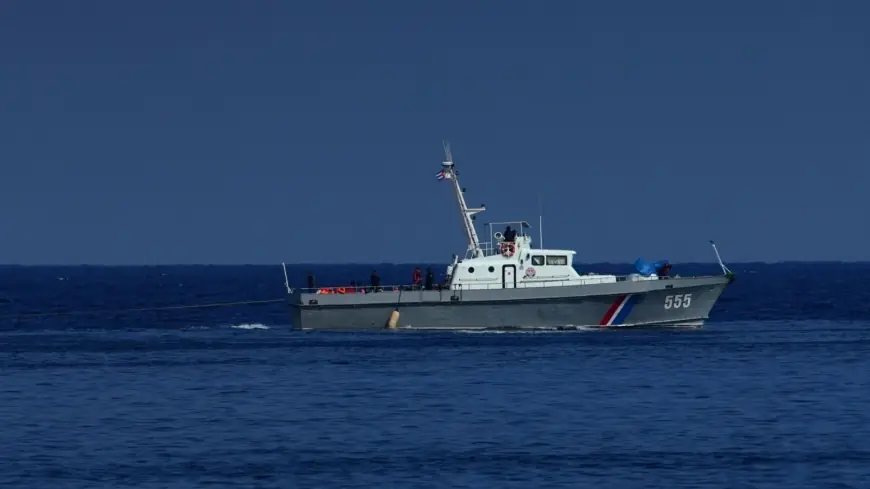
Cuban authorities say their forces killed four exiles and wounded six after a Florida-registered speedboat sailed into cuba's waters and opened fire on a Cuban patrol boat, a confrontation that comes amid heightened tensions between the island and the United States.
What Cuban authorities say about the attack
The interior ministry said the speedboat carried 10 passengers who had been living in the United States and approached within one nautical mile of a channel on Falcones Cay on Cuba's north coast. Five members of a Cuban patrol unit moved to intercept the craft, and the speedboat's crew opened fire, wounding the commander of the Cuban vessel. Cuban forces said they killed four of the passengers, wounded six, and detained the injured. The wounded were evacuated and are receiving medical attention.
Cuba identifies passengers and detainees
The government identified six people detained from the boat by name and said two of those, Amijail Sánchez González and Leordan Enrique Cruz Gómez, were previously wanted in Cuba on suspicion of planning terrorist acts. The other four detainees were named as Conrado Galindo Sariol, José Manuel Rodríguez Castello, Cristián Ernesto Acosta Guevara and Roberto Azcorra Consuegra. One of the dead was identified as Michel Ortega Casanova; the other three dead had not been identified in the material provided. Cuban authorities also said they detained another Cuban national on Cuban territory, Duniel Hernández Santos, who had been sent from the United States to receive the infiltrators and who had confessed to his role in facilitating the landing and reception of the armed group.
Weapons, intent and prior records
The interior ministry described the group as anti-government Cubans who came from the United States dressed in camouflage and armed with assault rifles, handguns, homemade explosives, ballistic vests and telescopic sights. Additional items seized included Molotov cocktails. most of the passengers have prior records involving criminal and violent activity and that preliminary statements from those detained indicated the group intended to carry out an infiltration for terrorist purposes. Two of the detainees are wanted by Cuban authorities on charges tied to the promotion, planning, organisation, financing, support or commission of actions in connection with acts of terrorism.
US response, statements and investigations
US secretary of state Marco Rubio told reporters the incident was not a US operation and that no US government personnel were involved. He said Cuban authorities had made the United States aware of the incident and that the US embassy in Havana would attempt to verify what happened independently. Rubio spoke while on a trip to St Kitts and Nevis and said the US would gather more information to determine next steps, including whether those involved were US citizens or permanent residents. Florida's attorney general, James Uthmeier, said he had ordered prosecutors to open an investigation with other state and federal law enforcement partners and characterized the Cuban government as untrustworthy in his statement.
Local geography and recent precedents
The confrontation occurred where gentle farmland meets the Florida Straits and bleached beaches; the scattered keys offshore are highly militarised and are a common launch point for both people seeking to reach the United States and for people smugglers operating fast boats. The interior ministry noted the speedboat was Florida-registered.
There were several deadly incidents in 2022 at the height of a migration crisis: Cuban they returned fire against a trafficking boat off Bahía Honda to the west of Havana, killing one. Survivors later said their boat had been rammed by the coast guard in a separate incident in which seven migrants died, including a two-year-old girl, Elizabeth Meizoso.
The recent clash also prompted historical comparisons: the Cuban air force shot down two small planes belonging to Brothers to the Rescue almost exactly 30 years earlier, killing four people and ending a thaw between the US and Cuba. The four killed in that incident were named as Carlos Alejandre, 45; Armando Costa, 29; Mario De la Peña, 24; and Pablo Morales, 29. The event led the United States to increase sanctions on the island.
What happens next
Investigations were announced on both sides: Cuban authorities are processing detainees and identifying the deceased, while US they would independently verify details and determine citizenship or residency status of those involved. Florida's attorney general has ordered an inquiry with law enforcement partners. Recent updates indicate details may continue to evolve as investigations by Cuban and US entities proceed.