

























Expert lens: To sit or stand — Trump’s sit-or-stand challenge to Democrats became the defining moment of the State of the Union

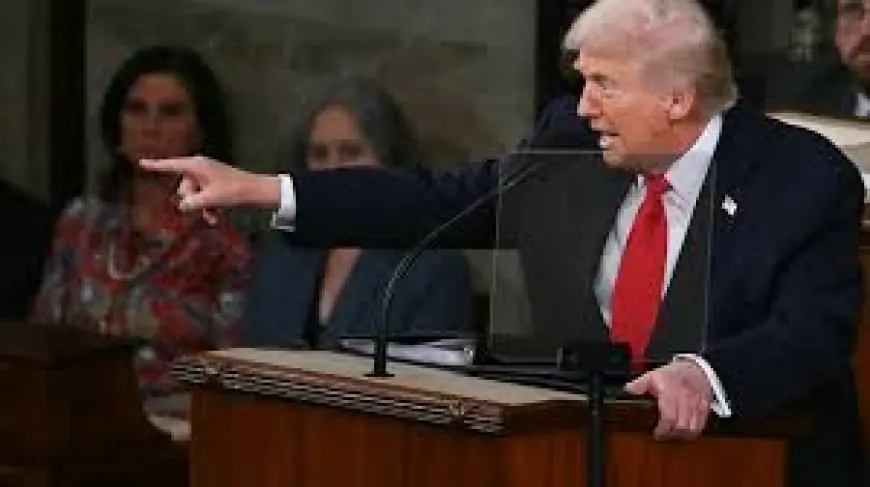
President Donald Trump’s marathon State of the Union on Feb. 24, 2026 hinged on a single staged moment that an expert would say crystallized the evening: an invitation for lawmakers to stand if they agreed the government’s first duty is to protect American citizens, “not illegal aliens. ” The challenge left Democrats who had not boycotted the event facing a stark, public choice and underscored the partisan spectacle inside the House chamber at the U. S. Capitol in Washington.
Expert assessment of the sit-or-stand moment
About halfway through the long, L-O-N-G address, the president sprung the moment on Democrats “like a trap, ” asking members to physically demonstrate agreement with a stark framing of government priorities. Republicans rose while Democrats kept their seats. The invitation to audience participation may stand as the most remembered element of the speech — particularly if Republican allies press that interpretation.
How the challenge played out on the floor
Lawmakers in the House chamber were visibly divided. Republican members stood as Democrats remained seated during the joint session on Tuesday. Vice President JD Vance and House Speaker Mike Johnson of La. were shown applauding during the address. Photographs from the chamber captured those partisan lines; images were credited to Alex Brandon and Mark Schiefelbein.
Messaging and theater: 'winning so much' and 'crazy'
Throughout the marathon speech, the president ticked through claimed victories and repeatedly insisted the nation was “winning so much, ” even as his approval slips. He also blasted Democrats as “crazy” for remaining seated rather than standing to applaud, tying policy claims to theatrical pressure on individual members of Congress to signal public support or dissent.
Pressure on Democrats: a damned-if-you-do, damned-if-you-don't choice
Democrats who hadn’t already boycotted the whole affair were cast into a high-visibility dilemma. Standing would have aligned them publicly with a president their party disdains; remaining seated risked being portrayed as unsupportive of the stated priority and made them a prop in a campaign-ready moment. That political dynamic was highlighted as a central consequence of the staged invitation.
Tone of the night and lingering questions
The sit-or-stand episode reinforced an impression that the address had elements of a “state of the disunion” rather than a traditional policy-focused speech. The phrase “One of the great things about the State of the Union is how it gives Americans a chance to see clearly what their representatives really believe” was used before the invitation; then the president said, “If you agree with this statement, then stand up and show your support: The first duty of the American government is to protect American citizens. Not illegal aliens. ”
With that, the lines of division within the chamber — and, by extension, the nati unclear in the provided context.
What to watch next
The immediate fallout will likely center on how both parties frame the sit-or-stand moment in coming days. Republicans are positioned to treat the episode as proof of a resonant message, while Democrats face decisions about whether to respond to the theatrical pressure or emphasize other policy debates. The event’s theatrical centerpiece ensures it will be a focal point of post-speech commentary and political planning.
Observers seeking an expert reading will look for how the moment is deployed in campaign messaging and whether it shifts public attention away from other elements of the address. For now, the sit-or-stand challenge stands as the clearest line-drawing moment of the Feb. 24, 2026 State of the Union.