






















Nvidia Q4 beats expectations, offers strong Ai-driven Q1 outlook ahead of GTC

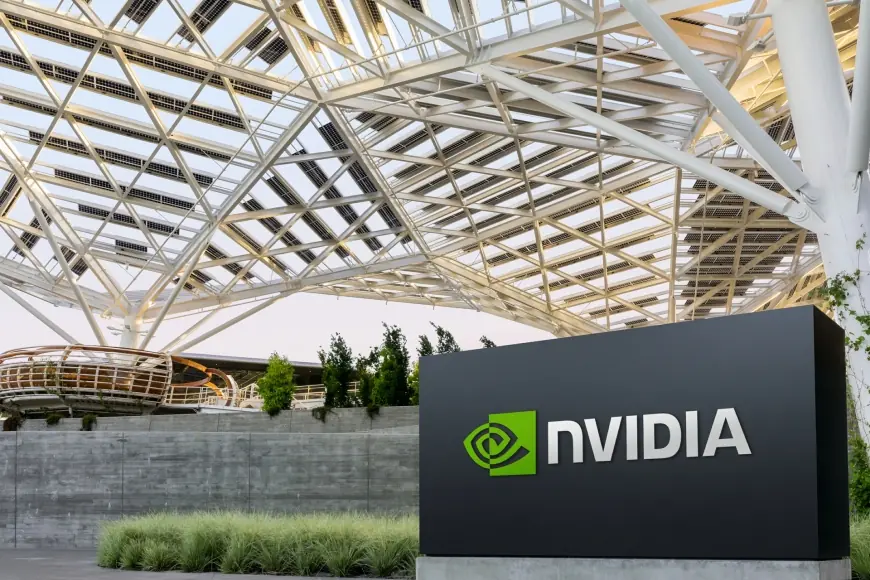
Nvidia reported fiscal fourth-quarter results after the bell, beating analysts on both the top and bottom lines and offering a first-quarter outlook between $76. 44 billion and $79. 56 billion. The company tied much of the quarter’s strength to data-center demand and to its expanding ai product lineup; the Q1 outlook does not include any potential revenue out of China.
Earnings, revenue and margins for the fourth quarter and fiscal 2026
fourth-quarter revenue was $68. 1 billion, a record for the quarter that was up 20% from the prior quarter and up 73% from a year earlier; the fourth quarter ended January 25, 2026. For fiscal 2026, revenue totaled $215. 9 billion, up 65% from a year ago.
For the quarter, Nvidia reported non-GAAP earnings per diluted share of $1. 62 on the $68. 1 billion in revenue; GAAP and non-GAAP earnings per diluted share were $1. 76 and $1. 62, respectively. Wall Street had been anticipating EPS of $1. 53 on revenue of $65. 8 billion. The company reported EPS of $0. 89 and revenue of $39. 3 billion in the same quarter last year.
Gross margins for the quarter were strong: GAAP and non-GAAP gross margins were 75. 0% and 75. 2%, respectively. For fiscal 2026, GAAP and non-GAAP gross margins were 71. 1% and 71. 3%, and GAAP and non-GAAP earnings per diluted share for the fiscal year were $4. 90 and $4. 77, respectively.
Data Center surge led by hyperscalers and compute growth
Data center revenue drove the vast majority of the quarter’s growth, bringing in $62. 3 billion—above analysts’ projection of $60. 2 billion. Nvidia breaks its data center business into compute, graphics chips and CPUs, and networking; compute revenue grew 58% year over year, while networking jumped 263% to $11 billion.
CFO Colette Kress said much of that strength came from hyperscalers. "For the fourth quarter, hyperscaler revenue increased and remained our largest customer category at slightly over 50% of Data Center revenue, while growth was led by the rest of our Data Center customers as revenue diversified, " she said.
Q1 guidance, fiscal 2027 notes and the investor call
Nvidia set first-quarter fiscal 2027 guidance between $76. 44 billion and $79. 56 billion, above Wall Street’s estimate of $72. 8 billion; that guidance excludes any potential China revenue. The company provided an outlook for the first quarter of fiscal 2027 and noted that for the full year fiscal 2027, GAAP and non-GAAP tax rates are expected to be between 17. 0% and 19. 0%, excluding discrete items and material changes to the tax environment.
Nvidia scheduled a conference call to discuss the results and prospects at 2 p. m. Pacific time (5 p. m. Eastern time) today; a live webcast in listen-only mode will be available on the company’s investor relations site and will be recorded for replay.
Beginning in the first quarter of fiscal 2027, the company will include stock-based compensation expense in its non-GAAP financial measures, noting that stock-based compensation is a foundational component of its compensation program to attract and retain talent.
Shareholder returns: buybacks and a dividend
During fiscal 2026, Nvidia returned $41. 1 billion to shareholders through share repurchases and cash dividends. As of the end of the fourth quarter, the company had $58. 5 billion remaining under its share repurchase authorization.
Nvidia will pay a quarterly cash dividend of $0. 01 per share on April 1, 2026, to shareholders of record on March 11, 2026.
Product cadence, partnerships and Ai initiatives ahead of GTC
The results arrive weeks before the company is set to host GTC 2026 in San Jose, Calif., where it is expected to announce new products. Nvidia launched its latest AI superchip, Vera Rubin, at the CES technology conference in Las Vegas in January, and CEO Jensen Huang framed the moment as an ai inflection.
Huang said, "Computing demand is growing exponentially — the agentic AI inflection point has arrived. Grace Blackwell with NVLink is the king of inference today — delivering an order-of-magnitude lower cost per token — and Vera Rubin will extend that leadership even further. Enterprise adoption of agents is skyrocketing. Our customers are racing to invest in AI compute — the factories powering the AI industrial revolution and their future growth. "
The company recently expanded its agreement with Meta to a massive, multiyear deal that will provide both Blackwell and Rubin AI processors and the first major standalone deployment of its Grace CPU servers. Outside of data center, gaming revenue was $3. 7 billion for the quarter versus estimates of $4 billion, and Nvidia could launch its own CPU for laptops in the coming months, which would serve as a boost to the company's gaming revenue.
Market reaction and investor debate over AI growth
Nvidia stock pared gains in premarket trading—rising 1% after an earlier 3% jump—and was up just over 5% since the start of the year as of Wednesday afternoon. By comparison, Advanced Micro Devices was down roughly 1%, Broadcom was off 3%, and Intel was up almost 27% year to date.
Deepwater Asset Management managing partner Gene Munster argued in a blog post that the gap between Nvidia’s announcements and its stock performance centers on whether investors see the AI trade as nearing an end or still beginning. "The real debate is what growth looks like in 2027 and 2028, " Munster wrote. "Ultimately, investors have to decide what inning of the AI buildout we are in, if it's the fifth inning, 2027 growth should look more modest, and if it is the second inning, which I believe, Nvidia’s growth outlook over the next several years remains robust. "
The company and major hyperscalers such as Amazon, Google, Meta and Microsoft plan to spend a collective $650 billion on AI capital expenditures in 2026 alone, a factor Nvidia cited as underpinning ongoing demand for its data-center products.