






















Casey Means Confronted Over Trump Executive Order on Glyphosate Production at Confirmation Hearing

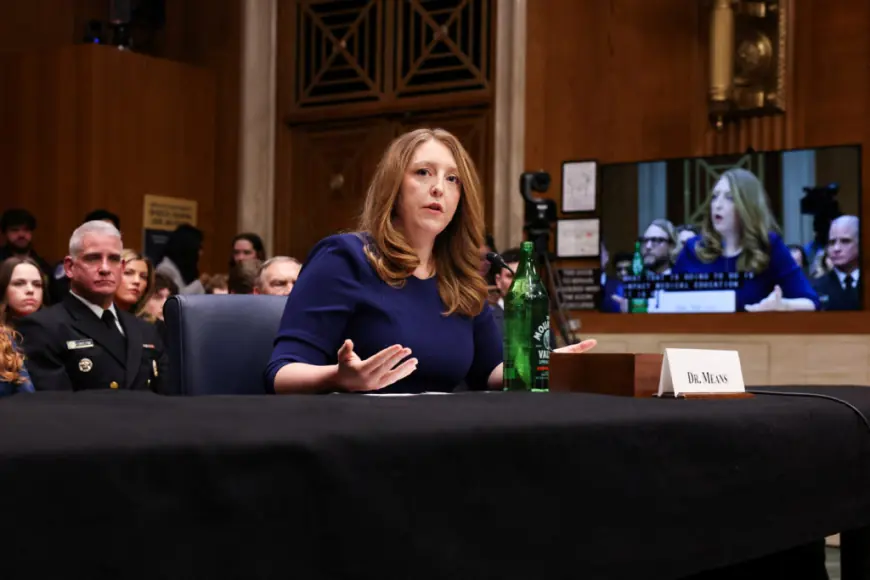
President Donald Trump's nominee for surgeon general, casey means, was pressed at a confirmation hearing about the president's recent executive order encouraging increased domestic production of glyphosate — an ingredient in weedkiller — and whether that policy conflicts with her prior public statements on the chemical's health effects. The exchange highlighted sharp questions about her advocacy work, movement affiliations and how federal assessments differ from her past views.
Casey Means' exchange with Sen. Ed Markey
During the confirmation hearing, Sen. Ed Markey, D-Mass., asked Means, described in the hearing as a wellness influencer and author, about past comments in which she linked glyphosate to cancer and whether she believes the executive order harms the health of families. Markey pressed Means to reconcile her past public statements with the president's directive, saying he was trying to help her align her earlier assertions with the current policy contrast.
What Means said about chemicals, farming and the MAHA movement
Means identified herself with the Make America Healthy Again (MAHA) movement and characterized that strategy as focused on consumer protection and support for sustainable farming practices. She said the MAHA strategy would aim to protect American consumers and that the country is entering an era in which helping farmers transition to more sustainable practices will be a priority. Means framed those priorities as beneficial both for the planet and for health, and said she intends to be a champion on the issue.
Positions, affiliations and rhetoric raised in the hearing
Panel questioning noted that Means is a supporter of the MAHA movement, which largely opposes pesticides in food production, and identified her as an ally of the Health Secretary Robert F. Kennedy Jr. In answering substantive questions, Means expressed grave concern about the health impacts of chemicals in the food supply and said the country must move away from using toxic inputs and study those chemicals more to understand their effects. The hearing also included a broader comment from Means that health problems reflect a nation with a "broken heart" and a sense that "society [is] losing its mind, " language raised during the session to describe her perspective on public health trends.
Regulatory contrast: the Environmental Protection Agency's stance
At the hearing, panelists noted the Environmental Protection Agency's position that there is "no evidence glyphosate causes cancer in humans. " That federal stance was drawn into the exchange as senators sought to contrast Means' prior public comments with the agency assessment and with the new executive order promoting domestic production of the chemical.
Senator Markey's closing challenge and MAHA movement reaction
Markey summarized his view of the exchange by telling Means he wanted her to agree with herself, pointing out that she had made statements in the past that appear at odds with the president's recent actions. He also observed that the MAHA movement is not happy with the Trump executive order and said that is the reality, underscoring tension between Means' stated priorities and current policy direction.
Accessibility of the hearing material and program disclosures
The hearing clip was made available for viewing during coverage of the event. Program notes accompanying the coverage included information that a related purchase was available as a free download with a specific account type. The coverage also stated that the program offers links to books featured in its coverage to simplify purchases and that it has agreements with retailers that share a small percentage of purchase price with the program. One example referenced an affiliate arrangement that generates revenue from qualifying purchases, but only when purchases are completed using the program's links; any revenue realized was described as being placed into a general account to help fund the program's operations. The material advised that questions about fulfillment, customer service, privacy policies, or book-order issues should be directed to the webmaster or the bookseller's administrator, who are responsible for those matters.
The story carried a byline naming Wyatte Grantham-Philips. Additional publication notes included a copyright notice and a statement that the presenting organization operates as a not-for-profit; details in the provided material showed those administrative and fundraising elements alongside the hearing coverage.
Recent updates indicate this exchange remains a focal point for senators evaluating the nominee's positions, affiliations and how they intersect with federal policy on agricultural chemicals; details may continue to be discussed as the confirmation process proceeds.