

























Nvidia Stock: Blockbuster Results Fail to Dazzle Investors Despite Record $215.9bn Revenue

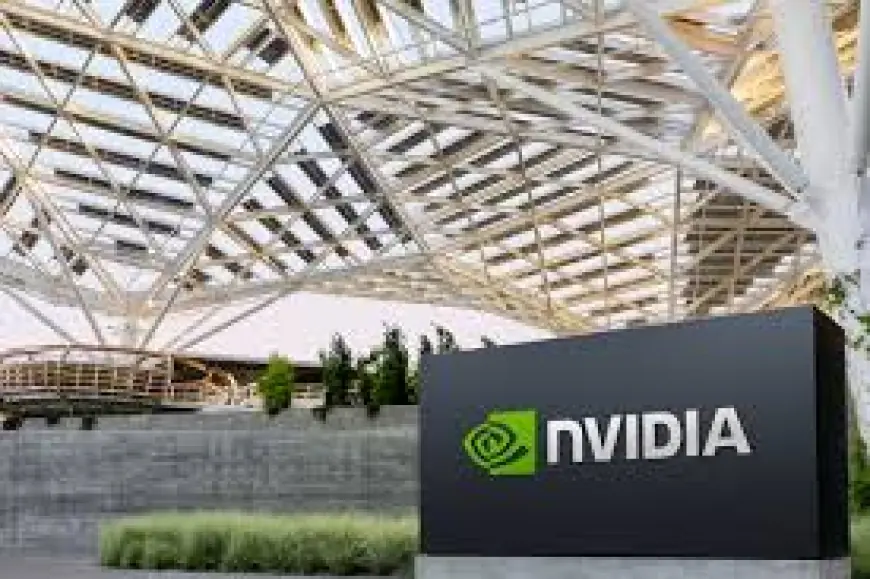
Nvidia Stock is under fresh scrutiny despite a set of headline numbers: fiscal 2026 revenue of $215. 9 billion (listed also as £159. 1 billion) and fourth-quarter revenue of $68. 1 billion. The results included sharp year‑over‑year growth for the last three months and abundant shareholder returns, but investor caution about AI spending, deal structures and China exposure muted enthusiasm.
Nvidia Stock: the headline financials and recent quarterly strength
The company posted fourth‑quarter revenue of $68. 1 billion for the quarter ended January 25, 2026, up 20% from the prior quarter and up 73% from the year‑ago quarter. For fiscal 2026 overall, revenue totaled $215. 9 billion, which the company described as record annual revenue; fiscal revenue was also noted as up 65% from the prior year. Last‑quarter sales jumped 73% compared with 12 months earlier, illustrating the sharp recent acceleration in demand.
Margins, earnings and shareholder returns
Profitability metrics were elevated: GAAP and non‑GAAP gross margins for the quarter were 75. 0% and 75. 2%, respectively, with fiscal 2026 GAAP and non‑GAAP gross margins at 71. 1% and 71. 3%. GAAP and non‑GAAP earnings per diluted share for the quarter were $1. 76 and $1. 62; for the full fiscal year they were $4. 90 and $4. 77.
The company returned $41. 1 billion to shareholders during fiscal 2026 through share repurchases and cash dividends, and it had $58. 5 billion remaining under its share repurchase authorization at the end of the fourth quarter. The next quarterly cash dividend is set at $0. 01 per share, payable April 1, 2026, to shareholders of record on March 11, 2026.
Executive messaging and product calls
CEO Jensen Huang emphasized that computing demand is growing exponentially and that customers are racing to invest in AI compute. He identified an “agentic AI inflection point, ” singled out Grace Blackwell paired with NVLink as leading inference performance with an order‑of‑magnitude lower cost per token, and said that Vera Rubin will extend that leadership further. The company also highlighted its plans to generate demand through new technologies and product expansion.
At the CES technology show, the company unveiled an open‑source AI model called "Alpamayo, " positioned as a platform to bring reasoning to autonomous vehicles and as part of a broader push into physical products and automotive technology.
Geopolitics, China sales and investor scrutiny
The company is navigating geopolitical constraints: the U. S. government has begun allowing sales of its H200 chips to Chinese customers under certain conditions, but a U. S. Commerce Department official told lawmakers that none of those chips have yet been sold to Chinese customers. The company’s outlook did not include expectations about chip revenue in China.
Investors have also scrutinized the company’s expanding web of deals. Critics raised the spectre of "circular financing" arrangements in which the company’s investments in other firms could cloud perceptions of how robust AI demand truly is. That scrutiny has contributed to tempered investor reactions despite the strong top‑line numbers.
Market position, external views and a separate note titled "Client Challenge"
The company is described as the world’s most valuable publicly traded company with a market value of around $4. 8 trillion. It supplies sophisticated chips to major AI model developers, including OpenAI and Meta, and is positioned as a central player in building AI infrastructure.
Industry observers added perspective: Gene Munster, identified as a managing partner at Deepwater Asset Management, wrote on social media that the AI buildout is likely to continue for a long time, and that AI is accelerating faster than many who do not use the tools can grasp. Separately, a recent item titled "Client Challenge" appears in coverage; unclear in the provided context what that item specifically refers to.
Outlook, accounting changes and investor access
Beginning in the first quarter of fiscal 2027, the company will include stock‑based compensation expense in its non‑GAAP financial measures; the firm described stock‑based compensation as a foundational component of its compensation program to attract and retain talent. For the full fiscal 2027 year, GAAP and non‑GAAP tax rates are expected to be between 17. 0% and 19. 0%, excluding discrete items and material changes to the company’s tax environment.
The company scheduled a conference call to discuss the fourth quarter and fiscal 2026 results today at 2 p. m. Pacific (5 p. m. Eastern). A live webcast will be available on the company’s investor relations site and will be recorded for replay. The company also noted that reconciliations of GAAP to non‑GAAP measures adjust to exclude stock‑based compensation, acquisition‑related and other costs.
Recent updates indicate strong demand and sweeping financial moves, but details about China revenue, some outlook specifics and the exact nature of certain external items remain unclear in the provided context and may evolve.