

























Total Lunar Eclipse Blood Moon: Where to See the total lunar eclipse blood moon in the Early Hours of March 3

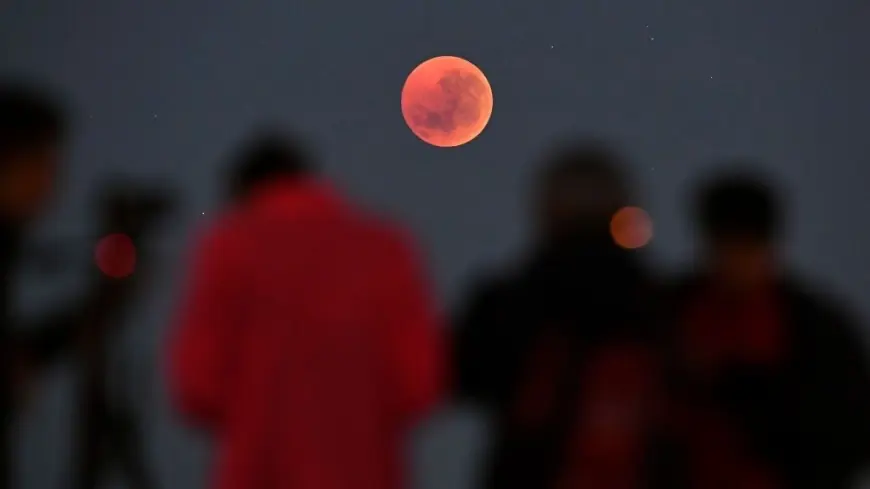
The total lunar eclipse blood moon will transform the moon into a coppery red in the early hours of March 3, 2026, offering dramatic views across North America and beyond. The event will be visible from wide swaths of the night side of Earth, but exactly what an observer sees depends on their location.
Where it will be visible
Skywatchers in North America, Australia, New Zealand and eastern Asia are included in the path of the March 2026 event. One account lists clear visibility in North and Central America; another notes the eclipse will be partially visible in Central and South Asia and will not be visible in Europe or Africa. The best views are expected from the western half of North America, Australia and the Pacific, while other regions in the night side will also see at least part of the phenomenon.
Total Lunar Eclipse Blood Moon timing
Totality, when the moon is fully immersed in Earth's shadow, is given in one timing as lasting 58 minutes: from 6: 04 a. m. EST (1104 GMT) to 7: 02 a. m. EST (1202 GMT). A separate description notes totality will occur almost at dawn and says the full moon will take on its reddish color for just 12 minutes a few hours before sunrise. The timing information for viewers will translate into local times across North America; in New York, observers will see the moon slip into totality and turn blood red but maximum eclipse — when the moon moves deepest into Earth's shadow — will occur after moonset and therefore will not be visible there.
What you'll see and why
A total lunar eclipse occurs when Earth sits between the moon and the sun. With the moon sitting in Earth's shadow, the only light reaching the lunar surface is filtered through Earth's atmosphere, which turns it red and gives rise to the name blood moon. One description calls the March 3 event a long-lasting and impressive blood moon that will be visible to billions within the path of the eclipse. NASA offers a vivid image of the process: "It's as if all the world's sunrises and sunsets are projected onto the moon. " The filtered light produces a coppery, orange or dull red hue rather than a complete loss of brightness.
Safety and viewing tips
Unlike solar eclipses, lunar eclipses are completely safe to watch with the naked eye. Observers are advised that no special equipment is required, but the best view comes from a dark location with clear skies. A high vantage point is recommended because at the time of totality the moon may be almost touching the horizon and about to disappear; viewers should avoid buildings or trees that could block the western horizon. Practical guidance includes dressing warmly and getting somewhere dark to maximize the experience. One summary of coverage even notes editorial details: "When you purchase through links on our site, we may earn an affiliate commission, " and the coverage offers newsletter sign-ups and a live blog for ongoing updates.
Minnesota specifics and local reaction
Minnesotans were told to set alarms for 5 a. m. on March 3 to catch a rare astronomical treat: a total lunar eclipse. Those who wake early can expect to see a yellow sun rising above blue skies while a red moon sets on a darkened western horizon. Astronomers predicted the eclipse would be visible in east Asia, Australia, the Pacific and the Americas and said it would last about an hour. John Zimitsch, vice president of the Minnesota Astronomical Society, urged people to watch in person: "The ancients had no idea the physics and what was going on. They just saw the moon turning... this orange ruddy [color]. That's where the 'Blood Moon' comes from, " and he added, "Look up. Put down your cellphone. You can go online and you're going to be able to see pictures, but seeing astronomical events in person is a wonderful thing. " He also said, "There's something inside of us that draws us to these astronomical events. Maybe it's just primitive, " and: "And no-one's using photoshop or AI when you're actually looking at it. It's real. "
Frequency and future appearances
Observational cadence is described in multiple ways: one set of materials notes that total lunar eclipses are slightly rarer than total solar eclipses, giving average intervals that a blood moon occurs every 2. 5 years while a total solar eclipse happens about every 18 months, citing NASA's astronomical catalogs. It is also noted that total lunar eclipses can be seen from anywhere it is nighttime, making them seem more frequent to many viewers. Officials at the National Aeronautics and Space Administration reported that March 2025 was the last total lunar eclipse visible to the Americas, and the last one before that was three years earlier. Astronomers in one account predicted this total lunar eclipse will not be visible in the Americas again until June 2029. For practical planning, viewers are advised to consult a local visibility tool where they can enter their city to see exact local timings and confirm whether the eclipse will be visible from their location.
Close observation will reveal the moon's gradual shift from a bright silver disk to a deep red as Earth's shadow sweeps across it — a sequence collectors and casual viewers alike value for its drama and rarity.