






















Trump State Of The Union Undercuts Economic Pitch With Military Pageantry

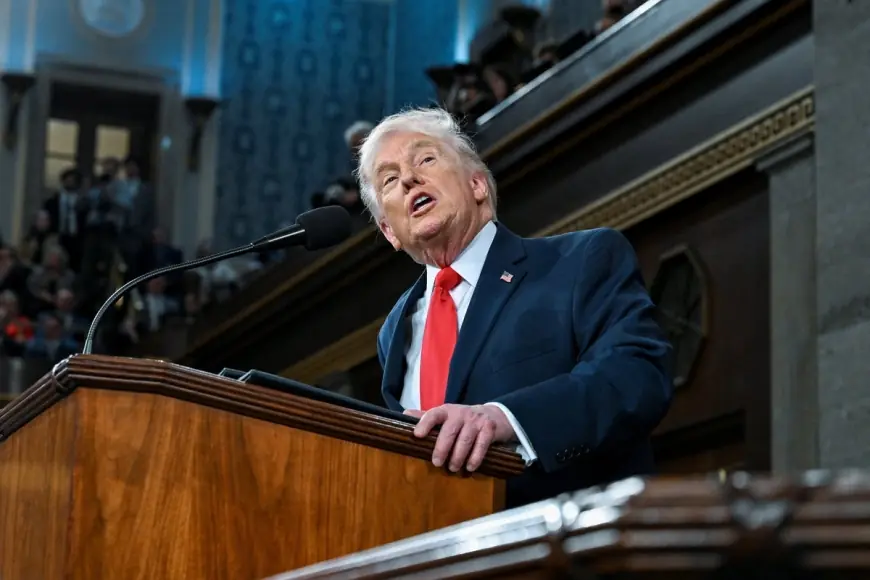
President Donald Trump staged a highly theatrical State of the Union that leaned into American military might and emotional guest moments but offered limited detail on how his administration would ease everyday costs for families. The trump state of the union address has left lawmakers and commentators questioning whether it sharpened a midterm message or merely served as a dramatic send-off for a beleaguered term.
Medals of Honor and guest tributes
The address included multiple show-stopping moments meant to tug at viewers’ emotions: a shoutout to the mother of a woman slain on a bus in Charlotte, North Carolina; recognition of the victorious U. S. men’s Olympic hockey team; and on-the-spot presentation of Medals of Honor to members of the U. S. military. Those theatrical elements were woven through a speech that repeatedly celebrated American prestige and military achievement, but drew critique for overshadowing concrete domestic policy.
Reaction to Trump State Of The Union from Republicans and Democrats
Members of both parties left Tuesday evening’s address asking whether the president had found a focused midterm strategy or produced a last hurrah. Most experts in Washington now agree the presidency will likely be hampered by one or more Democratic congressional majorities after the year concludes, and that prospect shaped how legislators interpreted the speech. The trump state of the union prompted particular frustration among some conservatives who wanted a clearer economic agenda.
Marjorie Taylor Greene and right‑wing criticism
Critics on the right, including former Rep. Marjorie Taylor Greene, signaled dissatisfaction with the lack of emphasis on lowering costs and broader economic policy. Those critics have pushed for a refocus on economic measures rather than what they see as performative foreign‑policy triumphs and an attempt to tout a double‑digit number of “wars ended. ” The speech’s relative scarcity of specifics about easing financial burdens on American families amplified those complaints.
Drug pricing and 2025 policy footholds
Domestic policy specifics in the address were limited to a few areas where the White House has gained ground in 2025 despite difficulty passing legislation. The administration pointed to drug pricing as one of those pockets of progress, highlighting efforts to lower prescription costs through a “most favored nations” program. That narrow policy focus came against a backdrop of an inability to pass broader bills even with twin GOP majorities in Congress, a dynamic that helps explain why the president emphasized achievements he could claim without new legislation.
Curt Mills, Hegsethism and the Maduro raid
Curt Mills of the American Conservative magazine criticized the speech’s tone after the opening declaration, arguing the president showed an “extreme lack of conviction” in claiming America was entering a new age of prosperity. Mills wrote that “Doubtless tens of millions of Americans hope that that is true. ” A longtime skeptic of military interventions in Iran, Venezuela and elsewhere, he faulted the address for its reverent boastings about the armed forces—singling out an in‑depth description of the raid to capture Venezuela’s Nicolas Maduro—and labeled the posture “Hegsethism, ” a might‑makes‑right ideology he associates with the president’s neoconservative defense secretary. Mills added: “The fetishization of the military is more pernicious, pointless (so what is this for?) and low IQ than in term 1. ” He continued, “It venerated and exalted the military with no clear rationale why. Pure Hegsethism. We got no answer on Iran. ”
Perception, timing and political effect
The timing matters because the speech came as parties are sizing up the midterms and as commentators assess how a presidency will function if congressional control shifts. The address’s emphasis on military spectacle and high‑profile guests produced clear moments of drama but limited new policy commitments that would directly relieve everyday financial pressures. That cause‑and‑effect dynamic—spectacle substituting for substantive economic detail—helped produce the cross‑partisan unease that followed. The page where the speech was published also carried standard site prompts about notifications and an invitation to be emailed about offers, events and updates; other contextual material about the speech’s reception in the final moments of the event is unclear in the provided context.
What makes this notable is that a speech designed to win a national audience instead sharpened questions about priorities: heavy focus on the military and foreign operations drew attention away from the narrower domestic victories the administration could claim in 2025, and left key constituencies wanting more on cost relief and economic policy.