






















Total Lunar Eclipse Blood Moon: How Minnesotans and Western North America Should Prepare for the March 3 Dawn Show

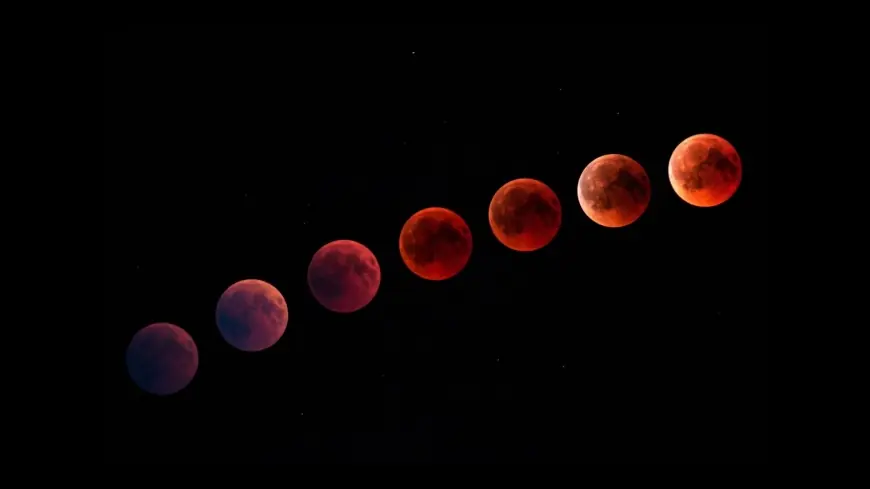
The Total Lunar Eclipse Blood Moon on March 3 will be felt first by early-rising viewers across western North America, with Minnesotans singled out who set alarms for a pre-dawn look. This is one of the few total lunar eclipses visible across the Americas, Asia and Oceania in the near term, so local preparation—picking a high, unobstructed spot and planning for an early start—will have an outsized payoff for skywatchers.
What Minnesotans and western North America can expect from the Total Lunar Eclipse Blood Moon
If you’re in Minnesota or anywhere in the western half of North America, the mechanics line up to make this a memorable dawn pairing: the red-tinted moon will be low on the horizon as sunrise approaches. Minnesotans who set alarms for 5 a. m. on March 3 are positioned to see the total lunar eclipse; expect a scene where a rising sun and a reddened, setting moon share the sky. It’s safe to view this event without special equipment—simple viewing from a clear, elevated site will often give better results than looking from a backyard blocked by trees or buildings.
Here’s the part that matters to practical viewers: dress warmly, choose a vantage with a clear western horizon, and leave extra time to reach a dark spot. For many in the Americas the show will be visible in the early morning hours; observers in Australia, New Zealand, eastern Asia and across the Pacific will also see the effect where nighttime aligns.
What’s easy to miss is how much location matters when the moon is near the horizon—small rises in elevation can change whether the lunar disk slips behind buildings or remains in sight at totality.
Event details and visibility, with timing notes and some developing points
- Where it will be visible: across the Americas, parts of Asia, and Oceania, including Australia and New Zealand; best views in the western half of North America and across the Pacific.
- Color and cause: during totality the moon will take on a reddish hue, commonly called a "blood moon, " caused by sunlight filtered through Earth's atmosphere reaching the lunar surface.
- Timing and duration: totality will occur near dawn in many North American locations. Estimates of how long the moon will appear reddened differ in coverage—some descriptions call it nearly an hour of tinting, while other estimates note a much shorter span of full totality. Details on exact durations are still developing.
If you’re wondering why this keeps coming up: the reddening happens because scattered sunlight from Earth’s atmosphere continues to reach the moon even while it’s in Earth’s shadow, essentially projecting sunsets around the globe onto the lunar surface.
Practical checklist for viewers:
- Wake before dawn and confirm a clear western horizon; urban rooftops or nearby hills often help.
- No special filters or eye protection required—this is safe to view with the naked eye or binoculars for closer detail.
- Expect the scene to change quickly as the moon moves toward the horizon—arrive early and stay flexible.
Micro timeline (verifiable details):
- March 3: total lunar eclipse and the resulting blood moon will be visible across the night side of Earth where conditions align.
- Earlier reference point: the last total lunar eclipse visible to the Americas occurred in March 2025.
- Forward-looking timing: projections vary—some coverage notes no worldwide total until New Year's Eve 2028–2029, while other projections place the next total visible in the Americas later; these timing estimates remain subject to refinement.
Practical note: travel-oriented lists highlighting dark-sky reserves and remote viewing spots have circulated for the March 3 event; if you plan to relocate for viewing, confirm access and local conditions ahead of time, as schedules and circumstances can change.
The real question now is whether you’ll find a horizon-clear spot in time. For many viewers across North America and Oceania, the payoff will be a rare visual of a reddened full moon paired with dawn or dusk lighting—an experience that, for those who make the effort, tends to feel more memorable in person than in photographs.