



















Met Police Apologises after Sir Lindsay Hoyle Passed Information from British Virgin Islands Visit

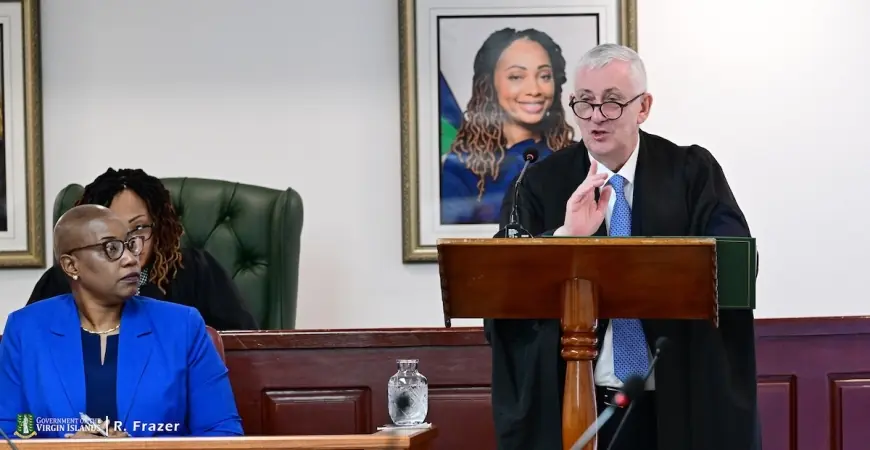
Sir Lindsay Hoyle confirmed he passed information he received during a visit to the British Virgin Islands last week to the Metropolitan Police, and the force has apologised for inadvertently revealing him as the source in the subsequent investigation into Lord Mandelson. The overlap of the Commons speaker’s diplomatic itinerary with the police inquiry has drawn scrutiny because it links a high-profile territorial visit to an operational decision by the force.
Sir Lindsay Hoyle speaks at the House of Assembly
Delivering the first address to the House of Assembly by a speaker of the British House of Commons, Sir Lindsay opened with the line "The light that comes from wisdom never goes out" and pledged to be a voice for the Virgin Islands in London. At a special sitting of the House of Assembly on Tuesday he emphasised support for self-determination and said he would "pass on comments, but it is not for me to decide, " stressing that the people of the Virgin Islands should have the final say on their future. He described himself as an ally of the overseas territories and vowed: "I will always stand up for the rights of the OTs. I will always stand up for all of you. "
British Virgin Islands visit included meetings and an apology over 75th anniversary
The speaker’s four-day visit included plans to meet the police, the attorney general and her team, and representatives of the Girl Guides. Sir Lindsay apologised for missing last year’s 75th anniversary of the restoration of the territory’s legislature and referenced the islands’ progress "from the Great March of 1949 to today’s democracy. " He also recalled hearing Charity Rymer, a Virgin Islands student, address the UK Youth Parliament in November 2022 about the impact of hurricanes Irma and Maria five years earlier.
Commission of Inquiry reforms and Governor Daniel Pruce
During his address Sir Lindsay argued the implementation of recent Commission of Inquiry reforms was necessary to "improve governance" in the territory and urged the House of Assembly to work with Governor Daniel Pruce, who was appointed by London, to achieve the best results. He signalled he could play a discreet role in discussions between the territory and the United Kingdom, saying he could "be in the background" and pass on comments, some of them "very strongly. " He also noted he is no longer an active politician and that made it easier to be frank about his views.
Metropolitan Police apology and Lord Mandelson arrest
The Metropolitan Police apologised to the Commons Speaker for "inadvertently revealing" that he had been the source of information relating to Lord Mandelson’s arrest on Monday, and senior officers met Sir Lindsay on Wednesday to explain the situation, which the force regarded as a serious breach of protocol. Sir Lindsay made a statement to MPs confirming he had given "relevant" information to the force, saying he did so "in good faith" and that it was his "duty and responsibility, " and adding: "It is regrettable this rapidly ended in the media. " He did not provide further details in that statement beyond confirming the referral.
Lord Forsyth’s denial and legal challenge by Mishcon de Reya
Police had twice told Lord Mandelson’s lawyers that information about alleged travel plans had been passed on by Lord Forsyth, the Speaker of the House of Lords; Lord Forsyth denied any involvement on Tuesday evening, calling the suggestion "entirely false and without foundation, " and arranged an urgent meeting with the Metropolitan Police on Thursday to seek clarification about how his name came to be mentioned and why he was not contacted as media widely reported erroneous attribution. Mandelson’s lawyers, Mishcon de Reya, have written to the Metropolitan Police asking what information and evidence formed the basis for the decision to arrest their client. They say Lord Mandelson had agreed to an interview next month and that the decision to take him into custody was prompted by what they describe as a "baseless" suggestion he was planning to "take up permanent residence abroad, " a claim they say made him appear a flight risk.
What makes this notable is the confluence of a diplomatic visit focused on constitutional talks, governance reforms and public engagement with a separate criminal-procedure development that the police acknowledge was mishandled in disclosure terms. The timing matters because the same visit that foregrounded the British Virgin Islands’ push for self-determination also produced the information that fed into an arrest and a subsequent procedural apology from the force.