























Samsung bets on built-in Privacy Display with Galaxy S26 Ultra as preorders open

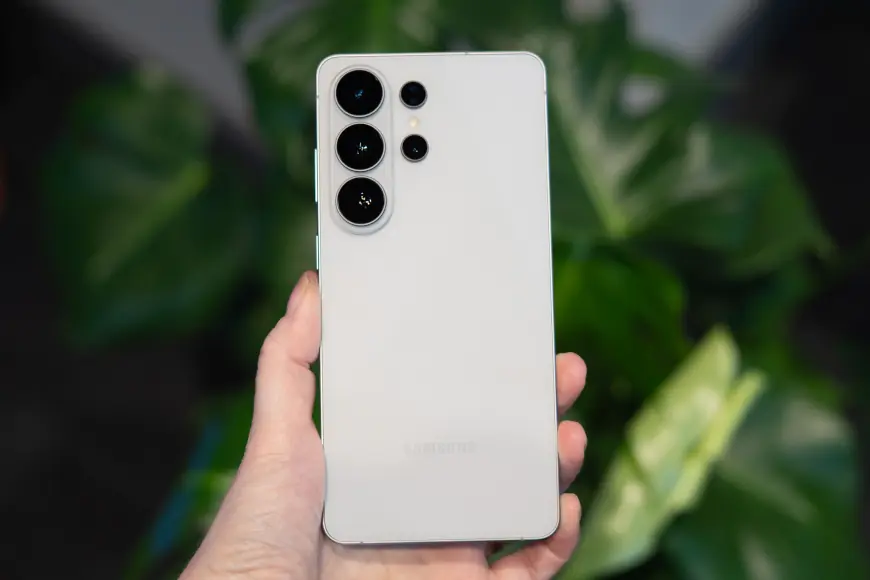
samsung has folded a hardware privacy screen into the Galaxy S26 Ultra and opened preorders for the new S26 series, with retail sales scheduled to begin on March 11. The addition of a Privacy Display, a thinner, lighter chassis and targeted camera and display tweaks mark the headline moves in a release that emphasizes AI performance and incremental refinement.
Samsung's Privacy Display
The Galaxy S26 Ultra’s signature new feature is the Privacy Display, a built‑in system that limits viewing angles without a third‑party screen protector. The panel contains two sets of pixels: one that projects directly to the person holding the phone and a second, wider set that sends light to the sides. Enabling the Privacy Display turns off the latter pixels, making the screen look normal to the primary viewer while appearing very dim from off angles; the effect also restricts viewing from top and bottom, not only left and right.
The feature is not entirely foolproof — someone directly behind a user with a clear over‑the‑shoulder line of sight may still glimpse some content — but there is an extra setting that amplifies the effect. Flipping the mode on and off in person reduced image contrast enough to make text difficult to read from angles, while the impact on perceived screen quality is modest overall: there is a small drop in brightness that users are unlikely to find significant.
Galaxy S26 Ultra customization and use cases
Privacy Display is deeply configurable. It can be toggled from a Quick Settings tile, applied to the entire screen or restricted to incoming notifications only, and can activate for specific apps or whenever a PIN or passcode screen appears (for example, banking apps and the lock screen). It can also integrate with Routines and geofencing to switch on or off automatically — for instance, turning off at home and on when leaving an office — and it functions the same whether the phone is held vertically or horizontally. The capability had been leaked before the announcement and draws from a concept seen previously in laptops, but putting it into a smartphone as a hardware option is the marquee change here.
Galaxy S26 Ultra camera and display upgrades
Camera hardware received a tangible tweak: the primary sensor is a 200‑megapixel main unit paired with brighter optics, moving the main lens aperture from f/1. 7 to f/1. 4. The telephoto system includes a 50‑megapixel 5x zoom that benefits from a brighter telephoto lens, with aperture shifting from f/3. 4 to f/2. 9; each increment of extra light is intended to aid low‑light performance. Another on‑screen enhancement borrowed from Samsung’s TVs, ProScaler, can upscale images for sharper photos and video playback on the device.
At least part of the S26 Ultra’s display toughness and finish comes from materials choices: the cover glass uses Corning’s Gorilla Armor 2 and the back is Gorilla Glass Victus 2. Camera modules are now housed in a surrounding glass module rather than appearing to float independently on the back.
Aluminum frame, dimensions and color choices
The S26 Ultra trims down modestly from its predecessor: thickness is 7. 9mm, down from 8. 2mm, and weight drops to 214 grams from 218 grams. Samsung swapped a titanium frame back to aluminum, a change that reduces mass by roughly 4 grams and carries the device’s color consistently from the back to the edge. That swap was described as following industry styling trends. The overall aesthetic has been unified across the S26 family — the Ultra has shed the boxy Note‑like corners in favor of the same rounded curvature used on the S26 and S26+.
Standard color options for the S26 Ultra are cobalt violet, sky blue, black and white; two online‑exclusive finishes, silver shadow and pink gold, will be offered as well. In person the standard hues read more subdued than past versions. There are no magnets embedded in the phone’s rear; magnetic accessories are supplied in the case instead.
Pricing, launch timing and wider S26 lineup
All three phones in the Galaxy S26 lineup are available for preorder and will go on sale on March 11. The baseline Galaxy S26 and the Galaxy S26+ received a $100 starting‑price increase and now begin at $900 and $1, 100, respectively; observers linked that rise to a RAM bump in those models. The S26 Ultra holds its predecessor’s starting price at $1, 300.
Samsung also announced two new earbuds timed to the S26 launch: the Galaxy Buds4 at $179 and the Buds4 Pro at $249, both slated to arrive on March 11. The company emphasized that the S26 series centers on performance optimizations and new AI features intended to boost on‑device AI processing, even as the phones remain broadly evolutionary rather than radically redesigned.
What makes this notable is the combination of a hardware privacy system with software ties and incremental but measurable hardware improvements — thinner dimensions, lighter weight and brighter camera lenses — that collectively shift the flagship toward everyday practicality rather than dramatic reinvention.
One final hardware detail remains unclear in the provided context: a camera line listing ends midphrase for one telephoto sensor, and that specific specification is unclear in the provided context.