
















World Cup Tickets Fifa: Surprise sales window and soaring resale costs fuel fan backlash

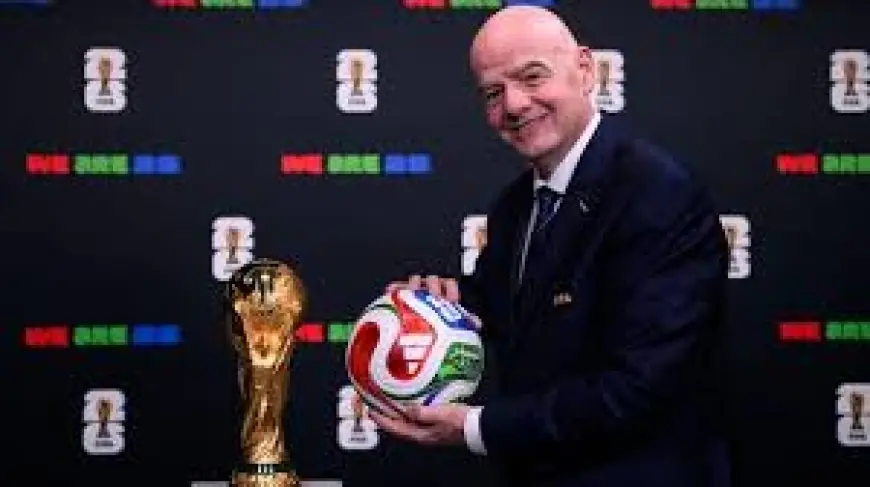
FIFA sent an unexpected batch of emails this week promising an "exclusive additional chance to purchase" tickets, touching off confusion after the messages omitted critical timing details. The timing matters because the communications arrived while the Web Shop Portal shows it closed until 2 April, and fans facing a resale market with tickets listed for hundreds of dollars are left questioning access and fairness to the 2026 tournament.
FIFA email sparks questions
The email landed in many inboxes around 9 a. m. ET on Tuesday and advertised that recipients had an "exclusive ticket window" and that their "exclusive 48-hour access window(s) will start at: " — but the time field was blank. A login link in the message directed users to a notice that the Web Shop Portal had closed on 22 February 2026 and would reopen on 2 April 2026. For hours after the first round of messages, there was no public explanation from FIFA spokespeople.
World Cup Tickets Fifa exclusive windows
Some fans began receiving follow-up emails around 2 p. m. ET the same day that did include time slots. Those amended messages specified a slot for Wednesday, Feb. 25, with the earliest access beginning at 11 a. m. ET. FIFA has said a limited number of additional single-match tickets have become available following the conclusion of the Random Selection Draw; a spokesperson confirmed that the new availability is limited and will be offered to a defined group of applicants who previously applied but were not allocated tickets in the lottery.
Web Shop Portal 22 February to 2 April schedule
The apparent contradiction — an email promising a sales window while the portal shows it closed until April — triggered fans to post screenshots and questions across Reddit, TikTok and WhatsApp groups. Fans who had entered the Random Selection Draw but did not win were the targets of the messages, which read in part: "Following your recent unsuccessful FIFA World Cup 2026 ticket application … and the availability of a limited number of additional tickets, you have been granted exclusive access to a dedicated ticket window with single-match tickets in Host City(ies) that you applied for. " The amended emails named cities including Dallas, Philadelphia, Kansas City and Guadalajara; other users reported time slots for Boston, Toronto, Los Angeles and San Francisco. It is unclear in the provided context whether all listed cities are included or only some. Fans who originally applied for Miami and New York New Jersey said they had not received time-slot emails.
Houston resale prices and parking
At the same time that FIFA framed the April window as the next and last chance to buy, resale listings show steep costs that put matches out of reach for many. An account of the Houston market published Feb. 23, 2026 at 11: 39 AM found that cheapest seats for a round-of-16 match were listed on SeatGeek for more than $700 each. Even parking options were listed as high as $270. Only a small fraction of fans secured $60 entry-level tickets; those seats represented 1. 6% of total World Cup tickets. With resale prices continuing to climb, the secondary market is making live attendance prohibitively expensive for typical households.
Lindsay Owens and Groundwork Collaborative critique
Lindsay Owens, executive director of Groundwork Collaborative, framed the impact in concrete terms: four seats at the $700 rate would equal nearly six months of marketplace health insurance premiums for a typical family. Owens criticized the current system, saying FIFA controls both the primary market and the resale market, where prices have been even higher, and that the organization is profiting from resales. She added that organizers could have used a lottery-style distribution to preserve more affordable access.
Fans already accustomed to the Random Selection Draw — which FIFA says generated more than 500 million ticket requests — were given a new jolt by the short-notice messaging. Gianni Infantino has recently asserted that "every match is sold out" while also noting that some tickets were held back for last-minute sales. The immediate effect of the Tuesday emails was wide confusion and a rush of online questions; the longer-term effect is renewed scrutiny of how the remaining inventory will be allocated and who will ultimately be able to attend in person.
What makes this notable is the collision of an opaque sales process with an outsized resale market and concrete numeric signals — a closed portal through 2 April, an announced 48-hour access window left blank, follow-up time-slot emails for Feb. 25 with an 11 a. m. ET start, and entry-level $60 tickets accounting for only 1. 6% of the total — creating both immediate uncertainty for fans and broader concerns about equitable access. Another last-minute sale is expected in April; how and to whom tickets are offered between now and then remains unclear in the provided context.
Separately, a website technical notice observed that some readers encounter an unsupported browser message and were told to download a modern browser to achieve the site's intended experience. The relevance of that advisory to ticket buyers is unclear in the provided context.
Fans, consumer advocates and officials now face a compressed timeline of concrete dates and dollar figures to parse: a portal closed on 22 February 2026, a reopening slated for 2 April 2026, specific time slots issued for Feb. 25 with access from 11 a. m. ET, and resale listings exceeding $700 per seat in markets such as Houston. Those numbers frame the practical challenge for anyone trying to secure seats in the months ahead.