


















Al Green’s ejection shifts the spotlight — who in the chamber was most affected and why his sign mattered

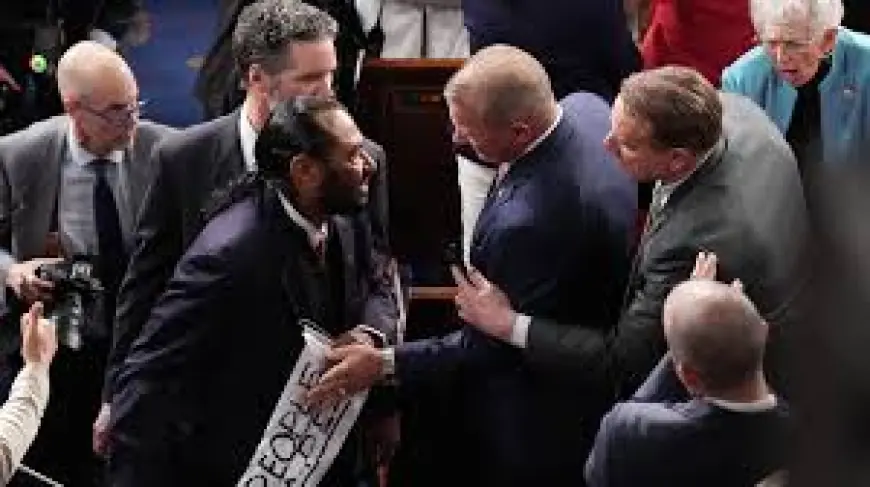
The image of al green being led from the House chamber with a cardboard sign and a walking stick reframed the night for Democrats and amplified questions about how protests are handled during high-profile addresses. His silent protest — a direct reference to a racist video depiction of Barack and Michelle Obama — forced attention onto tensions inside the chamber and left an empty seat marked by a handwritten sign that read “Al Green”.
Al Green’s move and the immediate impact on Democrats in the chamber
Here’s the part that matters: Green’s ejection, almost immediate and the second year in a row, turned a routine State of the Union into a moment of confrontation and visible division. While dozens of Democrats had chosen a quieter boycott or a seated refusal to stand, his aisle protest concentrated cameras and GOP reactions on a single image — the sign that read "Black people aren’t apes!" — and on the exchange that followed as he was escorted out.
Event details embedded in the confrontation
As the president began his address and many attendees sat, Green lingered in the center aisle holding his sign, a reference to the president sharing a racist video depiction of Barack and Michelle Obama. Multiple Republican representatives tried to grab at the sign or block it from cameras as a staffer escorted Green toward the door. Representative Troy Nehls, also from Texas, was seen engaging aggressively with Green just before the escort. Senator Markwayne Mullin approached Green in what was described as a menacing manner. Green walked out clutching his walking stick and the protest sign, and some Republicans chanted "USA! USA!" during the exchanges. After he left, his seat was left empty except for a handwritten cardboard sign reading "Al Green".
Other Democratic responses and departures during the speech
Democrats spent much of the speech sitting solemnly while Republicans frequently rose to applaud. Several Democrats walked out early. Senator Mark Warner, a Democrat from Virginia, posted on a social network that he "couldn't sit through an hour of Trump's lies" and left while the president spoke about economic achievements. Representative Bill Foster from Illinois shared on a social platform that he had tallied "5 bald-faced lies" — the same as the previous year — before departing, writing that he was out in less than one hour. Representative Rashida Tlaib, wearing a pin that read "release the files", could be heard yelling about the killing of Alex Pretti, a Minneapolis nurse shot to death by federal agents, repeating, "They saw the videos, Mr President. They saw the videos. " Representative Ilhan Omar shouted "You should be ashamed, " and repeatedly yelled "you have killed Americans" as the president told Democrats they should be ashamed.
Aftermath in the chamber and Green’s reaction outside
al green has been among the president’s most vocal critics and was the first member of Congress to call for his impeachment as early as 2017. He represents a predominantly African American district and has long advocated for civil rights. This was the second consecutive year he was removed from the annual address; last year the House speaker, Mike Johnson, ordered him out for yelling responses while the president spoke. This year’s protest was silent but deliberate. Outside the chamber, Green described his removal as "of no consequence, " held his sign for cameras, and said nothing would prevent him from acting on what he considered righteous. "You have to take a stand, " he added. "I am just a person who has done it – but there are many others, I believe, who would. "
- Green’s ejection concentrated attention on a sign linking the president’s past actions to an explicitly racial message.
- Visible physical interactions included attempts by GOP members to block or seize the sign and confrontations involving a Texas representative and a senator.
- Multiple Democrats chose quieter forms of protest — sitting solemnly or walking out — while Republicans repeatedly rose to applaud the president.
- The empty seat with a handwritten "Al Green" sign became a clear visual shorthand for the division in the chamber.
What’s easy to miss is how the mix of silent protest, physical engagement at the aisle, and televised departures produced overlapping narratives: individual dissent, party-wide standoffs, and escalation in direct encounters between members during a ritualized address.
What the scene signals about future floor behavior
The real question now is how chamber decorum and protest tactics will be managed at future events. Green’s second ejection in consecutive years underscores a pattern of confrontational responses to the president that can be silent, symbolic and still provoke physical attempts to suppress visibility. Whether colleagues replicate the aisle tactic, continue to sit in protest, or increasingly walk out remains unclear in the provided context, but the night made clear that visible dissent will shape how these addresses are remembered.
Omar and Tlaib — both vocal in their responses within the chamber — amplified a broader Democratic pushback that night, while several Democrats opted for departures rather than aisle confrontation. The overlap of shouted exchanges, social posts by members, and an escorted ejection kept attention on dissent as much as on the president’s remarks.
Editors' note: schedule and follow-ups mentioned in public statements are unclear in the provided context and may evolve as additional details are released.