




















Eric Slover’s Medal of Honor moment shifts focus to the wounded pilot and the raid that captured Nicolás Maduro

What mattered in the chamber was who felt the cost: eric slover, a wounded Army helicopter pilot still recovering and using a walker, was drawn into the national spotlight during the State of the Union, receiving a standing ovation while patriotic chants filled the room. His decoration recentered attention on a daring Jan. 3 operation that led to the capture of Nicolás Maduro and his wife, Cilia Flores — now held in a Brooklyn jail on drugs and weapons charges — and underscored the personal toll on those who carried out the mission.
Eric Slover’s moment: immediate impact on ceremony, politics and the people present
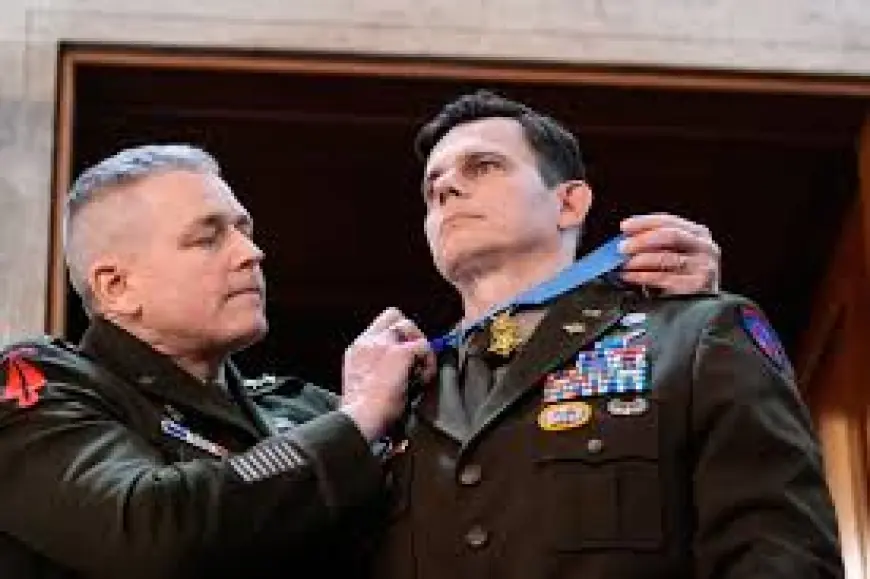
As Slover, 45, and his wife entered the chamber they were greeted with a standing ovation and chants that echoed across partisan lines. He appeared in full dress uniform but was still recovering from the wounds he suffered during the raid and relied on a walker to steady himself. Lt. Gen. Jonathan Braga, commander of Joint Special Operations Command, placed the Medal of Honor around his neck in the Capitol gallery — the first time that medal has been presented during the annual address.
Early signals from the podium and the Operation Absolute Resolve account
From the podium, the president described elements of the covert Jan. 3 mission, named Operation Absolute Resolve, and cast Slover as a principal architect and the flight lead in the cockpit. The account emphasized that the first Chinook carrying Slover approached a heavily fortified compound in Caracas under cover of darkness and that large defensive forces and foreign military technology were protecting the site. As that helicopter approached, it came under intense machine-gun fire from multiple directions.
Injury, control and the mission’s outcome
The president’s description noted that Slover was struck repeatedly and sustained serious wounds to his leg and hip, absorbing multiple rounds that severely damaged his leg. Despite those injuries, he maintained control of the helicopter and enabled the operators to carry out the mission. The operation concluded with the capture of Nicolás Maduro and Cilia Flores, with no American lives lost.
Capitol honors and the other recipient
During the same ceremony, the president also presented the Medal of Honor to retired Navy Captain Royce Williams, identified in coverage as a 100-year-old honoree. The dual presentations turned the address into a rare venue for the nation’s highest military decoration and forced a public reckoning with battlefield sacrifice inside a political setting.
Service record, decorations and a compact timeline
What’s easy to miss is how the medal presentation layered biography and battlefield detail into a single ceremonial moment. The record provided ahead of the ceremony included that Slover enlisted in the Army in 2005, and lists a long set of awards: Distinguished Flying Cross with V Device; Purple Heart; Bronze Star with one oak leaf cluster; Meritorious Service Medal with one oak leaf cluster; Air Medal with C Device; Air Medal with numeral 3; Army Commendation Medal with one oak leaf cluster; Army Achievement Medal with three oak leaf clusters; Combat Action Badge; Senior Army Aviator Badge; Master Aviator Badge; Parachutist Badge; Air Assault Badge; and the Army Service Ribbon.
Mini timeline:
- 2005 — Slover enlisted in the Army.
- Jan. 3 — The operation known as Operation Absolute Resolve took place.
- Tuesday — The Medal of Honor was presented to Slover during the State of the Union; the presentation was made in the Capitol gallery by Lt. Gen. Jonathan Braga.
Here’s the part that matters for veterans and families: eric slover’s public appearance, his wounds and the long medal citation that followed make the personal cost of the raid unmistakable for anyone in the chamber or watching from home. The deposed Venezuelan president and his wife are now in a Brooklyn jail on drugs and weapons charges, a factual aftermath of the mission highlighted during the ceremony.
The real question now is how this singular public decoration will shape internal military and public discussions about the operation and the injured personnel who return from such missions. Recent descriptions emphasized that the mission’s success and the lives of fellow warriors hinged on Slover’s ability to keep flying despite severe pain and damage to his leg.
Editor's aside: The bigger signal here is how a ceremonial moment inside the Capitol can compress battlefield events, long service records and ongoing recovery into a single, politically charged image — and that image will likely influence how the operation is remembered.