














Manchester Central Mosque security scare reverberates through worshippers and neighbourhood after man arrested with axe and knife

What matters first is who was directly affected: worshippers and volunteers inside a packed evening prayer. A man entered manchester central mosque during Taraweeh prayers carrying items described as an axe and a knife; volunteers challenged and contained him, the congregation was moved and police were called. The arrest has left people asking whether worship places need different on‑site safeguards.
Immediate impact at Manchester Central Mosque: volunteers, worshippers and local calm shaken
There were large numbers inside the mosque when the incident unfolded: one figure stated about 2, 000 worshippers were present, while a witness described approximately 5, 000 people being asked to evacuate. Volunteers played a central role—challenging the entrant, escorting him into a side room or office, and keeping him talking until officers arrived. Here's the part that matters: that frontline volunteer response prevented escalation and allowed the situation to end with no injuries.
Event details and disputed descriptions
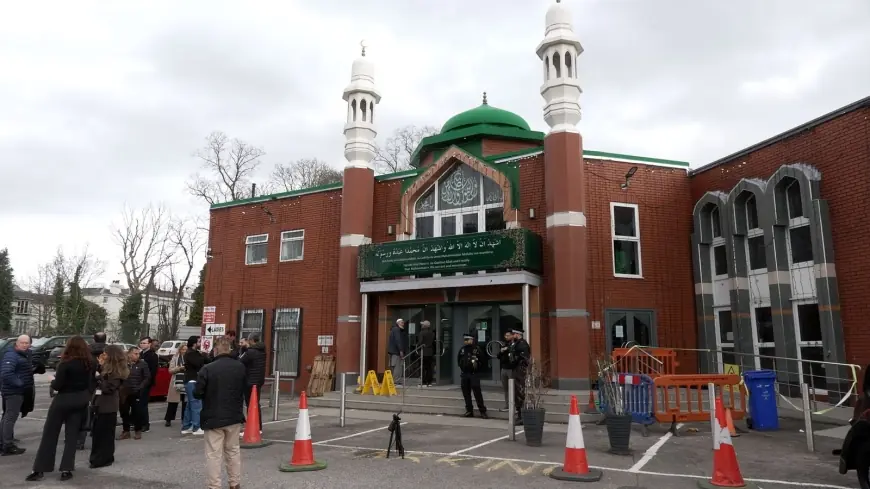
Police were called to Manchester Central Mosque on Upper Park Road in the Victoria Park area of Rusholme on Tuesday evening, with times given as around 20: 40 GMT, 8. 40pm and 8. 30pm in different accounts. The man who was detained was described in one statement as being in his 40s and held in custody on suspicion of carrying an offensive weapon and possession of Class B drugs; other descriptions called the suspect a white man in his 50s and also described him as in his late 40s with an athletic build and 'subble'. Items said to have been carried included an axe, a knife and a hammer; one account also mentioned a hammer and a suspicious bag. A witness said four people restrained the suspect and used a fire extinguisher during that restraint. No-one was injured and there was no suggestion that threats were made.
Arrest, further search and police lines of inquiry
Officers arrested the man on suspicion of possessing an offensive weapon and class B drugs and he remains in custody for questioning. Police said they were working with detectives from Counter Terrorism Policing North West but had not formally declared the incident terror‑related; representatives from the mosque questioned that position. The force is also seeking a second man reported to have been acting suspiciously—a black male described in one account as in his late 40s wearing a grey hoodie and a navy blue jacket (both hoods up), blue tracksuit bottoms and white trainers. Police said they were reviewing CCTV and body‑worn video to identify that person and asked anyone with information to come forward.
Community response, official reactions and scene details
Volunteers and an off‑duty special constable who was part of the congregation alerted police; officers were said to have responded within 15 minutes. Around 15 police cars were reported on scene in one account and video showed a heavy police presence outside the mosque that night; the following morning the mosque was quiet with no visible police presence and neighbours said they had not seen signs of a disturbance. The mosque described the incident as a serious security incident and confirmed it had passed CCTV to police. Political figures reacted: one MP described the episode as an outcome of far‑right scapegoating of Muslims and labelled it Islamophobia, while another senior political figure said he was concerned and thanked volunteers and emergency services for their quick response.
Practical implications, community concerns and next signals
- Who feels this first: worshippers present that evening and volunteers who engaged the suspect.
- Operational signals to watch for: identification or apprehension of the second man, results from CCTV/body‑worn camera reviews, and any formal change in the incident's classification by investigating teams.
- Community ask: the mosque highlighted a rise in threats and hostility toward the Muslim community and called for greater resources to address Islamophobic incidents.
It’s easy to overlook, but the speed of the volunteer response—and the presence of an off‑duty special constable—were decisive in preventing injuries and limiting disruption. The real question now is how investigators resolve discrepancies in descriptions and finalise the motive or intent, because at this stage the circumstances and intent remain unclear in the provided context.
If you’re wondering why this keeps coming up: the mosque leadership and community representatives have signalled wider concerns about rising hostility and are cooperating with investigators as inquiries continue.