
























Space hazards: Why a puncture in outer space is the worst thing for the ISS

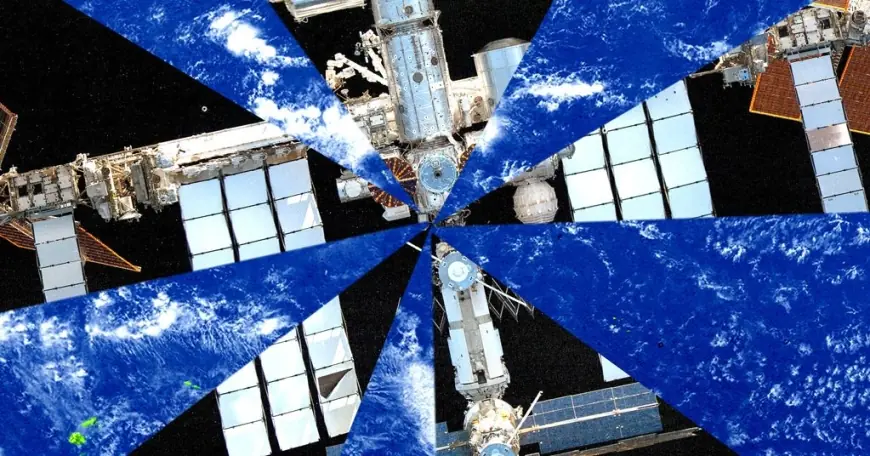
Space hazards are more than hypothetical: a puncture wound in outer space could force the International Space Station crew to evacuate. The ISS endures millions of pieces of debris, many traveling at 17, 000 mph, and a full breach would trigger alarms, pressure loss and a race to plug leaks or abandon ship.
Space debris and defenses
In the vacuum of space the amount of debris—spent rocket stages, splintered satellites, micrometeoroids—numbers in the millions, and those fragments are often zooming about at 17, 000 mph speeds. They are constantly hitting each other in a tsuris of exponential littering. Most of these pieces are tiny, and many are not anywhere near the altitude of the ISS, but the area is not completely clean. Debris actually pelts the ISS all the time, and noticeable dents and cracks line the exteriors.
Whipple Shield and protections
The ISS has defenses: fabric-y buffers envelope some systems, and a bumper called the Whipple Shield helps blunt impact. That shield is only built to stop debris up to about 1 cubic centimeter, though, and the debris tracker is only designed to catch pieces 10 cubic centimeters and larger. In other words, there is a gap in defenses.
How a breach plays out
Should something fully breach the station, cabin atmosphere will seep into the vacuum of space and alarms will go off. Pressure gauges will confirm to astronauts that the station has, almost certainly, been hit, and the speed of the seepages may indicate how much time the crew has to respond. A NASA estimate says a 0. 6-centimeter-wide hole leaves 14 hours to plug the leak; a 20-centimeter hole leaves less than a minute. If they have time, astronauts and cosmonauts will look to plug the leak or close the hatch to the leaking section of the station — that is how they dealt with a minor leak in the station’s PrK module for a number of years, and it basically worked.
Surveillance, maneuvers and odds
There is a plan to prevent such strikes: the Space Surveillance Network, a bevy of sensors that the military uses to track space debris. NASA monitors what’s unofficially known as the “pizza box, ” a sort of no-fly zone around the ISS. When pieces of debris are predicted to enter the box—if there’s at least a 1 in 100, 000 chance of collision—mission controllers order avoidance maneuvers, firing thrusters that move the ISS and dodge the trash. The technique has been used dozens of times since the first ISS module launched in 1998. The system only tracks about 45, 000 larger pieces, and all sensors have noise; risk thresholds can miss stuff, sometimes badly. In 2025, Chinese astronauts were briefly stranded at their station after debris hit their return vehicle.
Consequences and worst-case numbers
Whatever the case, a wounded ISS will have been fairly rotten luck. Back in 2017, scientists from NASA and a Russian space contractor put the odds of this worst-case scenario at 1 in 121. As of late 2025, NASA told WIRED the risk of debris causing a depressurization event in any six-month period was somewhere between 1 in 36 and 1 in 170. Once pressure falls to around 490 mm Hg, NASA says, critical systems risk breaking down. Astronauts could suffer hypoxia, oxygen deprivation so debilitating they could become delirious. It will be a heart-wrenching call, but if nothing else can be done, the crew will need to go to their crew vehicles and leave the ISS. There are other emergencies that could bring us to this point, including a fire from machinery shorting or a toxic ammonia leak, but these are described as even more unlikely.
ALMA Central Molecular Zone image
CAPE CANAVERAL, Fla. — A telescope in Chile has revealed in unprecedented detail the swirling splendor of star-forming gases at the heart of our Milky Way galaxy. The picture released Wednesday by the European Southern Observatory zeros in on a region of cold cosmic gases more than 650 light-years across. A light-year is nearly 6 trillion miles (9. 7 trillion kilometers). The clouds of gas and dust surround the supermassive black hole at the galactic dead center, Sagittarius A* (Sgr A*).
Chemical fingerprints and molecules
The image provided by the European Southern Observatory shows the complex distribution of molecular gas in the Central Molecular Zone, designated in different colors: sulphur monoxide (cyan), silicon monoxide (green), isocyanic acid (red), cyanoacetylene (blue), and carbon monosulphide (magenta). The stars in the foreground of this image were observed at infrared wavelengths (Y, Z and J filters). Using the Atacama Large Millimeter/submillimeter Array, astronomers detected dozens of different molecules as part of ACES, the ALMA CMZ Exploration Survey. Those detections ranged from complex organic molecules like methanol and ethanol to simple molecules like silicon monoxide.
Largest ALMA image and reactions
It is the largest image ever taken by the ALMA antenna network in the Atacama Desert, one of the driest places on Earth. The CMZ image represents the first time the cold gas of this 650-light-year-wide region has been fully explored in great detail. The CMZ is packed with an intricate network of dense and cold gas that flows along filaments, often collapsing into clumps capable of forming stars. The CMZ is around the size of three full moons in the night sky, meaning even ALMA, composed of 66 radio antennas across the Atacama Desert regions of northern Chile, could not image it all at once; the resultant image was stitched together using smaller, individual observations.
Statements from the team
Survey leader Steve Longmore of Liverpool John Moores University said the work should help scientists investigate how stars live and die in the extreme environment around the Milky Way's central supermassive black hole. “By studying how stars are born in the CMZ, we can also gain a clearer picture of how galaxies grew and evolved, ” Longmore said. Team member Ashley Barnes of the European Southern Observatory said, “It’s a place of extremes, invisible to our eyes, but now revealed in extraordinary detail. ” Barnes added that “It is the only galactic nucleus close enough to Earth for us to study in such fine detail. ” ALMA astronomers said they anticipated a high level of detail but were surprised by the complexity and richness revealed in the final mosaic, with one fragmentary credit reading Kath in the reporting.
Rolling out this week, WIRED’s journalistic commissions on technological decommissions—from broken-down electric cars to falling-down space stations—framed the ISS risks in parallel with the new ALMA imagery of our galactic center.
Closing: The two stories together underline contrasting fronts of modern astronomy and orbital operations—on Earth, radio arrays are mapping cold, molecule-rich regions more than 650 light-years wide; in low Earth orbit, millions of tiny fragments traveling at 17, 000 mph pose a puncture risk that could leave crews with hours or minutes to act.