


















Abigail Spanberger gave Democrats’ State of the Union response — but she didn’t have the stage to herself

Abigail Spanberger, the first female governor in Virginia's history, delivered the Democrats' English-language response to the president's State of the Union address, challenging his economic and immigration policies and questioning whether he was making life more affordable or safer for Americans.
Abigail Spanberger's State of the Union rebuttal: themes and timing
Spanberger's rebuttal came just moments after the president finished his remarks on Capitol Hill. She framed her remarks around three direct questions for Americans — whether the president is working to make life more affordable, whether he is working to keep the country safe at home and abroad, and whether he is working for ordinary people — and told listeners the answer to all three was no. In that critique she accused the president of lying, scapegoating and distracting while offering no real solutions to pressing national challenges.
What Spanberger said about immigration and the Minneapolis enforcement operations
In her response Spanberger attacked Immigration and Customs Enforcement raids in Democratic-led cities and praised resistance to those efforts in Minneapolis. She said federal agents had been sent into cities and had arrested and detained American citizens and people who aspire to be Americans without warrants, and that those agents had killed American citizens in the streets while masking their faces from accountability.
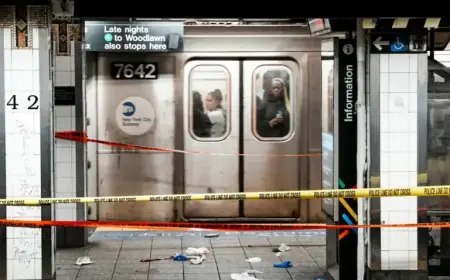
The context for those remarks included the recent deaths of two US citizens, Alex Pretti and Renee Good, who were shot and killed by federal agents last month during immigration enforcement operations in Minneapolis. Following an outcry after those deaths, the administration replaced the top official involved and withdrew agents from the city.
Economic critique: tariffs, housing, healthcare and alleged costs to families
Spanberger also criticised rising housing and healthcare costs and described the president's tariff policy as reckless, saying it has already cost American families $1, 700 each (noted in the original reporting as £1, 260). She said the Supreme Court had ruled against the tariff policy, yet the damage to the American people had already been done. She argued Republicans in Congress, by failing to oppose the president, were making life harder and more expensive for Americans.
Why Spanberger was a low-risk pick for the Democratic response
The selection of Spanberger to deliver the Democratic rebuttal was framed as little political risk for her party. Spanberger, 46, was elected as Virginia's governor in November after serving in Congress and working as a CIA officer. She was described as a rising star and was elected only a few months ago; she cannot run for re-election because Virginia has a one-term limit. That timing, combined with her recent victories, meant Democrats could spotlight her without exposing a long-term candidate to immediate campaign vulnerability.
In her rebuttal Spanberger also pointed to her own electoral track record as evidence of Democratic opportunity: she noted that she had ousted a Republican incumbent in 2018, becoming the first Democrat elected in that district in 50 years and swinging it by 17 points, and that her victory had helped Democrats secure a majority. She suggested Democrats could be well positioned to win seats in Congress in the coming November midterm elections.
Is the State of the Union response itself the problem?
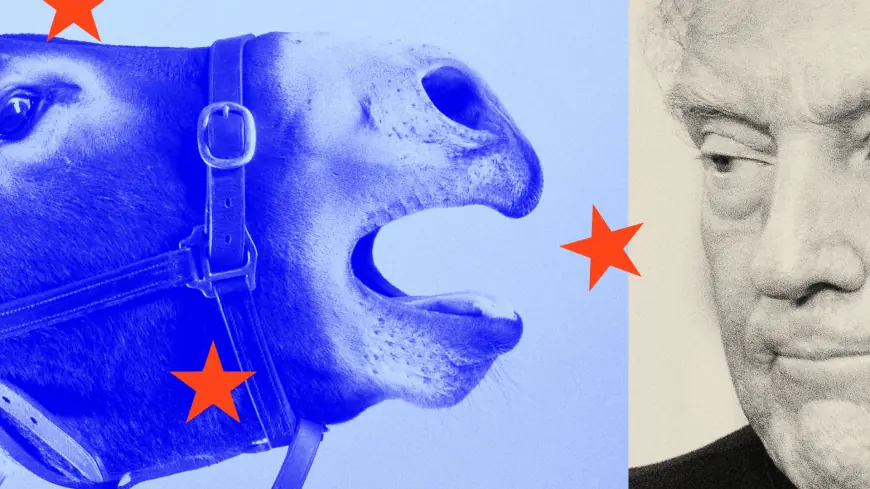
A companion opinion argued that the State of the Union response has become bland and forgettable, a ritual that rarely functions as a true rebuttal. Once a savvy adaptation to television, the modern solo response was criticised as a prewritten monologue delivered in a quiet room by a rising star staring into a teleprompter and reciting safe contrasts that feel familiar and instantly forgettable.
The opinion urged a rethink of the format for the Democrats' English-language response. One proposed alternative would put the responder in a live, reactive posture: watch the address in a small picture-in-picture while taking notes, confer with staff, absorb what is said and then step in front of cameras to deliver a concise, organic statement and take questions from reporters. The argument rests on the claim that authenticity comes from unscripted, human moments — raw reactions, visible conviction in tone and posture — and warned that production, over-scripting and viral mishaps have tended to overshadow substance.
The same commentary also argued that none of the solo responders in the modern era has become president and noted that the response often functions more as a national audition and test of message discipline for the next generation of party leadership than as a direct answer to the speech just delivered. It further characterised the president as a highly skilled television and media politician, a belligerent master of live performance and spectacle, and suggested that such a performer is not best met with a teleprompter.
Recent updates indicate these details reflect the immediate coverage of the rebuttal and accompanying commentary; details may evolve.