
























Is School Open Today — Why Low Attendance and Teacher Shortages Hit Families First After NYC Blizzard

The question many parents asked on Tuesday — is school open today — mattered less as a binary and more as an immediate test of access. When classrooms reopened after the storm, only 63% of students attended in person, large pockets of the city remained difficult to reach, and staffing gaps left schools scrambling to sustain essential services for nearly 900, 000 students. The practical impact landed first on families who depend on schools for meals, mental-health support and childcare.
Is School Open Today — Immediate effects on families, staff and local services
Here's the part that matters: reopening was uneven across neighborhoods. Citywide attendance stood at 63%, while some hard-hit areas registered far lower turnout — one borough reported roughly 16% of students present after about 28 inches of snow fell there. The Department of Education recorded 12, 000 teacher callouts from a workforce of 78, 000, and only 5, 000 substitute teachers were slotted to cover those absences. That gap shaped which programs could run and which could not.
What follows for families is concrete: less reliable class time, reduced extracurriculars and pressure on caregivers where local roads remain impassable. Many teachers also faced the same travel and childcare constraints as parents, since numerous staff members live outside the districts where they work.
What's easy to miss is that device availability and readiness for an immediate remote pivot were not guaranteed after midwinter break, limiting the city's ability to shift students off campus on short notice without disrupting services.
How reopening unfolded on Tuesday: attendance, staffing and local reactions
The city's restart on Tuesday combined operational strain with strong local criticism. Sanitation crews needed reinforcements on narrow streets in at least one borough; extra personnel, equipment and private contractors were moved in on Monday night to address plowing challenges. Community leaders and union representatives openly criticized the timing of the return, and many parents said side streets and residential blocks still looked unsafe.
- Student attendance (citywide): 63%
- Staten Island attendance (reported local figure): ~16% after ~28 inches of snow
- Teacher absences: 12, 000 of 78, 000
- Substitute teachers placed: 5, 000
- Students relying on services: nearly 900, 000
- Online petition signers the day before reopening: more than 169, 000
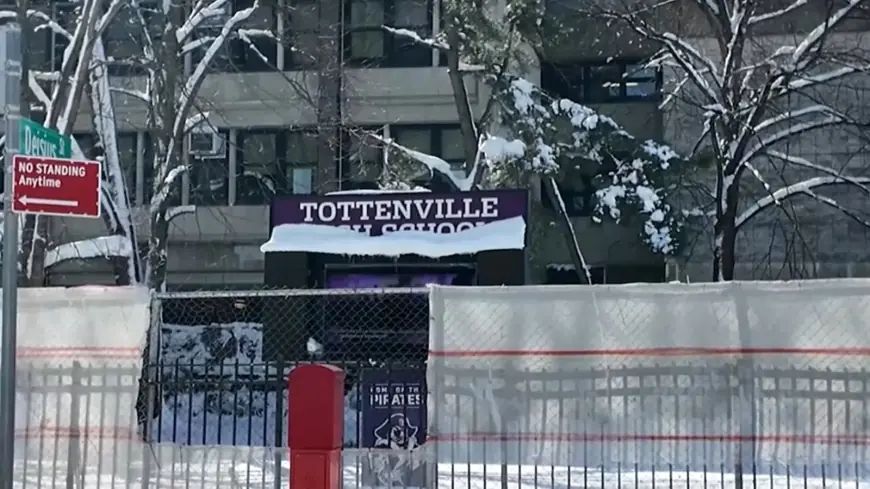
- Tottenville High School faculty unable to make it in: 180
Responses ranged from frustration about safety and readiness to pragmatic acceptance of the competing needs schools serve. Some elected officials described roads as still impassable in parts of the city, and parents described downed trees and unsafe side streets that complicated travel to school buildings.
The day before in-person classes resumed, a large online petition pressed for remote learning, citing hazardous roads and transit — a signal of public concern that the reopening would face operational headwinds.
Micro timeline (selected):
- Monday night: additional sanitation crews, equipment and private contractors were moved into the hardest-hit borough.
- Day before reopening: more than 169, 000 people signed an online petition urging remote learning.
- Tuesday: schools reopened for in-person learning with documented staffing and attendance shortfalls.
The real question now is how the city balances the immediate need to provide meals, mental-health services and childcare with the logistical reality of impassable streets and large staff shortages. Recovery steps will be judged on whether staffing levels and sanitation progress restore consistent access across neighborhoods.
Short-term signals to watch for include additional substitute placements, expanded sanitation operations on narrow residential streets, and any operational changes that clarify whether remote instruction will be used when conditions remain unsafe. Recent updates indicate details may continue to evolve as crews clear streets and families adjust plans.
It’s easy to overlook, but the reopening exposes a broader operational trade-off: schools function as community hubs beyond education, and when physical access is limited, the loss is felt across meals, childcare and support services, not just classroom hours.