

























Spacex Rocket Launch: Falcon 9 Starlink 6-110 Lifts Off from Cape Canaveral

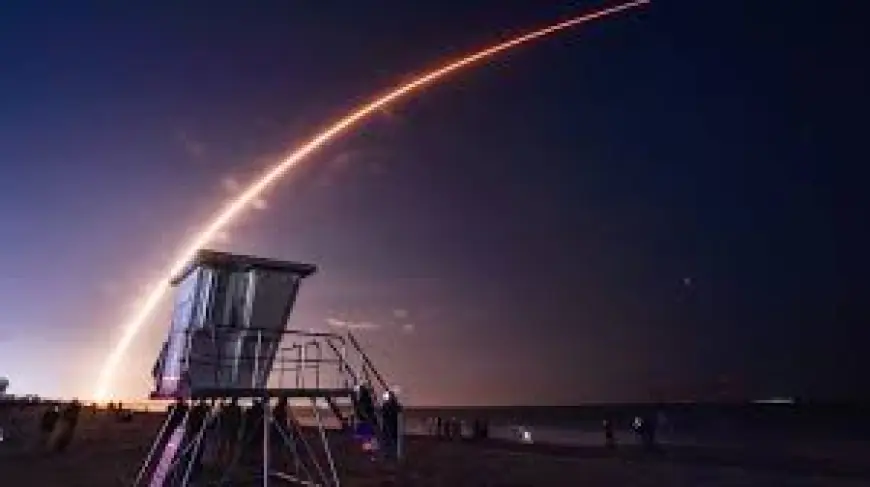
A spacex rocket launch late Tuesday afternoon placed 29 Starlink V2 Mini satellites into low Earth orbit and concluded with a successful booster recovery, marking the firm’s 18th mission of the year. The flight offered a near-term read on launch cadence, vehicle reuse and recent pricing shifts that could affect commercial demand.
Spacex Rocket Launch timeline and payload
The Falcon 9 rocket carrying the Starlink 6-110 payload lifted off from Space Launch Complex 40 at Cape Canaveral Space Force Station and deployed 29 satellites. An update at 7: 10 p. m. ET confirmed deployment of the 29 Starlink satellites. Liftoff was recorded at 6: 04: 10 p. m. ET, and the rocket followed a south-easterly trajectory after clearing the launch pad.
The mission added to the company’s growing broadband constellation; prior to liftoff the constellation exceeded 9, 700 satellites, based on public orbital-tracking tallies maintained by an expert observer.
Booster recovery and reuse milestones
The first-stage booster used on this flight carried the tail number B1092 on its 10th flight. A little more than eight minutes after liftoff the booster landed on the drone ship Just Read the Instructions, positioned in the Atlantic Ocean to the northeast of The Bahamas. That landing counted as the 151st recovery for that vessel and the 576th booster landing overall for the program.
Reused hardware continues to be a central element of the launch economics highlighted by the firm, with multiple flights per booster remaining a routine part of operational practice.
Weather, launch window and cadence signals
Forecasts ahead of the attempt showed favorable conditions, with launch weather officers placing the chance of acceptable conditions above 95 percent. The mission was conducted in a twilight window and represented the company’s 18th launch of the year supporting its broadband constellation, underscoring a high operational tempo.
Because the flight occurred within an established launch window and during routine operational hours for the range, no public notes indicated viewing availability from nearby visitor complexes for this specific event.
Pricing updates and industry implications
Separately, the company’s published Falcon 9 pricing for standard payment plans through 2026 lists a price of $74 million for launches placing up to 5. 5 metric tons into geostationary transfer orbit, up from $70 million in 2025 and $67 million in 2022. Public information also lists an internal per-launch cost for a reusable Falcon 9 at roughly $15 million.
For context, other launch systems cited in public figures show pricing estimates in the tens of millions: a reusable medium-lift rocket has been targeted in the area of $55 million for a dedicated flight, and a larger heavy-lift system is estimated near $68 million per flight. A recent low-cost government flight was listed at $20 million, reflecting higher program risk on an early vehicle flight.
If the published list prices remain at the higher level, customers weighing mission risk, payload requirements and budget could compare those fees with competing options that project lower per-launch prices. Observers will watch upcoming manifestings and announced customer contracts for clearer signs of market response.
Forward look
The successful deployment and booster recovery keep the constellation build-out on a steady path. Upcoming mission schedules, manifest updates and any future pricing adjustments will be the clearest indicators of how launch demand and competitive positioning evolve. If launch cadence stays high and reusability continues to lower operational costs, that dynamic may be reflected in future commercial arrangements and manifest pacing.