
















Presidential Medal Of Freedom Announcement Deepens the Fallout from Team USA’s Gold — What Changes Next

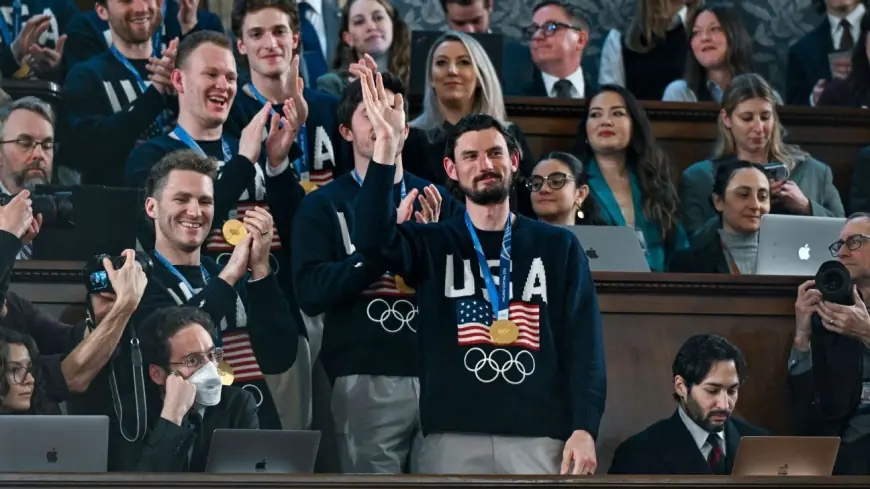
The president’s declaration that Connor Hellebuyck will receive the presidential medal of freedom came in the middle of a charged State of the Union moment with the gold-medal team present, and it changes the shape of the team’s post-victory spotlight. It matters now because a routine presidential honor intersected with recent locker-room celebrations, a high-profile visit to the House chamber and questions about political optics — placing athletes squarely in a controversy that could outlast the joy of the win.
Immediate consequences: goodwill narrowed and scrutiny intensified
For a brief period the nation celebrated together — strangers high-fived in bars and grownups hugged with wet eyes — but the aftermath has been more complex. The team’s goodwill has diminished after a series of moments that blurred celebration and politics: a congratulatory presidential call, laughter at a misogynistic joke about the gold-winning women’s hockey team, a locker-room encounter with beer-chugging FBI Director Kash Patel who is now under scrutiny for using taxpayer money to fund a sports getaway, and a boisterous return-party in Miami followed by plans to appear in the House Chamber during the State of the Union.
Here’s the part that matters: the medal announcement, made while players were seated in the chamber, converted a sports honor into a political tableau — and that conversion is changing how the win is remembered.
Presidential Medal Of Freedom: how the announcement unfolded in the chamber
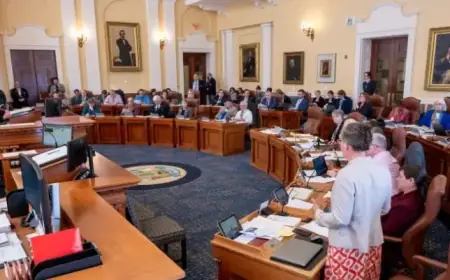
During the State of the Union the president said he would award the Presidential Medal Of Freedom to Connor Hellebuyck, and players from the U. S. men’s hockey team were in attendance when that was announced. Hellebuyck smiled, tapped his heart and waved as those in the chamber applauded. Members of the team entered the House chamber through two sets of doors, wearing blue "USA" sweaters, khakis and their gold medals, and walked down the rows of the press gallery; lawmakers on both sides of the aisle stood, cheered, chanted "USA!" and many pumped their fists. The president described taking a vote among the players before making the award decision; players raised their hands in response.
What Hellebuyck did on the ice and his season credentials
Connor Hellebuyck, the goaltender for the gold-medal-winning U. S. men’s Olympic hockey team, made 41 saves in the gold medal game against Canada and assisted on the overtime goal by Jack Hughes in the 2-1 victory. One signature sequence saw him make a sprawling save and use his stick to stop Devon Toews. He plays for the NHL’s Winnipeg Jets. Winning the gold has added to his reputation: he was awarded the Hart Memorial Trophy for the 2024-25 season as the league’s most valuable player — becoming the eighth goalie to win that award and the first since Carey Price in 2014-15 — and he also won his third Vezina Trophy that season. It is believed Hellebuyck will be the first hockey player to receive the presidential medal of freedom, joining the roll of 671 past recipients that includes athletes such as Simone Biles, Joe DiMaggio, Michael Jordan, Megan Rapinoe and Babe Ruth.
Team behavior, optics and the political frame around celebration
The sequence of events shifted the narrative away from sport alone. The team neither created the wider political divide nor demonstrated a deliberate partisan strategy, yet stepping quickly into public celebrations and presidential and congressional settings narrowed their moment. Celebratory rituals that once felt routine now carry symbolic weight in a polarized climate. It would be a copout to blame only the environment — these are adults who thrilled a nation — but leadership decisions about optics have consequences for how triumphs are received.
- For a few hours after the win the country experienced a rare, unified celebration.
- Soon after, some players laughed at a misogynistic joke about the women’s team and celebrated with Kash Patel in the locker room; Patel is under scrutiny for using taxpayer money to fund a sports getaway.
- After partying in Miami, some players planned and then made an appearance in the House chamber during the State of the Union, where the medal announcement took place.
What's easy to miss is how quickly a sports victory can be reframed by a handful of public moments: one call, one joke, one room. The real question now is whether the team’s members and leadership will recalibrate how they navigate invitations and optics going forward.
Key takeaways and signals that will matter in coming weeks
- Presidential recognition elevated Hellebuyck’s profile beyond his on-ice accomplishments and linked the team directly to a political ceremony.
- Public memories of the gold will now share space with images from the locker room, the Miami celebrations, and the House chamber appearance.
- Watch for responses from team leadership and individual players that either acknowledge the political tightrope or treat the moments as routine celebration — those reactions will shape whether goodwill recovers.
- If inquiries into the locker-room guest’s use of public funds develop, that could further complicate the team’s post-victory narrative.
Micro timeline: 1980 — the U. S. last won men’s Olympic hockey gold in the famed "Miracle on Ice"; 46 years later that benchmark returned as the present team took gold; shortly afterward the sequence of a presidential call, locker-room interactions, Miami partying and a State of the Union appearance converged with the medal announcement.
Expect the conversation to keep shifting. This is not simply about an award or a celebration; it’s about how modern political optics reframe sporting triumphs and who ends up carrying the fallout.