

























State Of The Union 2026: Trump Delivers Record-Length Address as Reactions and Political Fallout Mount

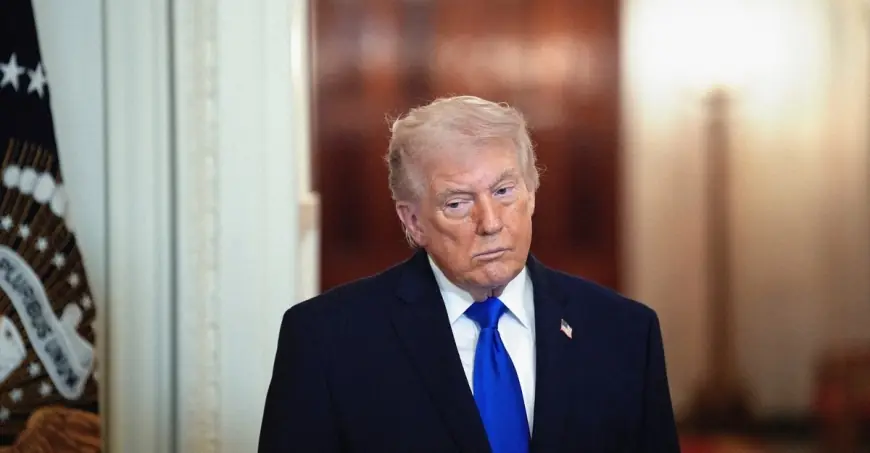
President Donald Trump delivered the annual address to a joint session of Congress in a speech lasting almost 1 hour and 50 minutes, setting the record for longest-ever State Of The Union 2026 address. The speech pressed his economic agenda and carried political implications ahead of crucial midterm elections in November.
State Of The Union 2026: Record length and chief claims
Trump repeatedly pushed his economic agenda throughout the near two-hour address, saying he had overseen what he framed as a turnaround during his first year back in the White House. He claimed his policies were rapidly ending high prices and pointed to recent successes he linked to his administration. On Iran, he said his preference was to solve the issue through diplomacy while warning Iran against pursuing a nuclear weapons programme. He sparred numerous times with Democrats in the chamber but did not directly admonish the Supreme Court justices in attendance over their recent tariffs ruling.
Immediate responses from Democratic leaders and lawmakers
Democratic Leader Hakeem Jeffries reacted to the speech by calling the past year of Trump's presidency a "complete disaster, " and said that for nearly two hours the president "spewed lies, propaganda and hatred, " accused him of failing to deliver on a promise to lower costs on day one, and charged that the administration had made life more expensive, ripped healthcare away from the American people and unleashed state-sponsored violence on communities. Senate Minority Leader Chuck Schumer said Americans have never seen a State of the Union so disconnected from reality, adding that the president rattled off "lie after lie" and that Americans are not fooled by the rhetoric.
Abigail Spanberger, Virginia's governor, delivered the Democrats' response and said the president offered no real solutions to the nation's pressing challenges. Some Democratic lawmakers boycotted the speech.
Disruptions on the floor and racial controversy
Texas Democrat Al Green was removed from the chamber earlier after holding up a sign that read "Black people aren't apes. " Green said he wanted the president to be confronted and to understand that Black people will not tolerate that behavior. He linked the sign to a racist video the president posted depicting America's first Black president as an ape. Green said the president now acts as if he is beyond the law, does not recognize separation of powers or due process, and does not accept judges may be right when rulings conflict with his opinions; he warned that if this continues the Constitution will become meaningless. Green made his remarks in a public broadcast interview.
Policy flashpoints: tariffs, immigration and international posture
Tariffs and immigration emerged as central tensions. The president's sweeping tariff policy was overturned recently by the Supreme Court a few days ago, and the president has publicly pushed back since that ruling. New global tariffs took effect at 10%, though he had threatened a 15% rate the prior weekend; a lobby group described the 10% rate as providing some relief for British businesses. Immigration enforcement has also been contentious: backtracking on an enforcement crackdown in Minnesota followed public backlash tied to federal operations that coincided with the deaths of two US citizens in that city, and the president's expanded deportation efforts have become broadly unpopular.
Wider political context and adjacent news items
The address came amid polling that suggests Americans are souring on his second-term agenda ahead of November midterms; broader polling figures showed 68 percent of Americans saying the president has not paid attention to the country's most important problems, up from 52 percent the year before, and 57 percent disapproved of his handling of the economy. The president sought to bolster his message by spotlighting recent symbolic victories, at one point bringing the US men's hockey team that had just won gold at the Winter Olympics into the gallery. The victorious team visited the White House on Tuesday, though several notable absences were reported.
Outside Capitol Hill, other developments intersected with the night: Marco Rubio delivered a rare briefing to top lawmakers on Iran from the White House as Washington deploys its largest force of aircraft and warships to the Middle East since the 2003 buildup to the Iraq war. US military leaders including the defense secretary Pete Hegseth met with executives from Anthropic to resolve a dispute over what the government can do with the company’s AI model; Hegseth gave Anthropic CEO Dario Amodei until the end of the day Friday to accept departmental terms or face penalties. The justice department sued a major university, alleging a hostile work environment for Jewish and Israeli faculty and staff after protests about the war on Gaza. A congressman refused calls to resign amid a furore over allegations of an affair with a staffer who later died by suicide. Senate Democrats opened an investigation into whether a federal communications regulator and a major network parent company prevented a late-night interview with a Texas Democratic candidate from broadcasting. Cancellations and delays of new US datacenters have increased as the AI boom runs into supply chain snags, energy shortages and tariff-induced restraints. Separately, Savannah Guthrie's family offered up to $1m for information leading to the return of her 84-year-old mother, Nanc.
Outlook: what the address aimed to achieve and what remains unsettled
Commentators and allies framed the speech as an opportunity for the president to turn things around, but assessments differed on whether that is realistic. When the president last addressed Congress in March 2025 he was described as triumphant after storming back into the White House following two assassination attempts and moving through an intensely productive first 100 days. Advisers urged him to stay on message by stressing job growth, cooler inflation and market markers such as the Dow hitting 50, 000; whether that approach will blunt public concern about affordability and other controversies is unclear in the provided context. The address was edited for circulation by Caitlin Wilson and Oliver O'Connell.