
























Secretary Of State Figures Show Democratic Early Voting Surge in Texas Primaries

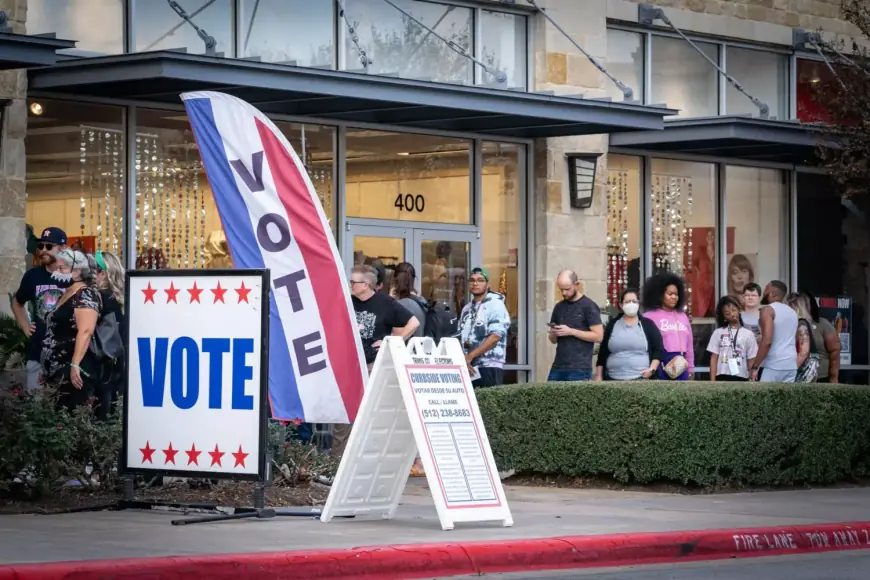
Data from the secretary of state show early voting in Texas’ 2026 party primaries has jumped, with more than a million Texans casting early ballots in the first week — a sign of heightened engagement ahead of March 3. The early count matters now because Democrats have cast more early ballots than Republicans at this stage, reversing patterns from recent cycles.
Data from Secretary Of State
Nearly 483, 000 Democratic ballots had been cast in person or by mail as of Sunday, an increase of more than 211, 000 compared with the same point in the 2022 primary and substantially higher than Democratic early turnout at the comparable stage of the most recent presidential primary. Republican early turnout stands at about 446, 000 ballots so far, roughly 6, 000 more than at this point in 2022 but below the over 522, 000 Republicans who had voted by this stage in the 2024 presidential primary.
Those figures amount to roughly 5% of the state's 18, 657, 918 registered voters at this stage of early voting, compared with just over 4% at the comparable point in 2022. Early voting began Feb. 17 and runs through Feb. 27 (all times ET); Election Day is March 3.
What Texans Say Is Driving Turnout
Voters interviewed across Austin, Lubbock, Houston and San Antonio gave varied reasons for casting early ballots. Longtime party loyalty and personal history drew some to the polls: one voter described decades of voting with a party and no regrets; another said family history and the legacy of poll taxes motivates each election trip. Economic concerns also surfaced repeatedly: an unemployed information-technology worker cited a difficult job search and what she described as a high unemployment rate, while a near-retiree pointed to rising prices and housing costs as top issues.
Several voters said down-ballot contests mattered to their choices. One Lubbock attorney prioritized judicial races in the Republican primary and urged elected officials to "get it right. " Another voter identified the governor and U. S. Senate contests as key, noting potential choices for the November ballot.
What’s Next for the Primaries
Early totals so far show Democratic participation far outpacing the party's earlier midterm-cycle pace and exceeding the party's early numbers from the most recent presidential primary. If Democratic early turnout stays elevated through Feb. 27, it would sustain the current gap in early ballots and could shape the dynamics heading into March 3. Republican participation is roughly flat compared with 2022 at this stage, leaving party-by-party campaigns to press during the remaining early-vote window.
Officials will continue releasing updated totals through the final days of early voting. Uncertainties remain about how in-person and mail ballots cast before Feb. 27 will translate to final primary results on March 3, and which contests will be decided in the primary versus advance to the November ballot. Observers will watch whether the early surge translates into higher overall turnout or concentrates the impact in specific races.