
























Scott Bessent warns $175 billion raised under IEEPA may never reach Americans

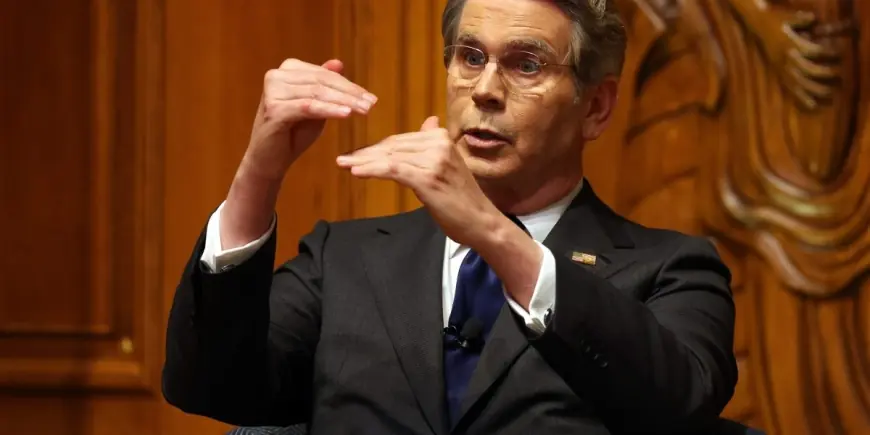
scott bessent told an audience that the Supreme Court’s decision striking down the use of the International Emergency Economic Powers Act to impose global tariffs could put roughly $175 billion in potential refunds out of reach for American consumers.
Scott Bessent says refunds will be tied up in trade courts
Treasury Secretary Scott Bessent spoke at the Economic Club of Dallas in the immediate aftermath of the court’s ruling, saying the high court did not decide how funds collected under the IEEPA should be handled and that the matter will move to international trade courts. He warned the process could be prolonged, saying, “My sense is that could be dragged out for weeks, months, years, so … we’ll see what happens there. ”
The IEEPA tariffs were first imposed on China in February 2025, with levies on Canada and Mexico following a month later, and April’s “Liberation Day” tariffs also implemented under the same authority. Analysts estimate cumulative IEEPA collections reached roughly $164. 7 billion by January 2026, with collections running at about $500 million per day, figures that underpin the Penn Wharton Budget Model’s projection of up to $175 billion in potential refunds.
Legal ruling shifts who gets the money and when
The Supreme Court’s Friday decision—written by Chief Justice John Roberts—found the administration’s use of the IEEPA to impose broad tariffs unlawful, immediately putting past collections in legal dispute. That shift means importers who paid the duties would be the parties entitled to any rebates, and the Treasury secretary said consumers should not expect those funds to flow back quickly or at all.
Scott Bessent added that the administration has alternative statutory routes to impose tariffs, naming Section 232 (national security grounds) and Section 301 (unfair trade practices) as options that could preserve the government’s ability to generate tariff revenue without relying on IEEPA. He noted those alternatives would prevent a drop in tariff revenue generation even as the treatment of past IEEPA collections moves into litigation.
Who stands to receive refunds and what it means for prices
Economic modeling in the wake of the ruling projects that any rebates would go to U. S. importers—the parties that actually paid the duties—rather than directly to consumers. The Penn Wharton Budget Model at the University of Pennsylvania set the upper bound of potential refunds around $175 billion, reflecting the roughly $164. 7 billion collected by January 2026 and continued daily receipts.
UBS chief economist Paul Donovan cautioned that rebates paid to importers would likely increase the U. S. fiscal deficit and act as fiscal stimulus, and that rebates alone do not guarantee lower consumer prices. He argued that with further tariffs expected under different legal authorities, it seems unlikely businesses would rush to cut prices for customers.
Other administration officials echoed the view that courts will determine the path forward on refunds; U. S. Trade Representative Jamieson Greer said the legal process will dictate next steps and that the government will follow court directives.
With the Supreme Court having removed IEEPA as the legal basis for those tariffs, the immediate operational consequence is procedural: trade courts will now sort out entitlement to past collections while the administration explores alternate statutory authorities to continue collecting duties.
Officials have signaled the next concrete developments will come through trade court proceedings and any new tariff actions under Sections 232 or 301; Treasury officials have said those routes would maintain revenue flows while the IEEPA-created fund disputes proceed through litigation.