

























Gorsuch Confronts Fellow Supreme Court Justices in Tariff Ruling

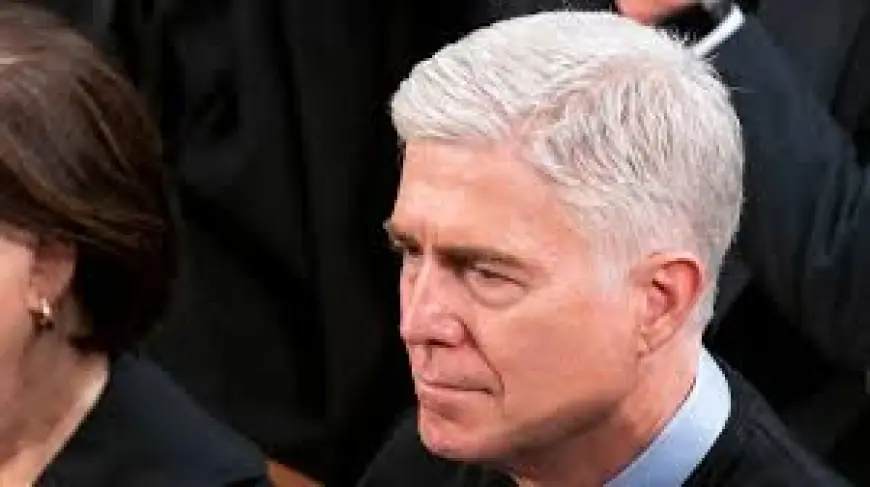
Justice Neil Gorsuch authored a forceful opinion in a recent tariff decision that directly challenged how other Supreme Court Justices approach statutory interpretation. The opinion matters now because it pairs a pointed critique of a colleague with a broader defense of legislative authority, signaling intra-court friction over judicial roles.
Development details involving Supreme Court Justices
Gorsuch wrote the court’s opinion in a tariff dispute and used that ruling to take aim at fellow justices’ reasoning. The opinion specifically singled out Justice Elena Kagan, a named colleague, characterizing her position as decisively refuted. In parallel, Gorsuch framed the opinion as an affirmation—described in commentary—as an homage to legislative power and offered what was characterized as a subtle reproach of a neutered Congress. Those are the concrete actions reflected in the decision: Gorsuch authored the majority opinion in the tariff case, explicitly challenged a named justice’s arguments, and emphasized the primacy of legislative authority over judicial lawmaking.
Context and escalation
The tariff ruling served as the instant prompting for Gorsuch’s broader statements about the respective roles of courts and lawmakers. By anchoring his opinion in deference to legislative judgment, Gorsuch created the space to question the analytical approach adopted by colleagues on the bench. The critique of Justice Kagan was presented within the opinion’s legal analysis rather than as a separate statement, intensifying its impact within the court’s deliberative record. What makes this notable is the convergence of three strands in a single opinion: a substantive tariff ruling, a direct challenge to a sitting justice’s reasoning, and an articulated defense of Congress’s lawmaking role—all of which amplify the decision’s institutional significance.
Immediate impact
The immediate effects are internal to the judiciary and institutional. Fellow justices are placed on notice that Gorsuch is both willing and prepared to publicly contest their interpretive methods in written opinions. Justice Elena Kagan is the only colleague named in the coverage of the decision, and the opinion’s language was framed as leaving her argument "dead to rights, " indicating a decisive legal rebuttal. The decision also casts Congress as an actor receiving an explicit judicial admonition: by praising legislative primacy, the opinion implicitly critiques lawmakers’ diminished influence on certain legal questions. For litigants and practitioners, the ruling resolves the tariff dispute at issue and establishes a publicly recorded line of analytical argument that lower courts and future advocates will observe.
Forward outlook
There are no additional procedural dates or next steps specified in the materials describing the ruling. The immediate milestone embedded in the record is the publication of Gorsuch’s opinion itself, which now stands as the operative judicial explanation for the tariff outcome. Absent identification of appeals, rearguments, or other procedural filings, the confirmed trajectory is that the opinion will be the primary vehicle through which the court’s position on the tariff issue and the attendant interpretive stance will be assessed by lower courts, commentators, and future panels facing comparable statutory questions.
In sum, the tariff decision constitutes both a case outcome and a strategic judicial statement: an authored opinion that rebukes a colleague, champions legislative authority, and reframes an institutional debate about the balance between courts and Congress.