






















Jonathan Kuminga’s Hawks Debut Reshapes Expectations for Hawks and Warriors Fans

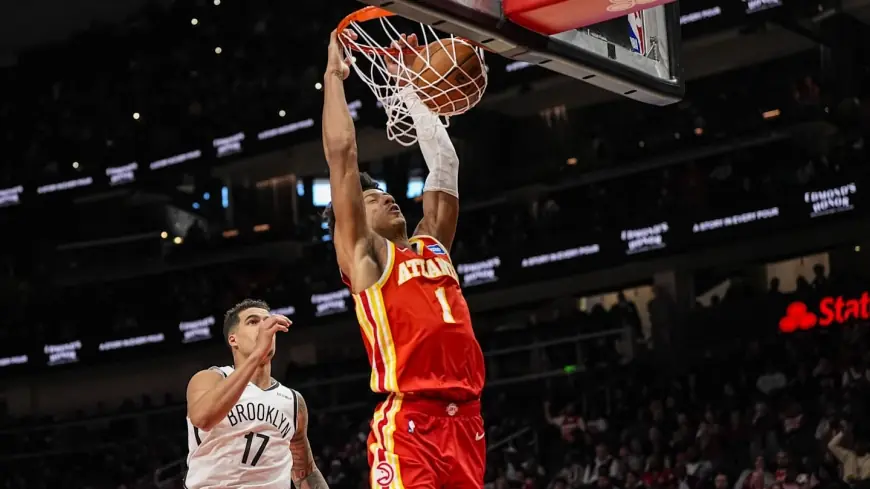
For two distinct fanbases this move lands differently: jonathan kuminga’s availability signals an immediate rotation change for Atlanta while reopening concerns in the Bay Area about Kristaps Porziņģis’ reliability. The immediate effect falls first on Hawks game-planning and bench minutes; for Warriors observers, Kuminga’s debut highlights lingering questions about Porziņģis’ health and integration after the trade that moved the pieces between the clubs.
Jonathan Kuminga's role and what it means for Hawks and Warriors observers
Here’s the part that matters: the Hawks list jonathan kuminga as available after a left-knee bone bruise, but he will not be in the starting lineup. The team is keeping CJ McCollum as a starter, a configuration used in a recent win. That combination reframes expectations — kuminga is set to enter a team where his minutes and role are uncertain rather than taking a starting assignment immediately.
That uncertainty is consequential on two fronts. For Hawks followers, kuminga’s presence injects a new scoring/defensive option into second-unit rotations and late-game planning, but it also creates short-term questions about how many minutes he receives and which matchups the coaching staff favors. For Warriors observers, kuminga’s debut serves as a reminder of the trade that moved him and the unsettled status of the player that arrived in the other direction; Porziņģis’ availability issues have remained a headline since the swap.
What’s easy to miss is how quickly a single availability update can shift narrative: a player moving from injured reserve to active changes substitution patterns, matchup planning and even how coaches manage late-game minutes.
Game and roster details
Key event details embedded in that shift: kuminga was acquired from his former team at the trade deadline and had been sidelined by a left-knee bone bruise until now. He is available for the matchup with Washington, but the Hawks will not insert him into the starting five, instead retaining CJ McCollum in that role.
The broader environment around the trade remains unsettled. The player who moved in the opposite direction has appeared in only one game since the swap and is expected to miss at least the next two games because of illness. That player had already missed a string of games prior to the trade while managing Achilles tendinitis, and his singular appearance after the trade was handled with strict minutes monitoring. Additionally, he did not travel for a recent quick road swing, signaling another gap in availability that continues to affect perceptions about the trade’s short-term balance.
- Recent Hawks results relevant to the context: a 131-116 meeting earlier in the season featured a 30-point, 12-rebound, 12-assist performance from a Hawks forward; another recent win (115-104) included a dominant 24-2 finish over an opponent in the final eight minutes, a defensive sting rare since the play-by-play era began in 1997-98.
- Roster notes: kuminga is available but not starting; the Hawks maintain CJ McCollum in the starting lineup.
The real question now is how quickly kuminga earns meaningful minutes and whether his early contributions quiet the frustration on the other side of the trade.
Quick Q&A
Will he start? No — kuminga will not be in the starting lineup while CJ McCollum remains a starter.
How many minutes should fans expect? Minutes are uncertain; the team has made him available but is managing his role rather than assigning a guaranteed starter’s workload.
Why are Warriors observers watching? Because the trade that moved kuminga also involved a player whose availability has been inconsistent due to illness and recent injury management, so kuminga’s debut highlights whether that swap is yielding near-term balance.
Signals to monitor in the immediate stretch: how many minutes kuminga receives in early appearances, whether he impacts late-game rotations, and whether the player who moved the other way returns to consistent availability. These outcomes will quickly tilt assessments of the trade’s practical effects on both teams.
The bigger signal here is not one game but the pattern of usage that emerges: a handful of meaningful bench minutes over several games would suggest rapid integration; limited, low-leverage minutes would point to cautious ramp-up.