
























Alternative State Of The Union Rally Draws More Than Two Dozen Democrats Away From House Chamber

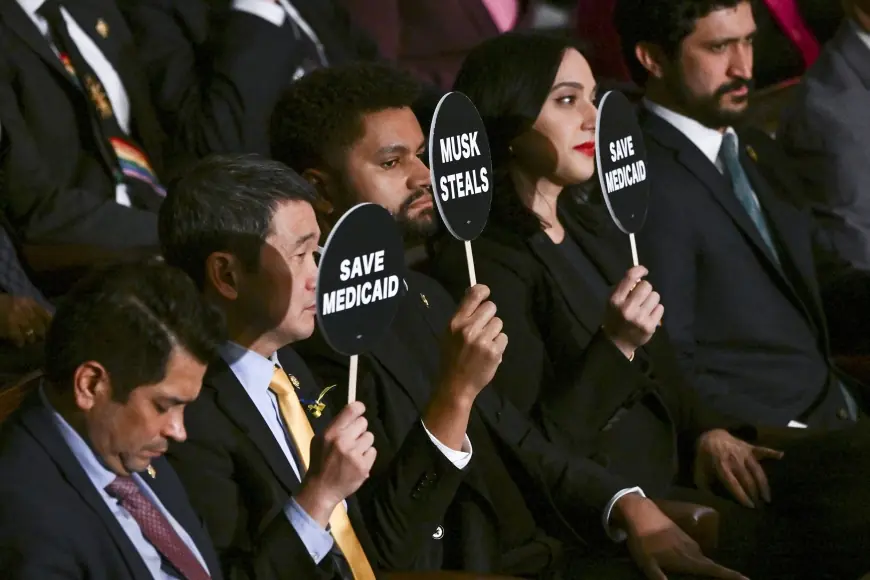
More than two dozen House and Senate Democrats are planning to skip the president’s address and attend an alternative state of the union event on the National Mall. The move matters because it creates a parallel gathering that will run at the same time as the president’s prime-time speech and shape how both events are perceived.
Alternative State Of The Union — Development details
Organizers MeidasTouch and MoveOn. org will host the People’s State of the Union on the National Mall, with the rally expected to begin at 8 p. m. ET on Tuesday night. The program will feature federal workers, immigrants and other people directly affected by the president’s policies. Maryland Senator Chris Van Hollen is among the lawmakers expected to attend, and more than two dozen Democratic members of Congress have announced plans to join the Mall rally instead of sitting in the House chamber for the address.
At least one senior House Democrat has also announced he will not attend the State of the Union inside the chamber. Some members who will be absent cited the rally as their destination; others have absences tied to travel disruptions and postponed votes after a winter storm.
Context and escalation
The decision by a cohort of Democrats to stage or attend alternative events comes amid a lineup of contentious developments: disputes over tariffs that drew a rebuke from the Supreme Court, rising health care costs, public outcry over immigration enforcement tactics and the effects of a partial government shutdown. Those dynamics have shaped internal debate among Democratic leaders about whether to confront the president in the chamber, stay silent, or provide a visible contrast outside the Capitol.
Party strategists wrestled with competing instincts: some advised limiting attention on the president’s remarks in the belief that his misstatements would undercut him, while others warned that silence in the face of perceived institutional erosion would register as passivity to voters. Past instances of visible protest in the House chamber have had ripple effects outside Washington, energizing activists and fueling subsequent demonstrations.
Immediate impact
Because a coordinated group of lawmakers will be absent from the House floor at a high-profile moment, vacant seats will be a conspicuous feature of the address and will alter the visual and political optics of the chamber. The parallel rally on the Mall creates an organized outlet for public voices directly affected by policy choices, ensuring those stories are highlighted simultaneously with the president’s speech.
The absence of these lawmakers also changes how Democratic leadership manages discipline and messaging during the address: a calculated decision to allow members to choose protest events over attendance avoids an orchestrated spectacle but accepts that empty chairs will communicate discontent. The result is a two-pronged presentation—a formal presidential address inside the House and an oppositional demonstration outside—that will be visible in live coverage and subsequent analysis.
Forward outlook
The immediate schedule is set: the president’s State of the Union address will proceed in the House chamber while the People’s State of the Union rally begins on the National Mall at 8 p. m. ET. Lawmakers who have publicly confirmed plans to skip the chamber will be on the Mall, and other members may still choose their position as events unfold.
The timing matters because the simultaneous events create a direct counterprogramming effect, making it easier for organizers to draw attention to alternative narratives in real time. In the hours after both gatherings conclude, political leaders and activists will assess turnout, headlines and public reaction to determine next steps within their respective campaigns and legislative strategies.